
History
The Russian yal – from the Dutch jol, the English yawl – was a ship’s boat that could be both rowed and sailed. Boats of this kind were already in wide use in the 18th century, but the term yal only came into common use in the first half of the 19th century. By then most larger ships carried yawls, from brigantines and tenders to frigates. They were indispensable for the connection with the shore, for bringing food and water on board and for the daily work around the ship: clearing mooring lines, cleaning and painting the side, working with the kedge anchor. A yawl with four to six oars usually had a single mast, and on each thwart sat two rowers.
According to Falconet, the model was reconstructed from an archive drawing in the Russian State Naval Archive (RGAVMF). The drawing belongs to the many boat designs of Veniamin Fomich Stokke, an English shipbuilder in Russian service in the 19th century, whom Falconet credits with more than 600 ships of various ranks, among them the frigate Pallada. The yawl’s lines are close to modern boats but have a characteristic drop-shaped section, which gives her a very elegant outline.
A small project
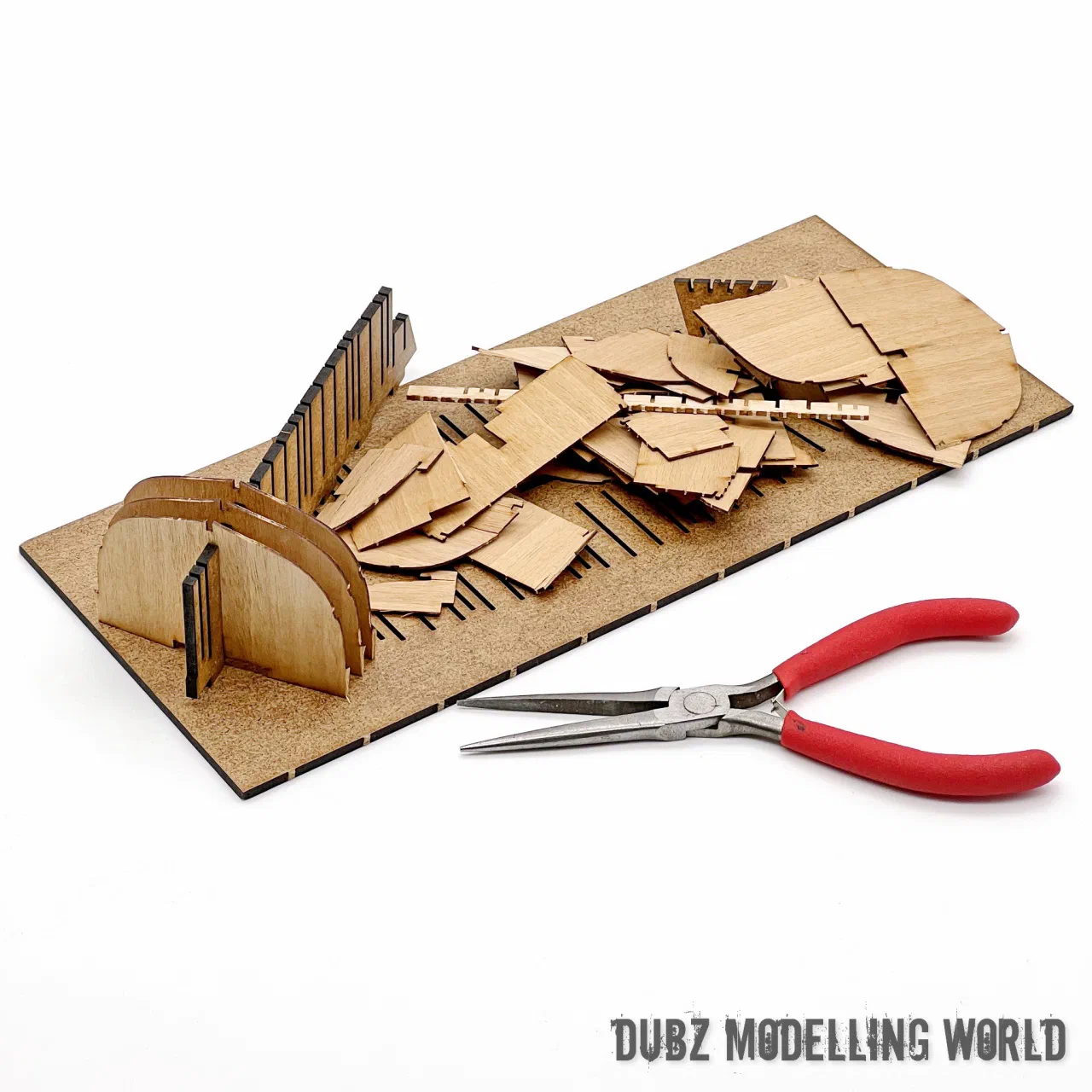
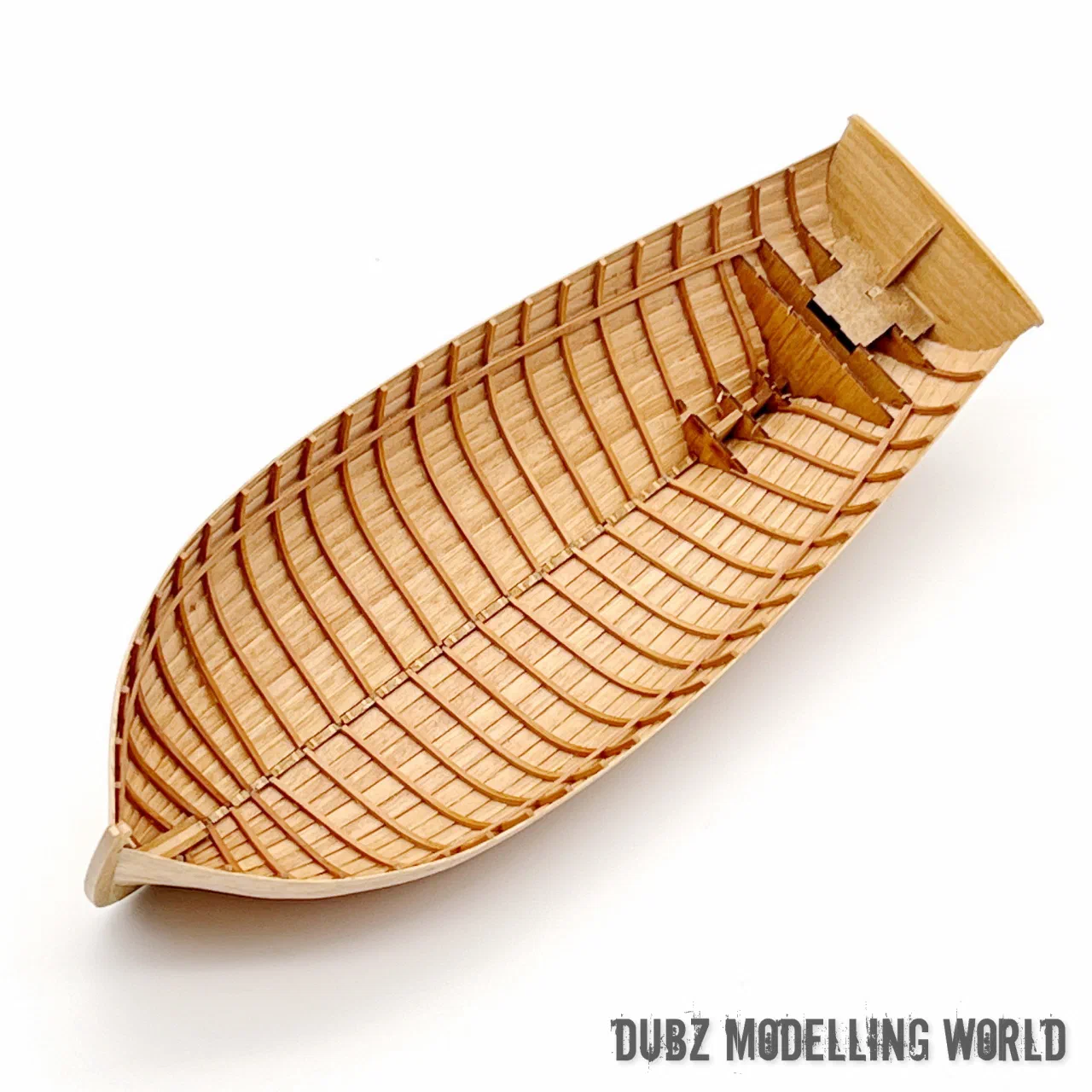
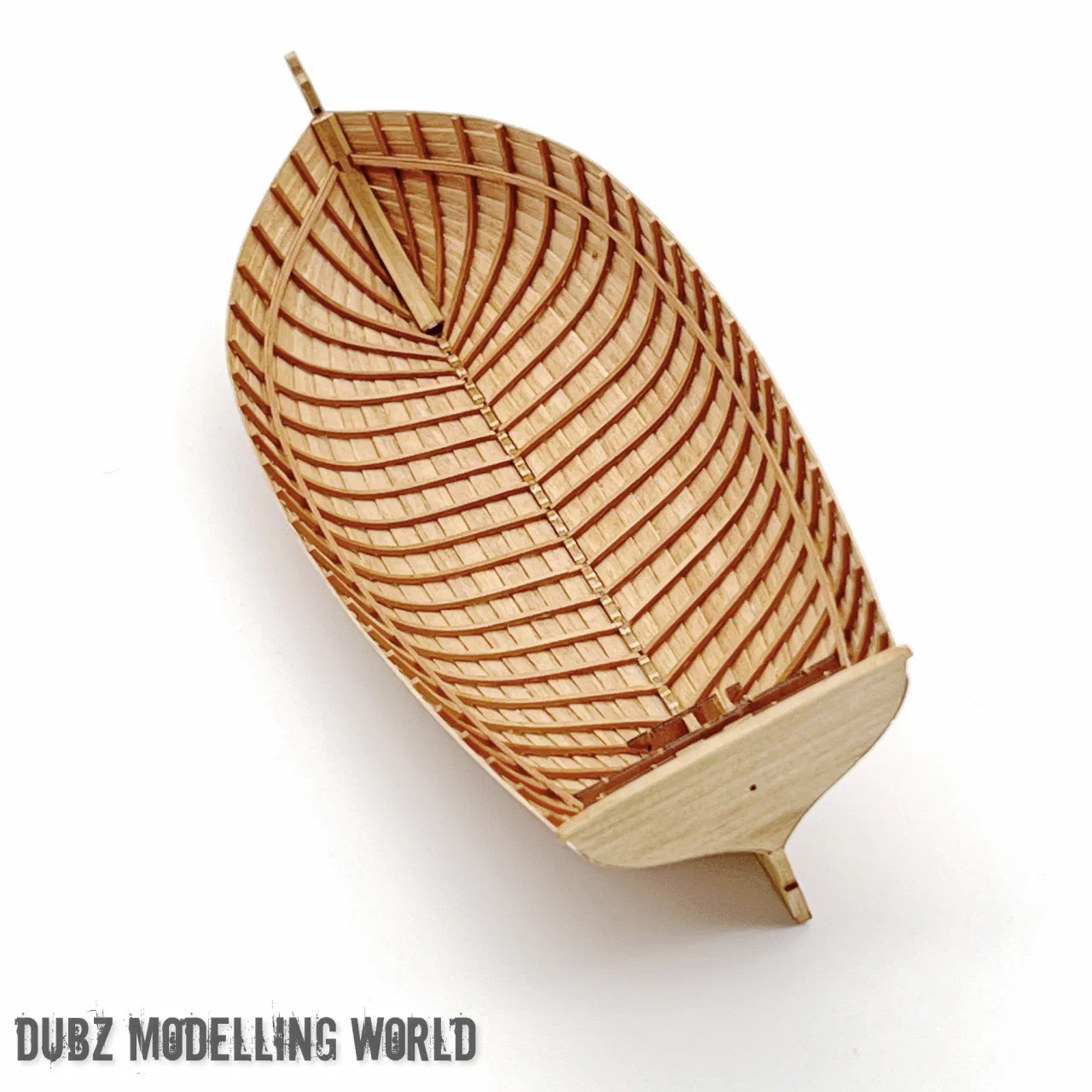
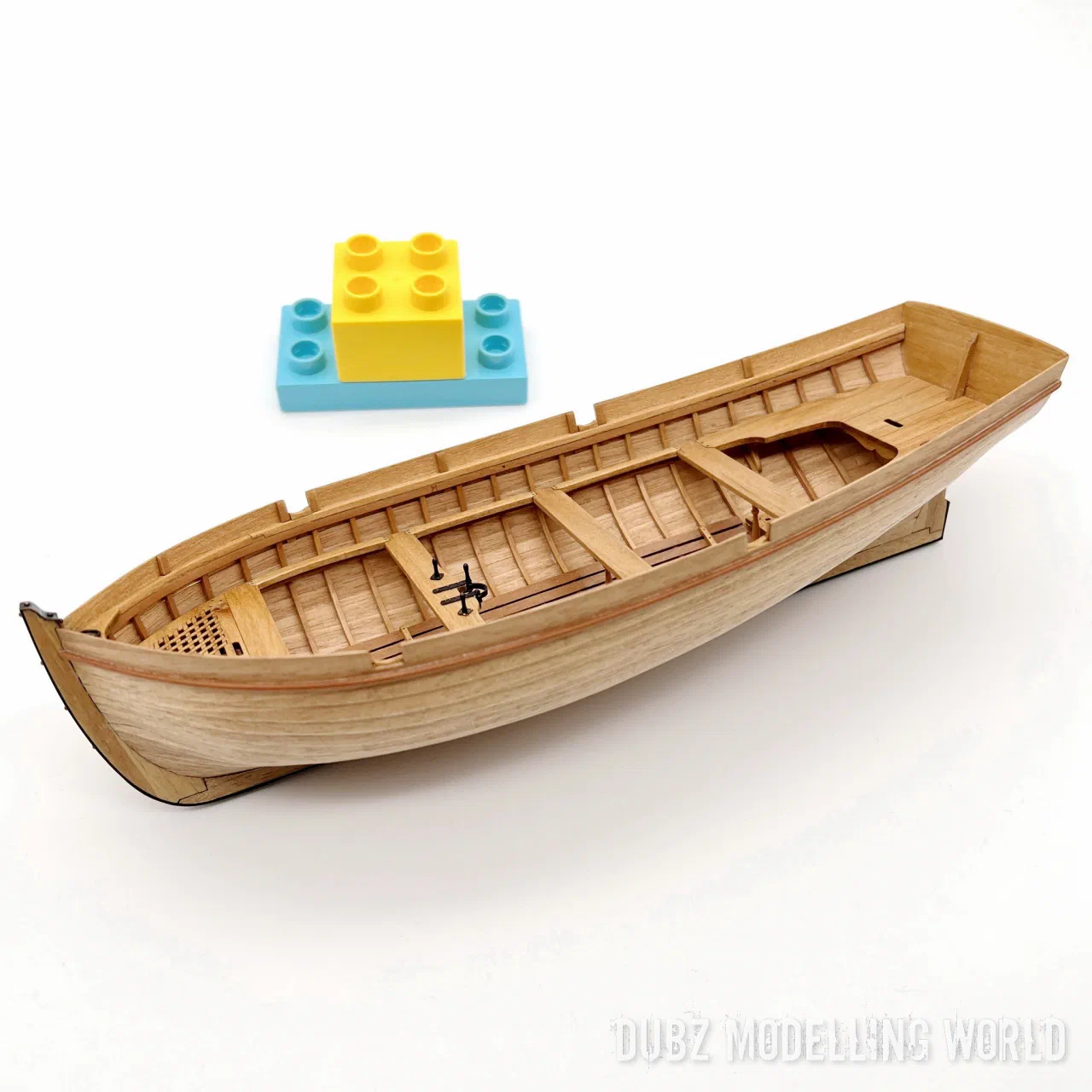
I needed a small project that was feasible while our little daughter was still very small. The four-oared yawl from Falconet, in 1:24, had been waiting for a good while – I had been given it as a present. Frames and planking are laser-cut from 1 mm pear, with photo-etched and cast resin details; according to Falconet the model is 214 mm long. Building small boats this way is something I really like: the frames sit on a building jig and are snapped off once the hull is planked, and even at small scales the results are very elegant.
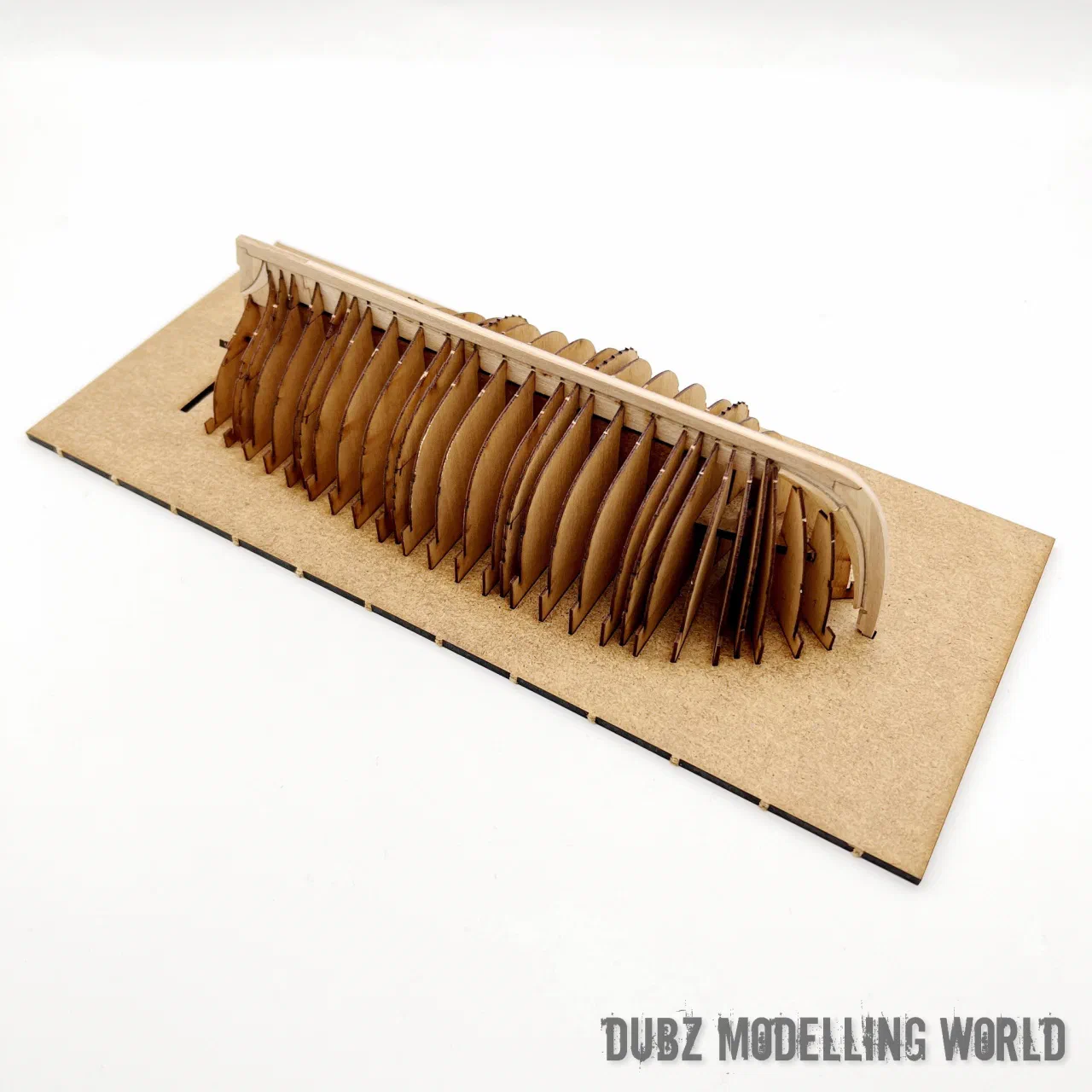
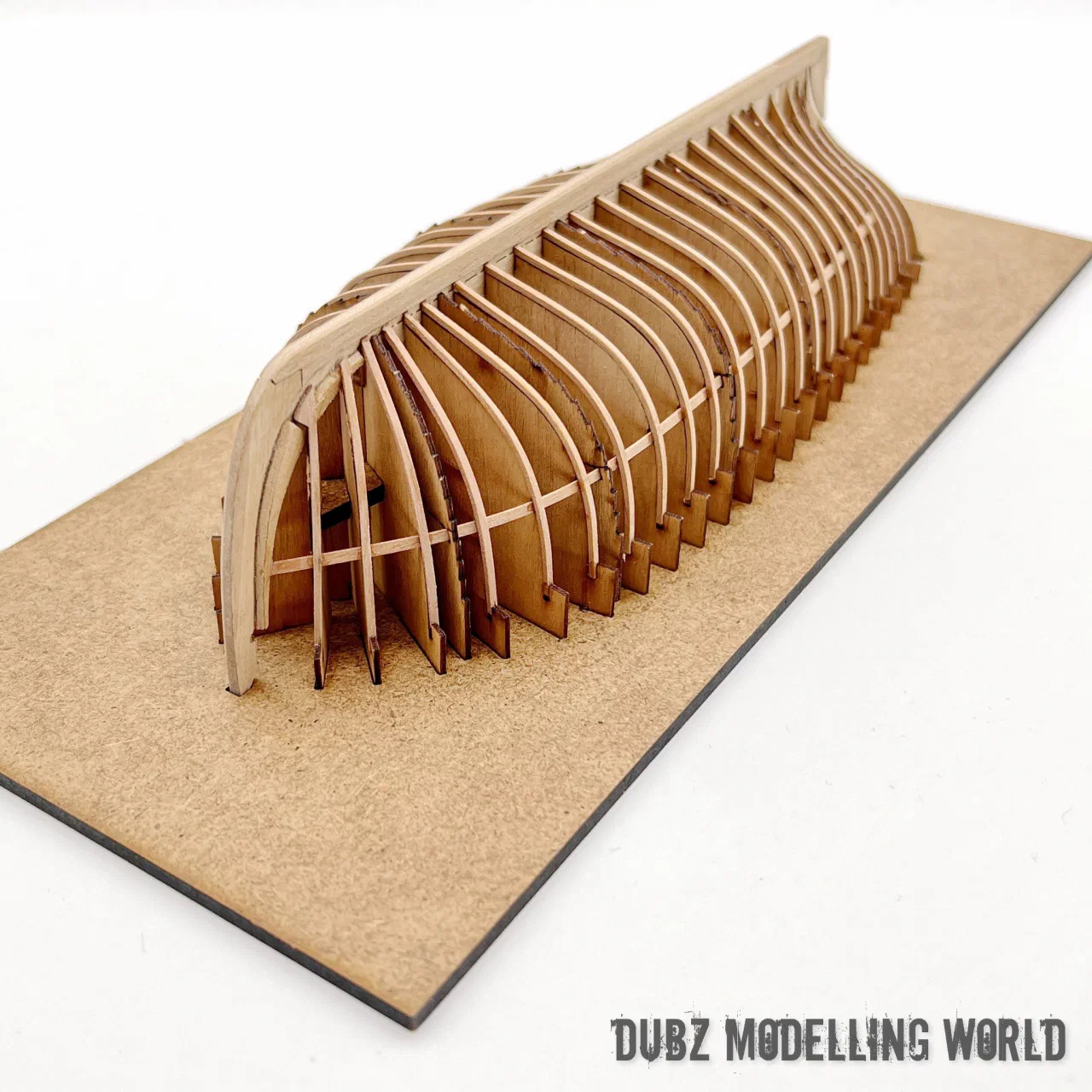
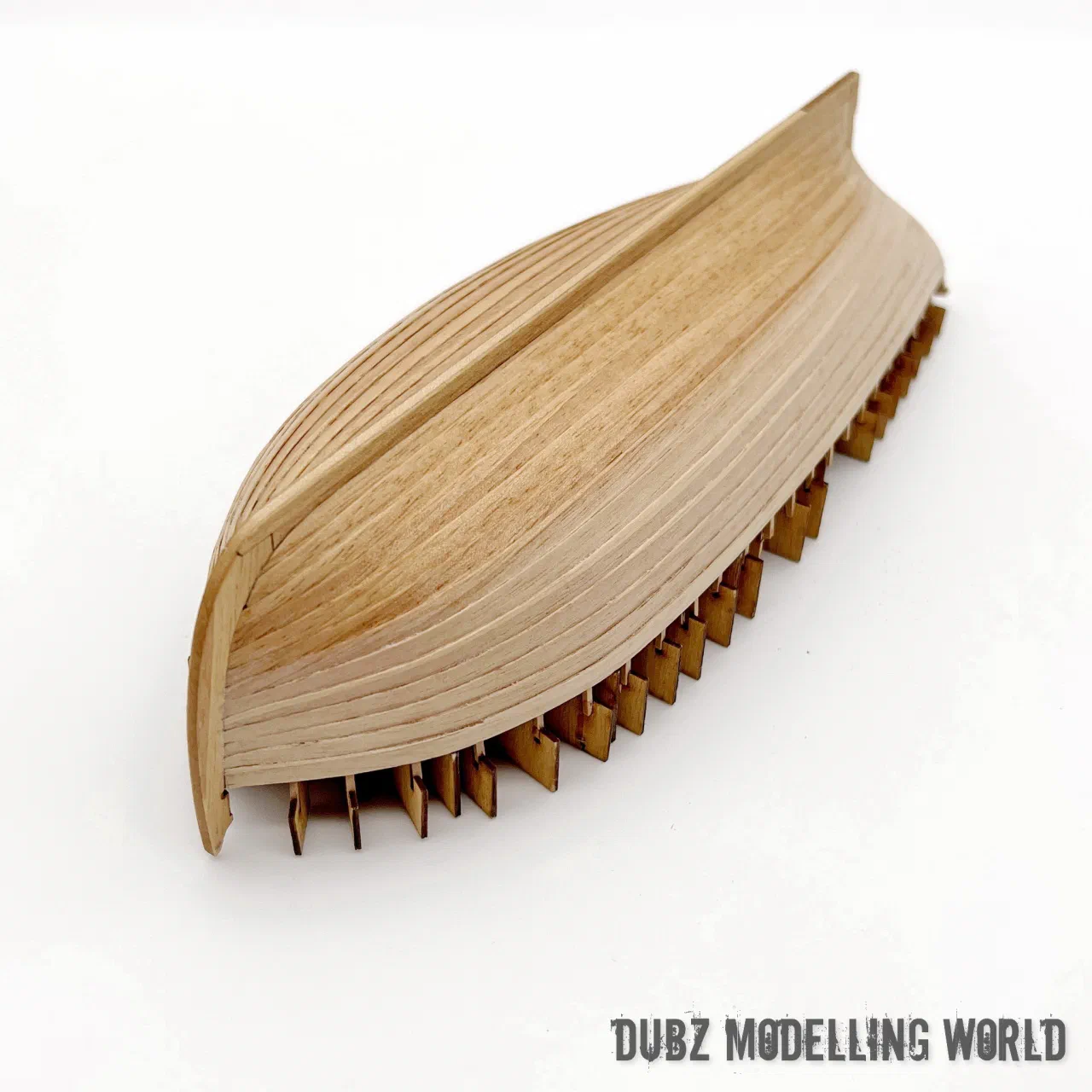
Bolts, oil and a little shine
The first thing I changed: all the laser-etched “nails” were replaced with blackened brass rods. At 1:24 an etched dot is just a dot, a real metal pin is a fastening.
The wood was oiled and then treated with Ballenmattierung to give it a little shine. With this treatment I really like the colour of the kit wood.
The case
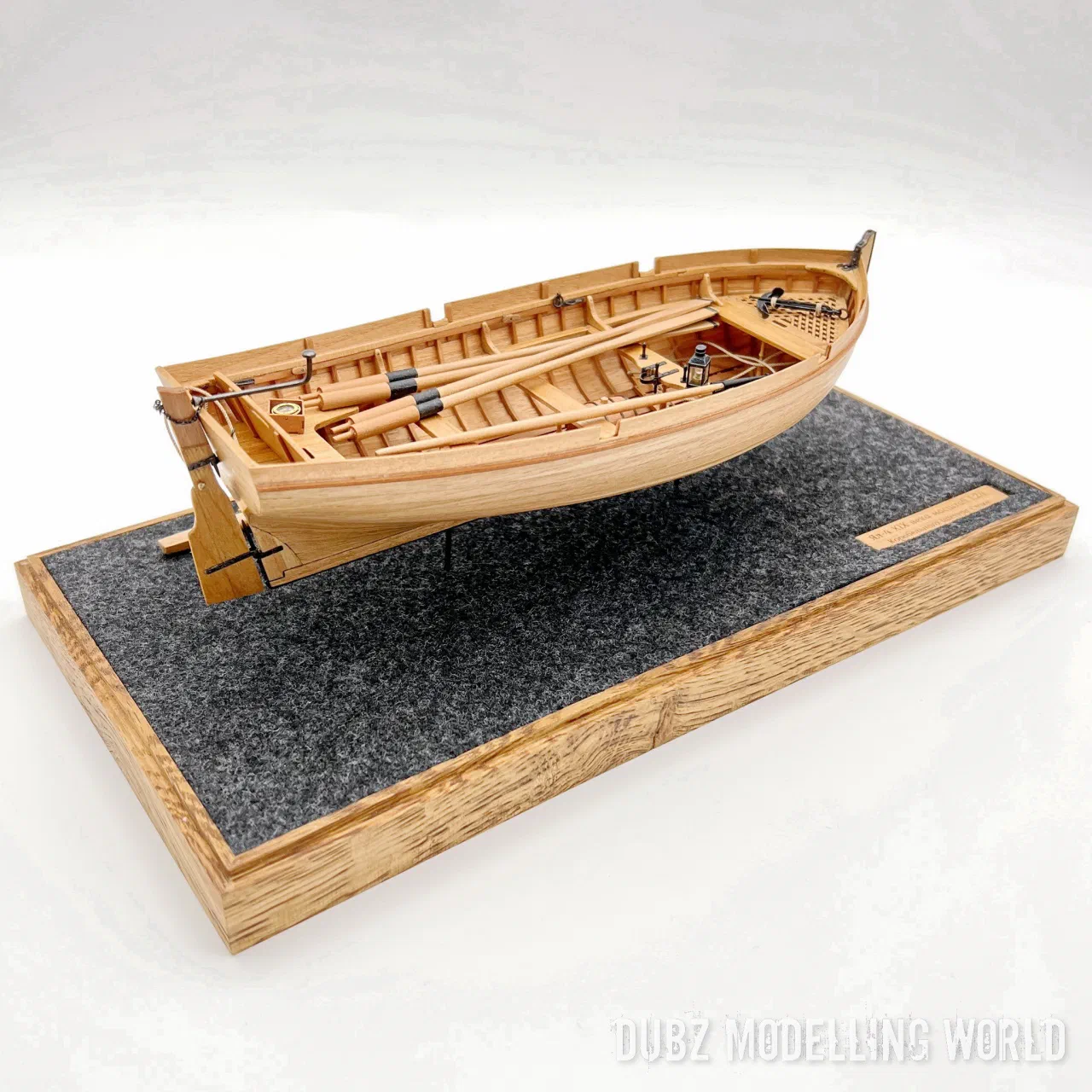
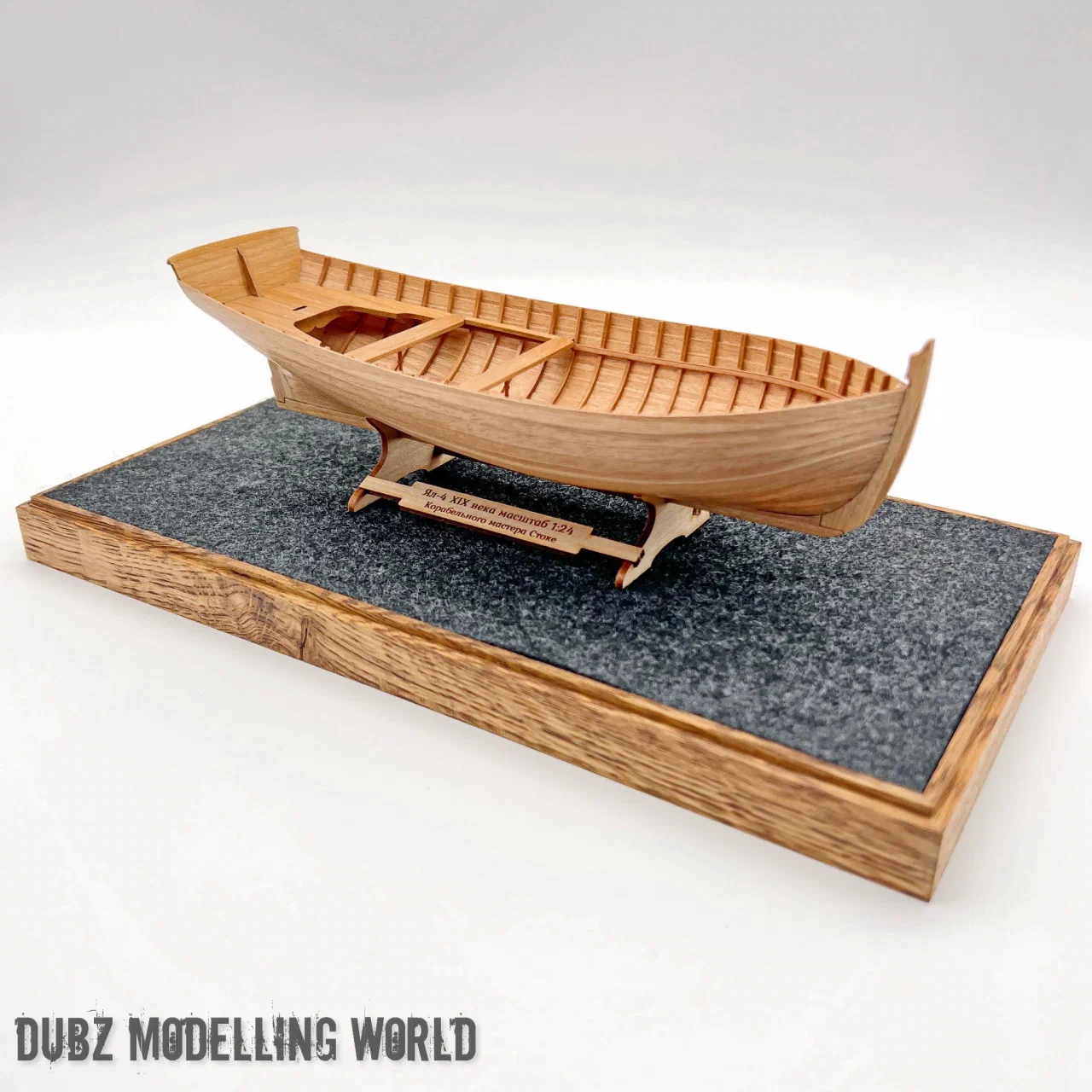
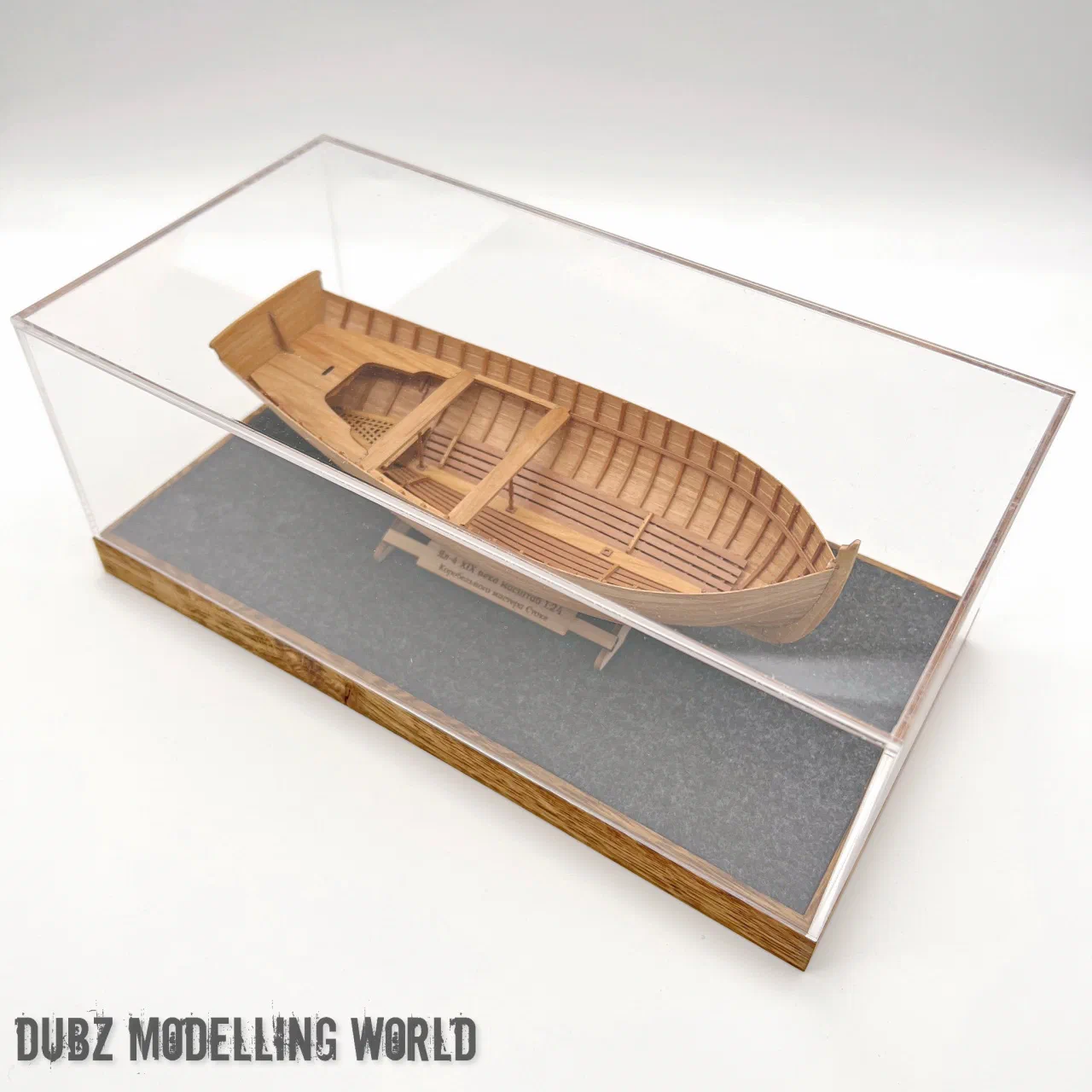
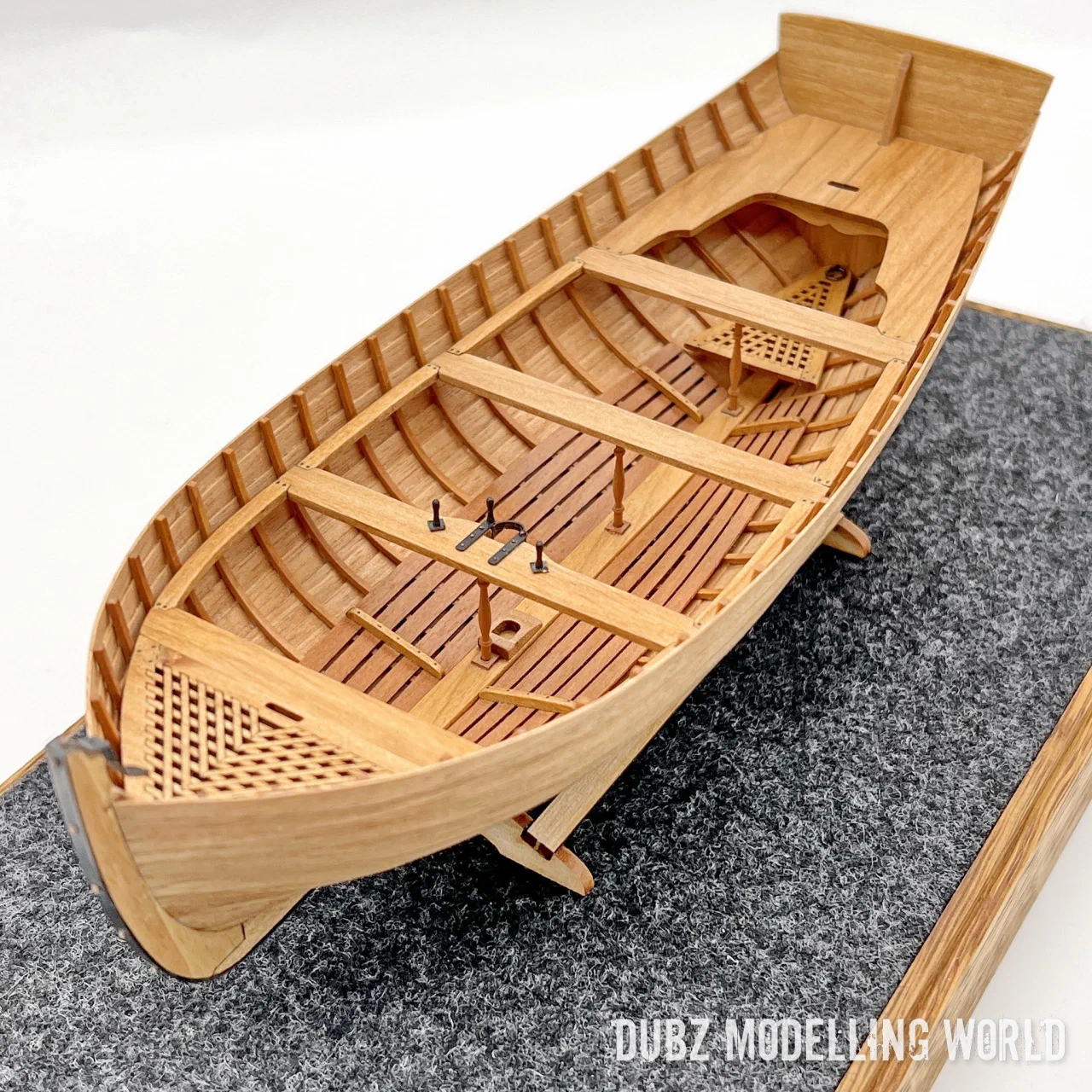
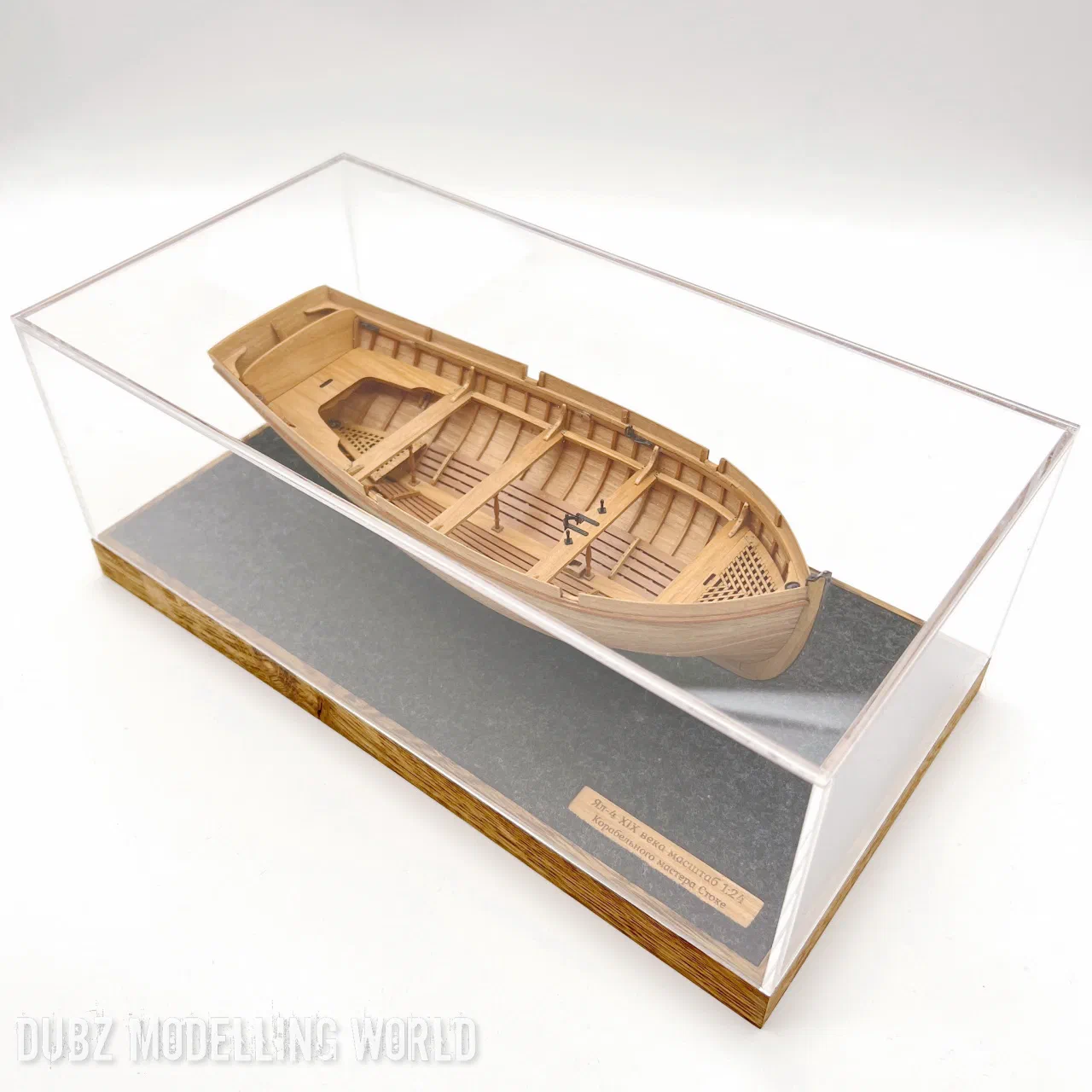
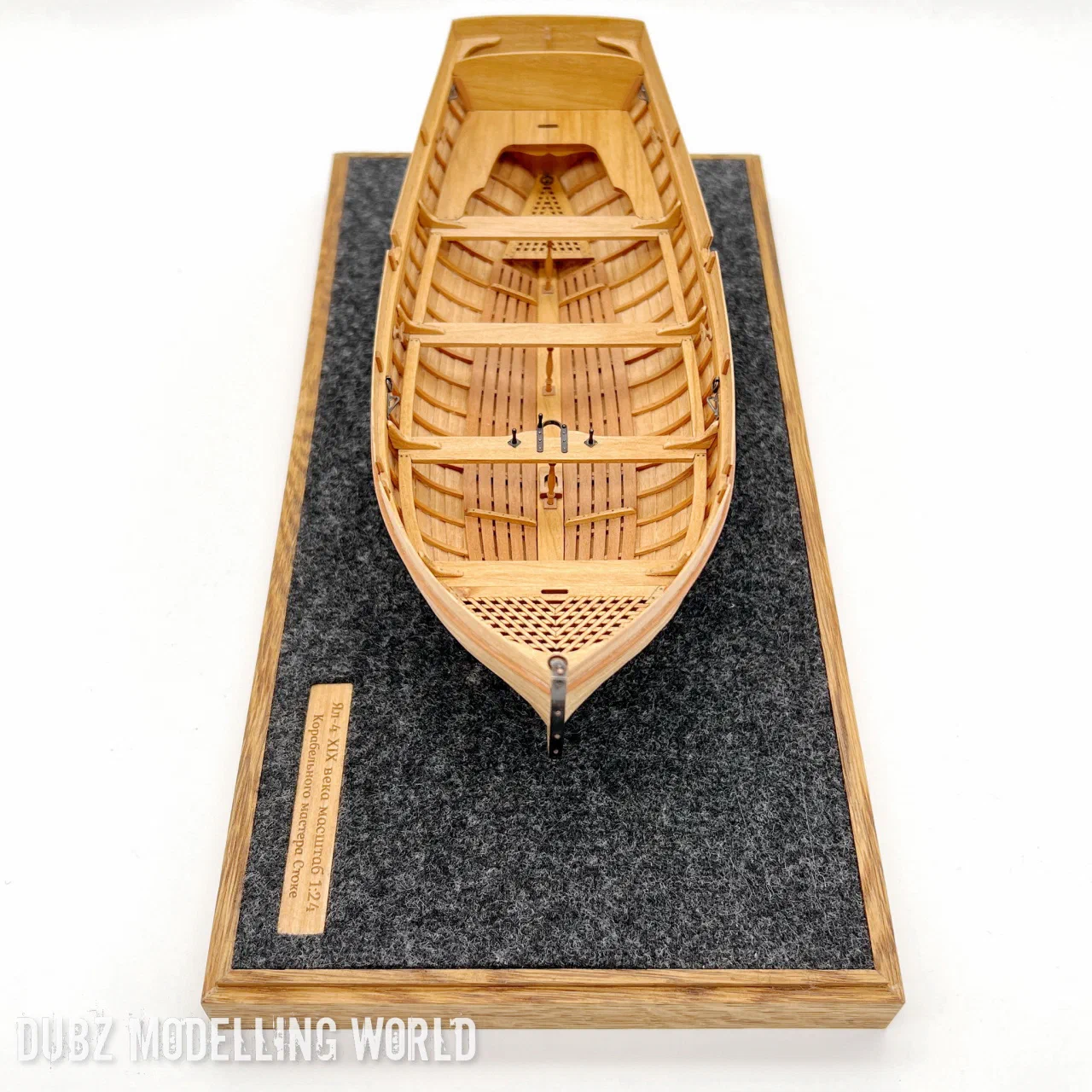
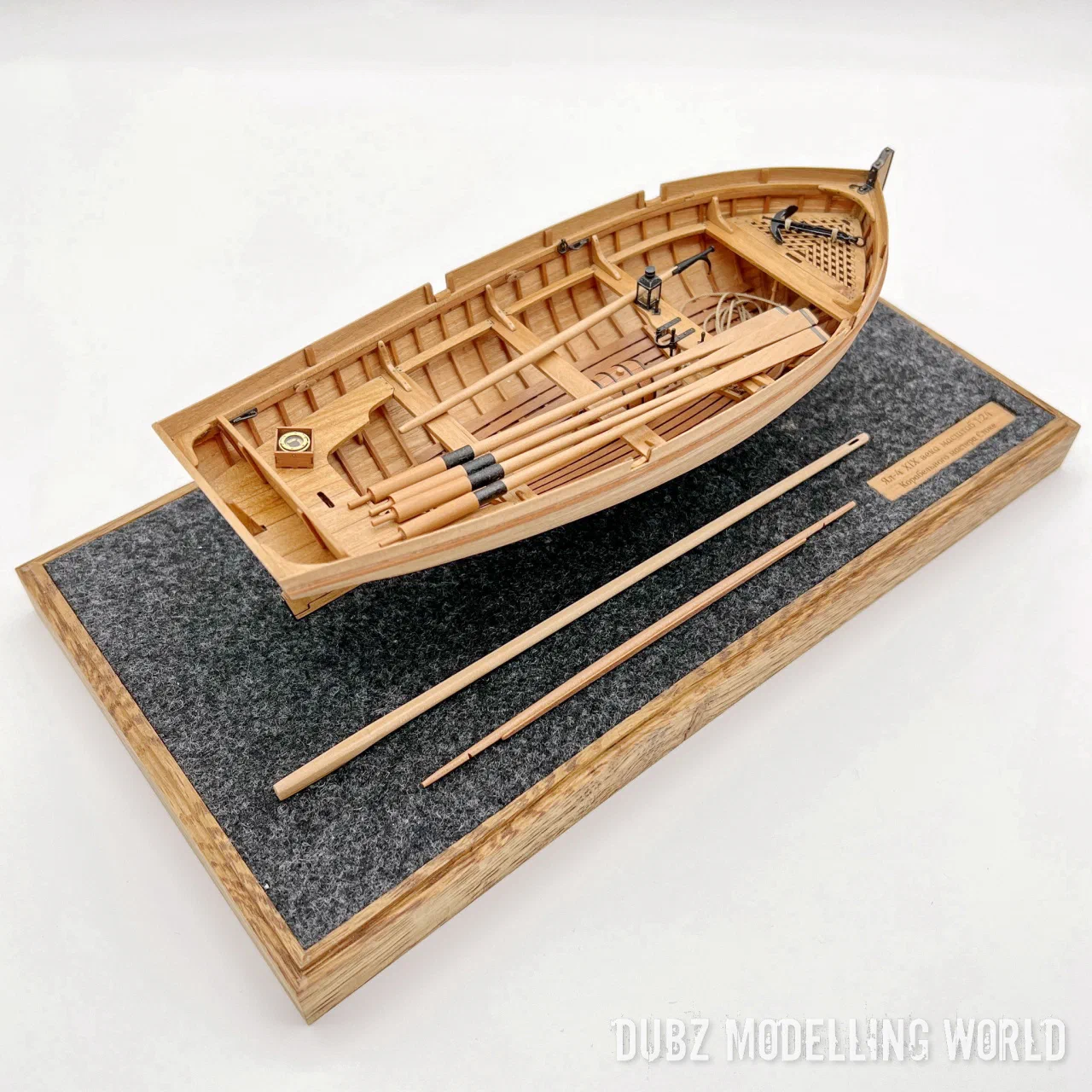
Early on I built the case. The base is wild oak, oiled, with a dark fabric cover, and the yawl will stand on two brass rods above it. Putting effort into the presentation is always worth it – a good base makes a small model look finished.
Interior
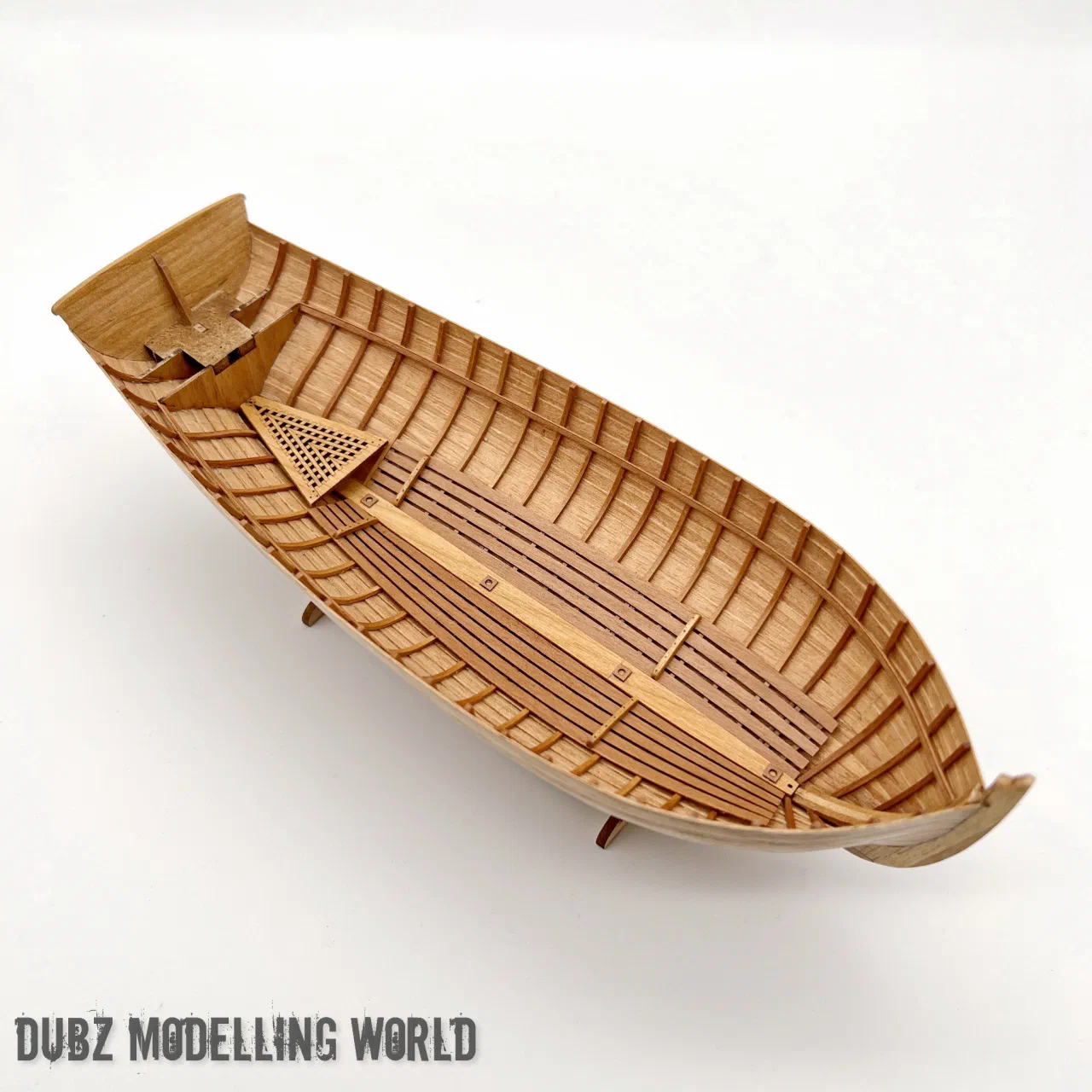
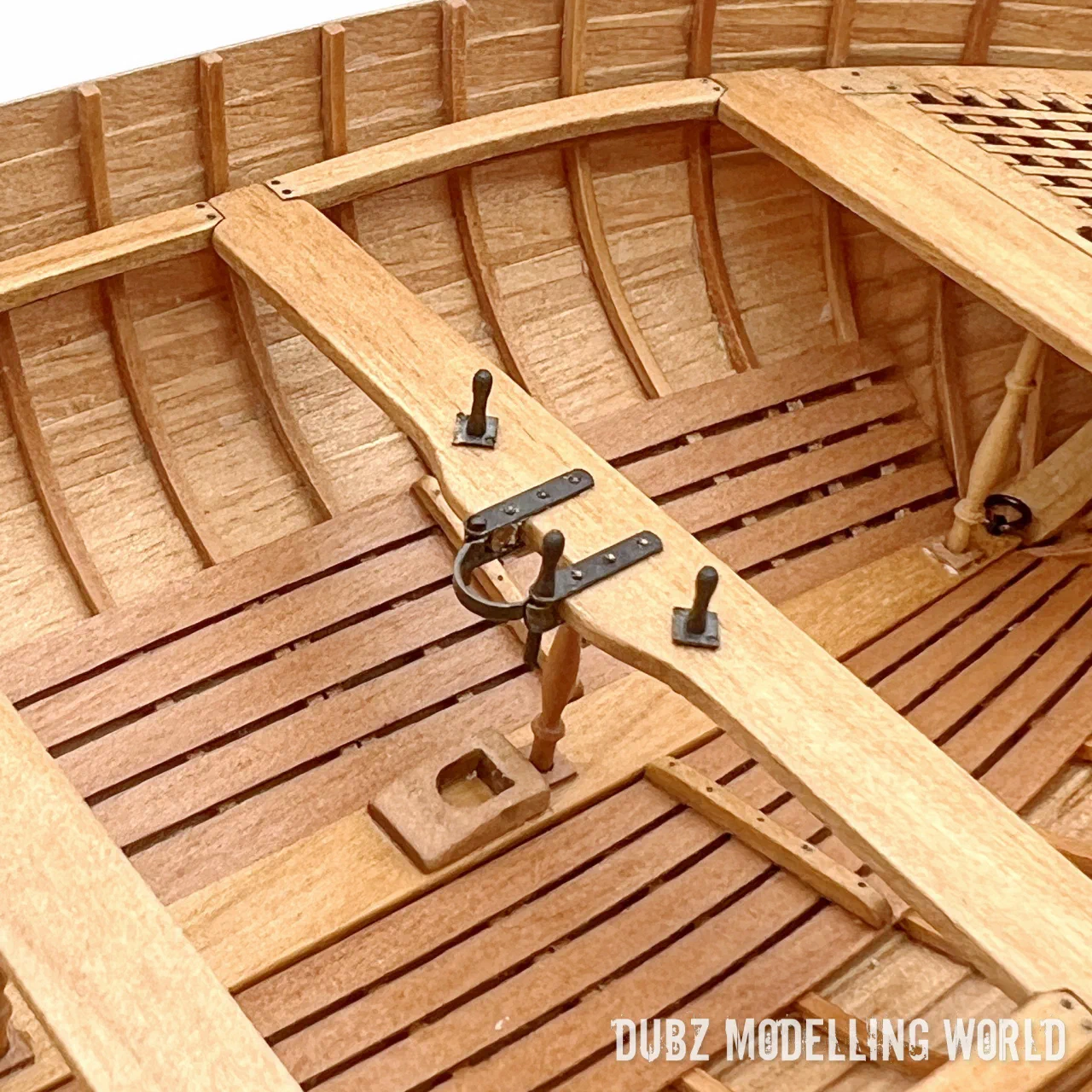
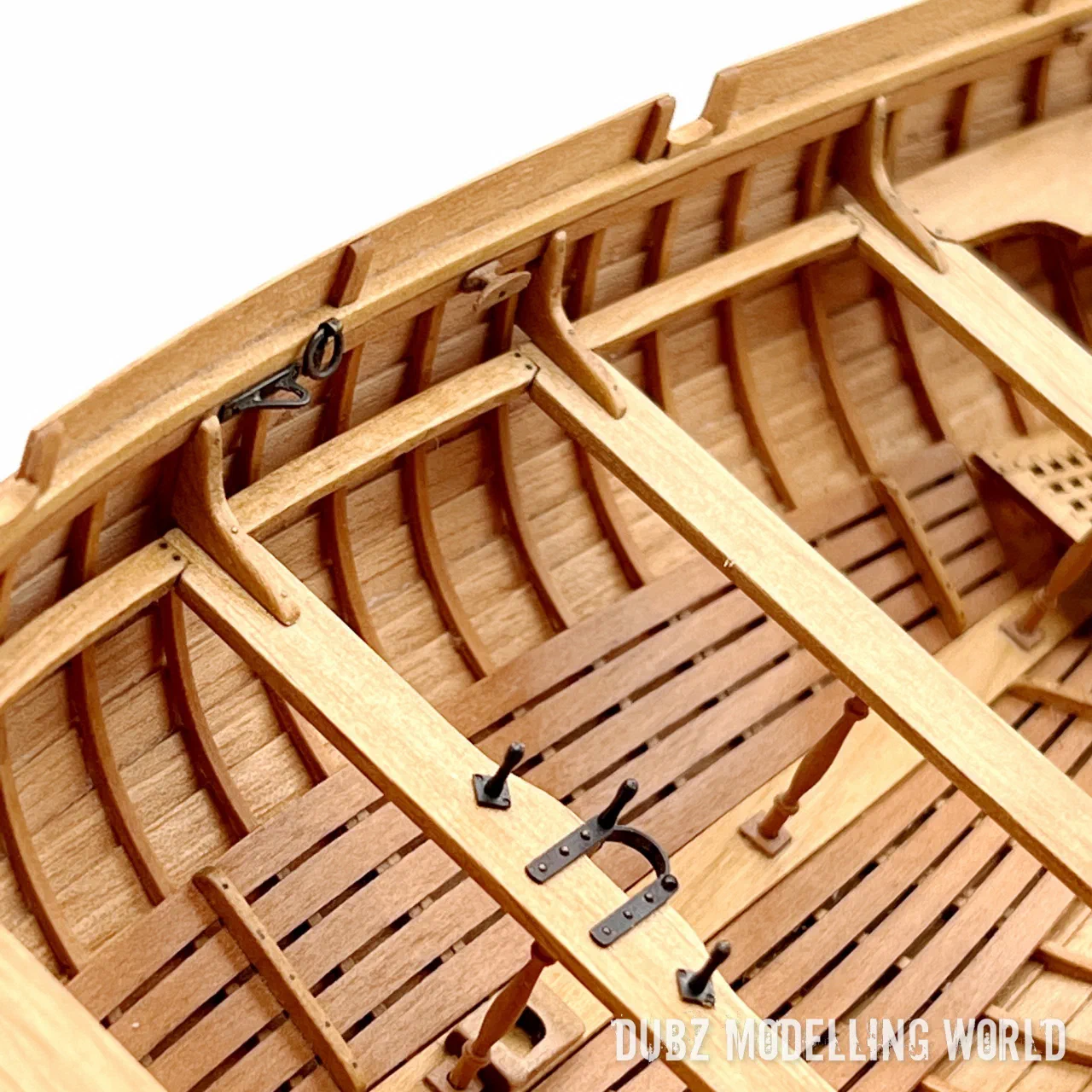
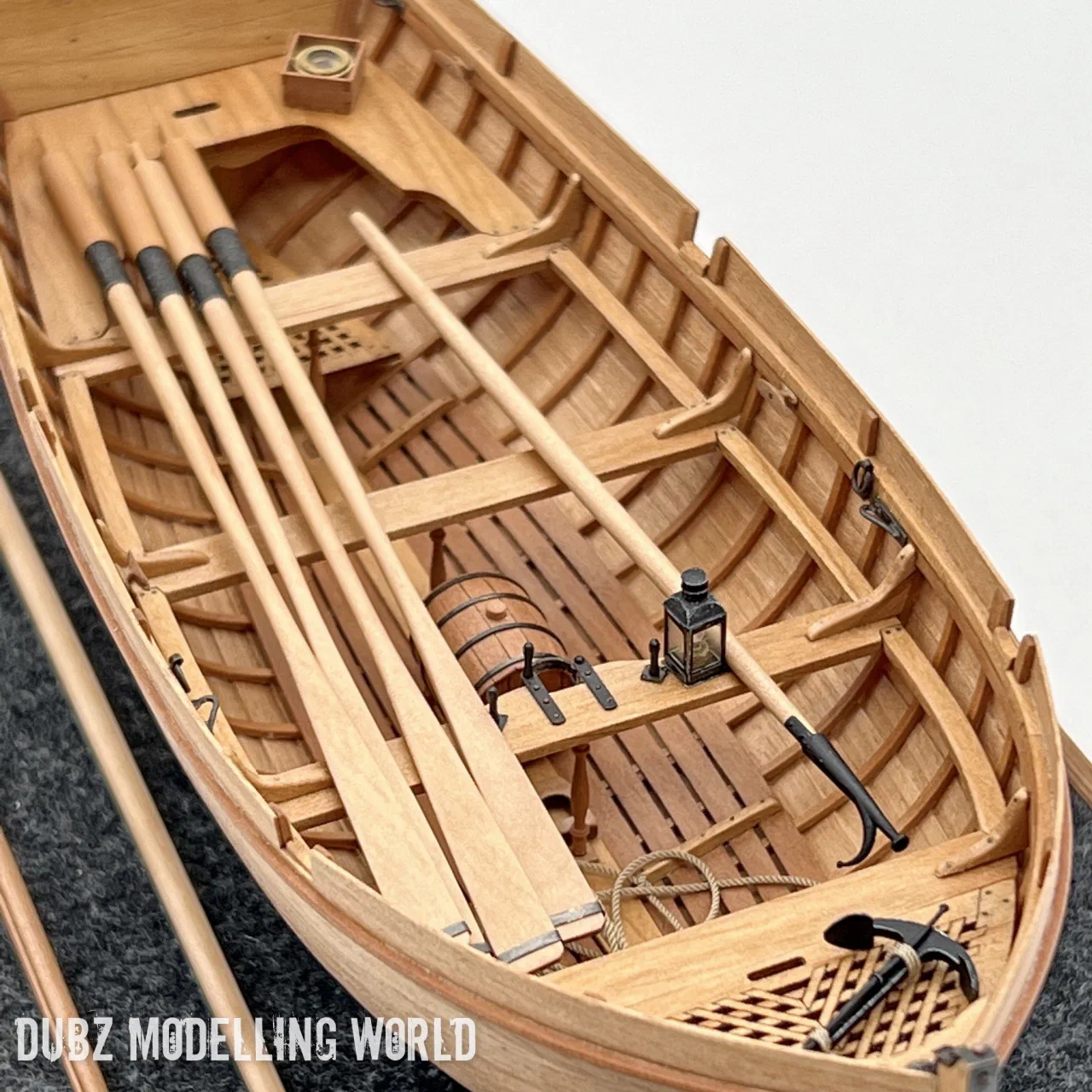
The interior followed. The very nice supports turned from pear are part of the kit. The brass parts were blackened with brass stain from Dräger: a sanding pad to make the brass bright, ten seconds in the stain, done.
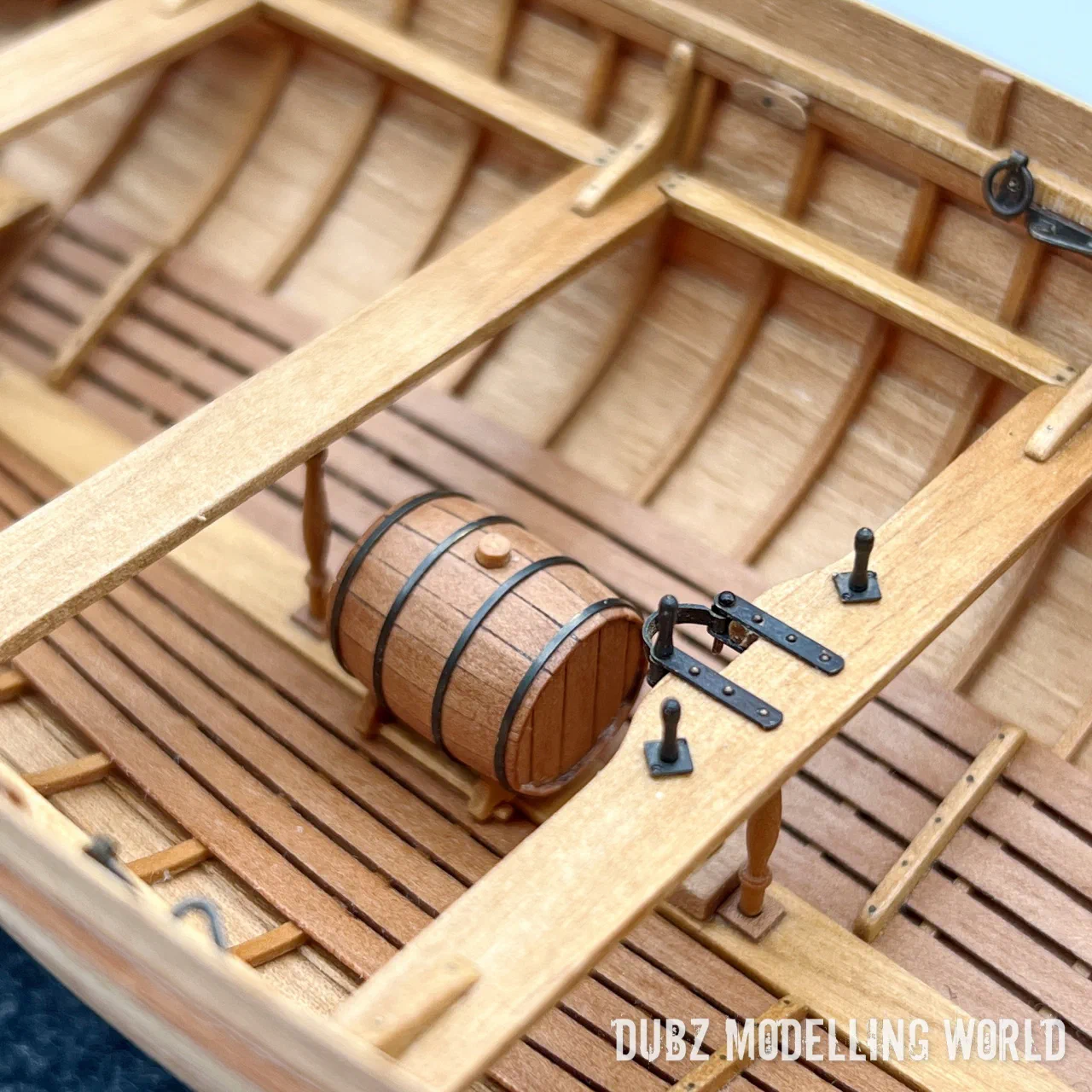
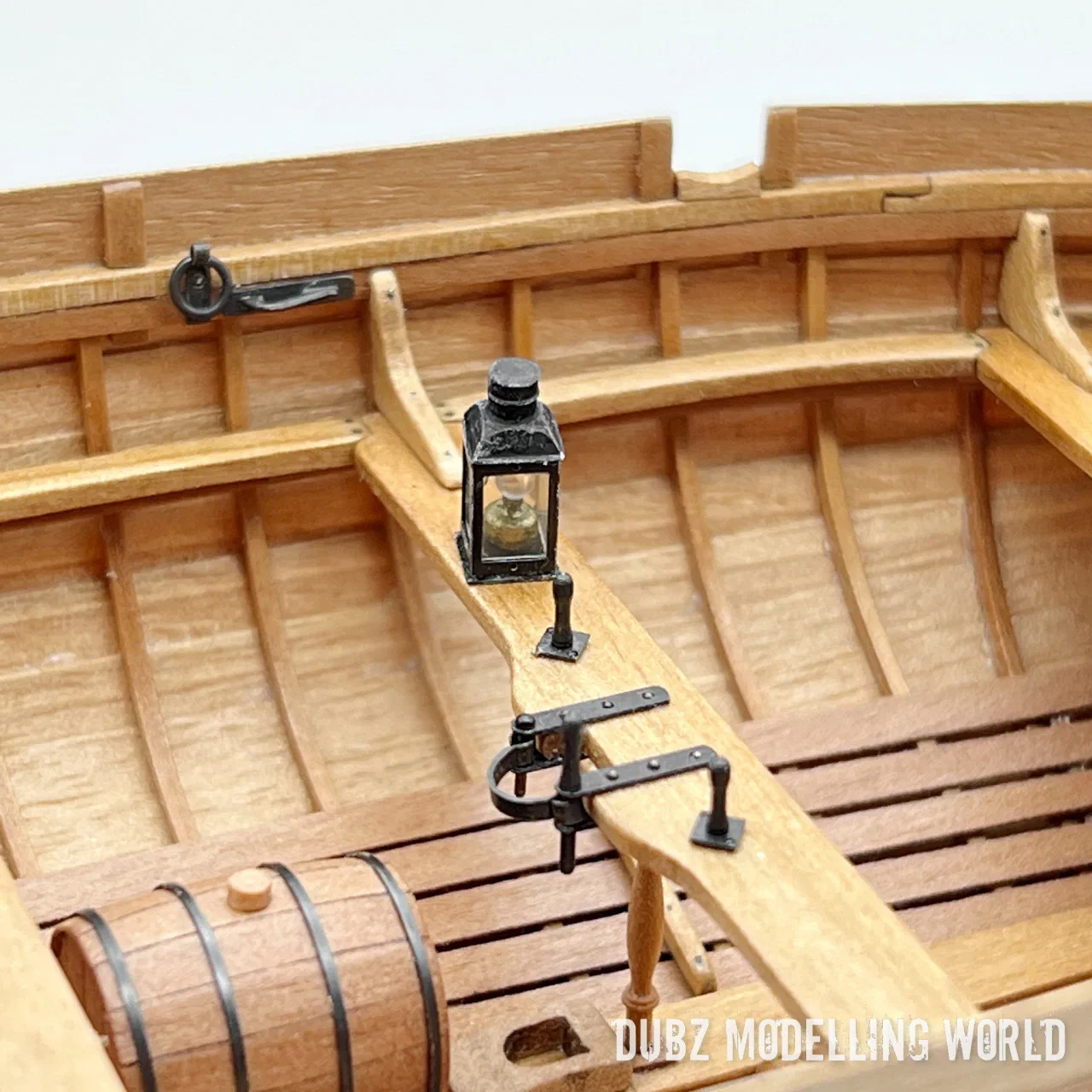
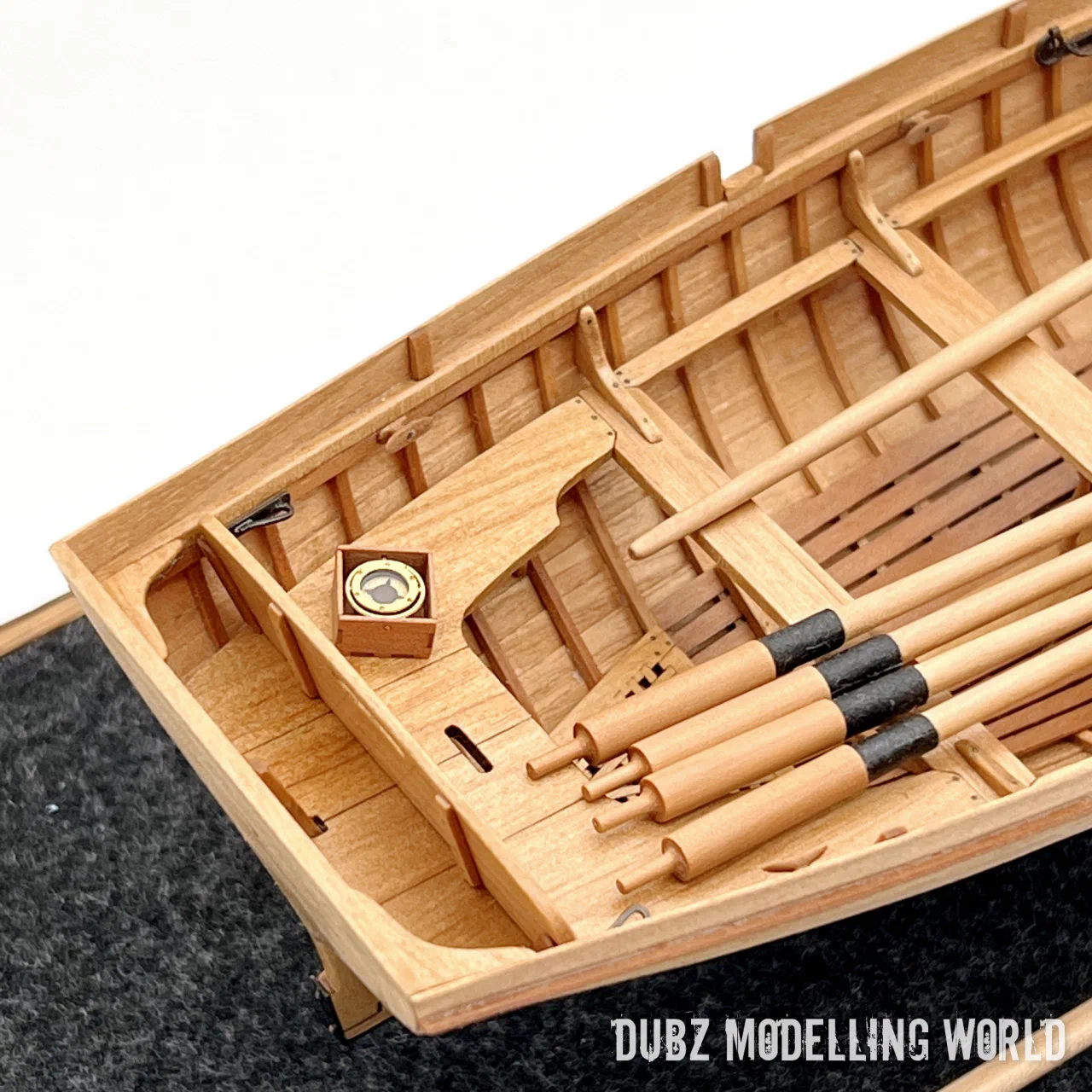
Again a little improvisation was necessary, because laser work is precise on the drawing and not always in reality – the thwarts could have been two millimetres wider. The mast securing looks good and works, even though I think the belaying pins could have been a bit bigger. All the etched nail holes were drilled out and replaced with miniature rivets. I like this impression, even if it is slightly exaggerated.
Gunwale and waterboard
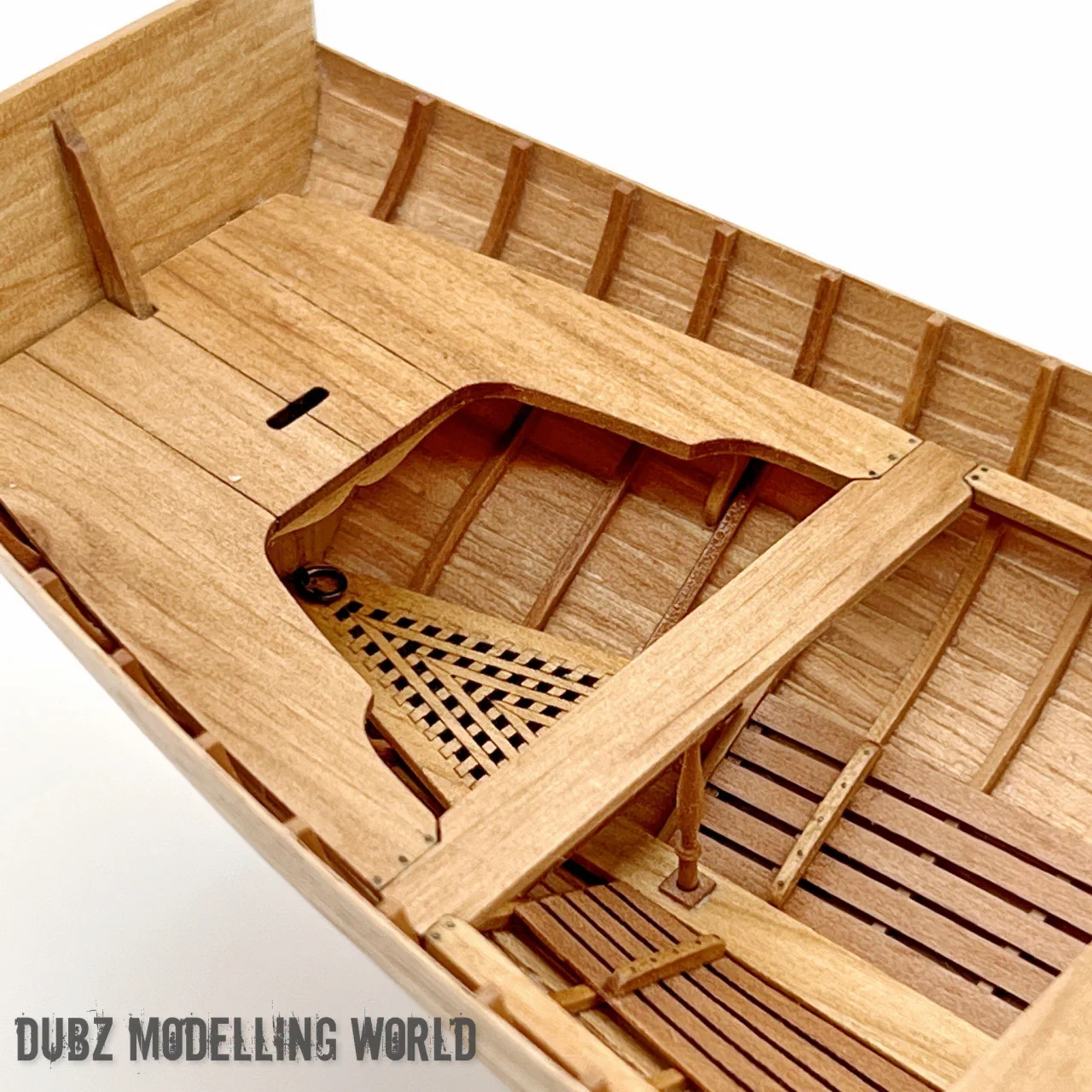
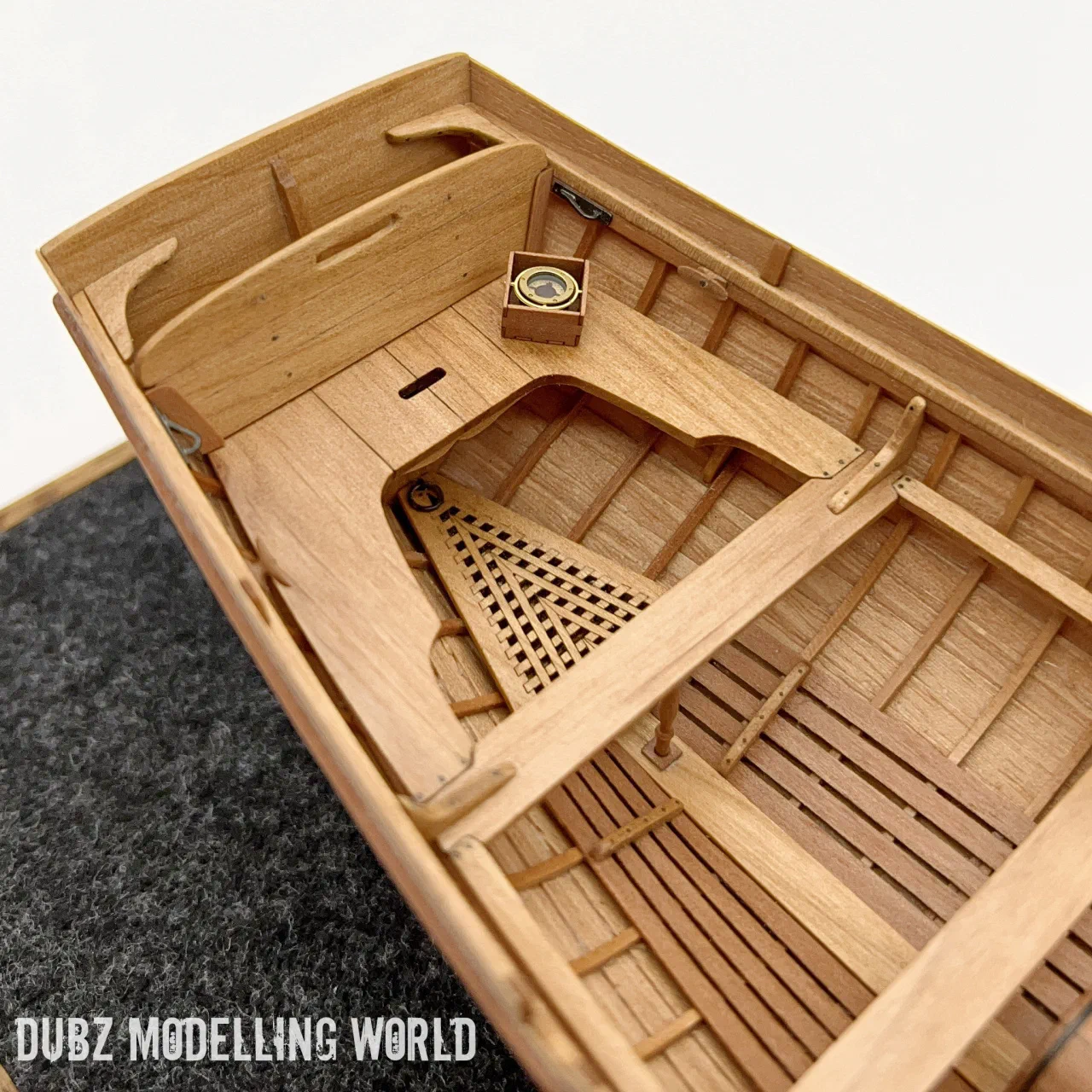
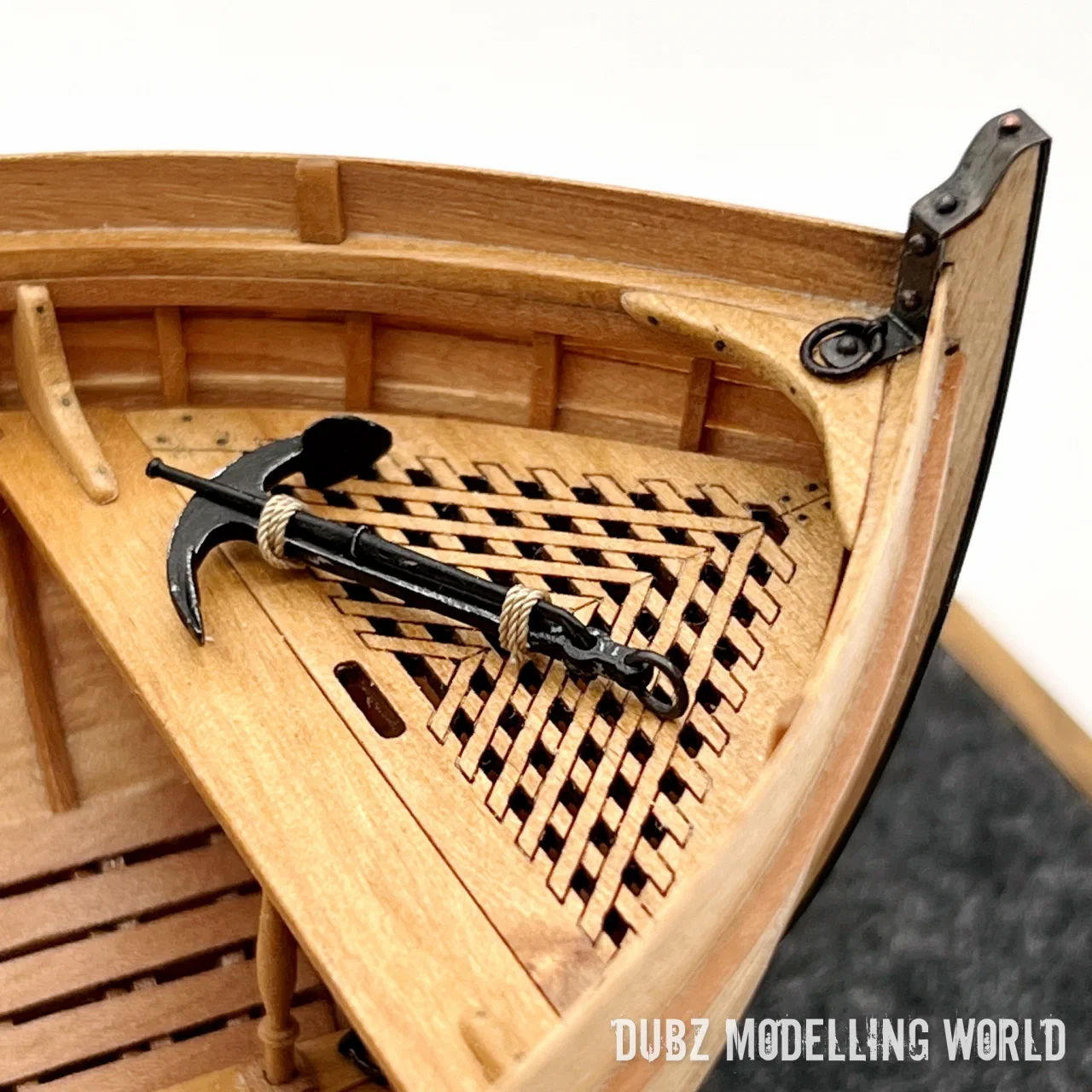
Next came the gunwale (Dollbord in German) and the knee at the bow, followed by the grating platform in the bow – one of the nicest details of the kit.
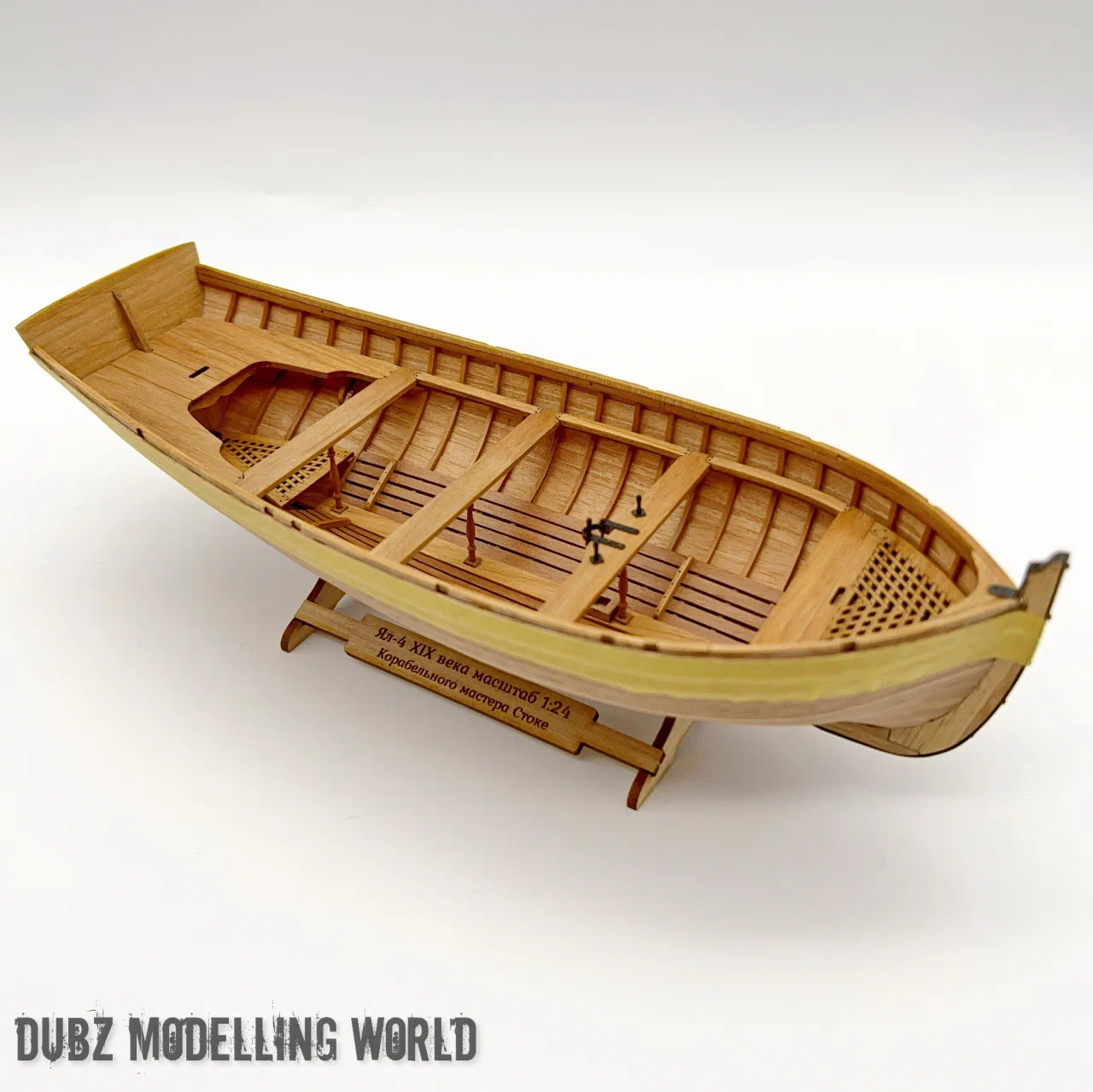
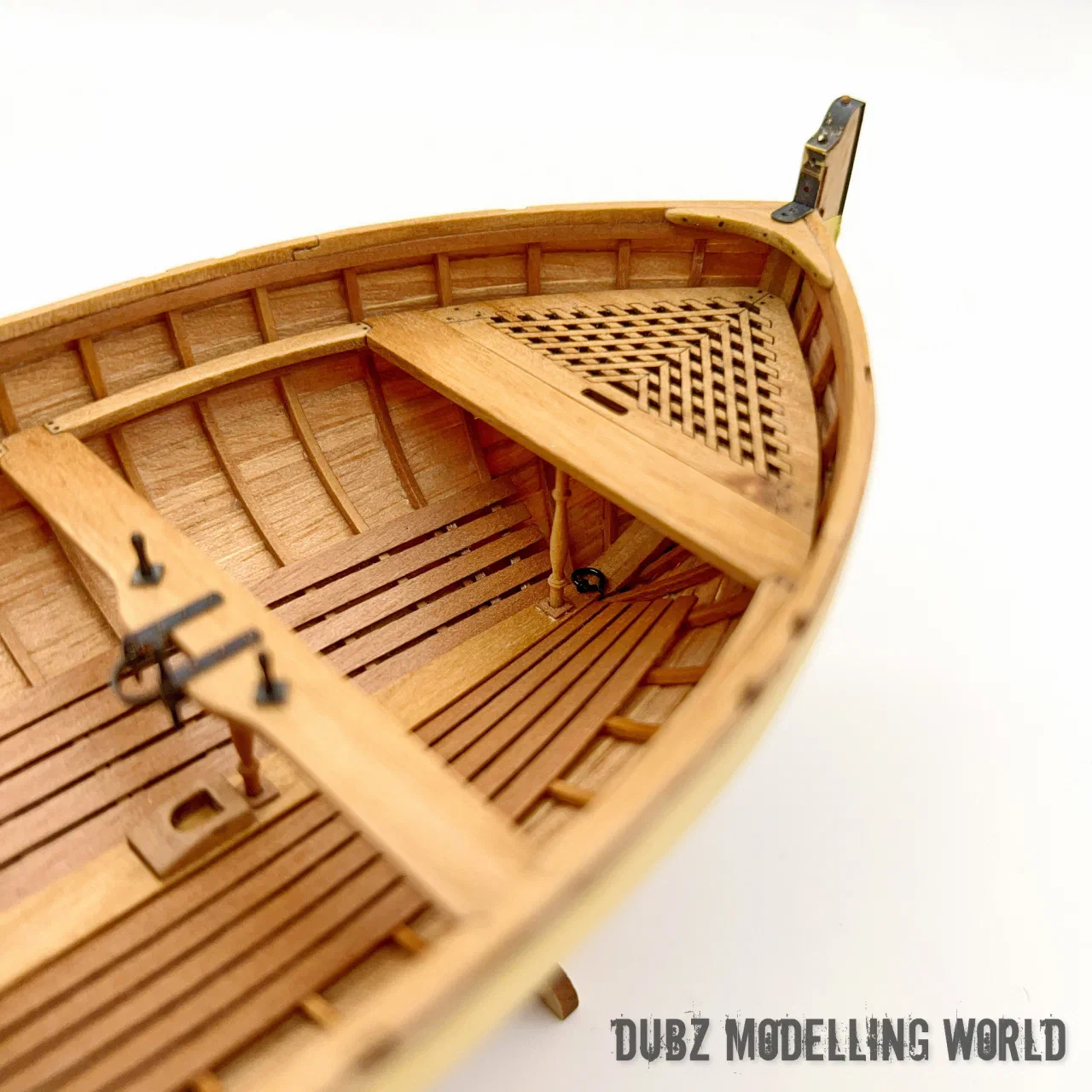
Then the waterboard could be attached, and the rubbing strake found its place. I made it from 1 × 1 mm pear and did not use the kit part. The waterboard got its reinforcements, and at the bow the missing rivets and a ring were set.
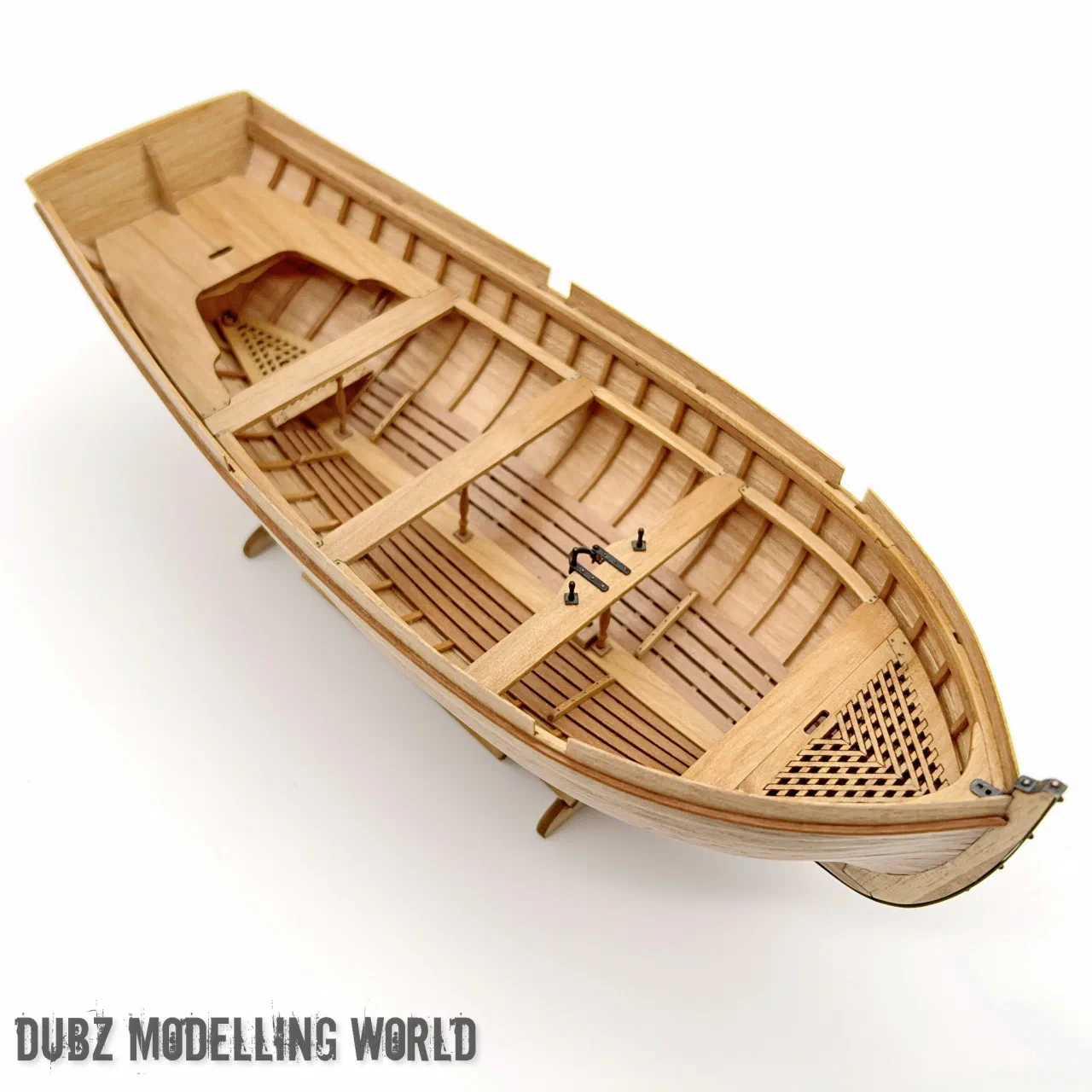
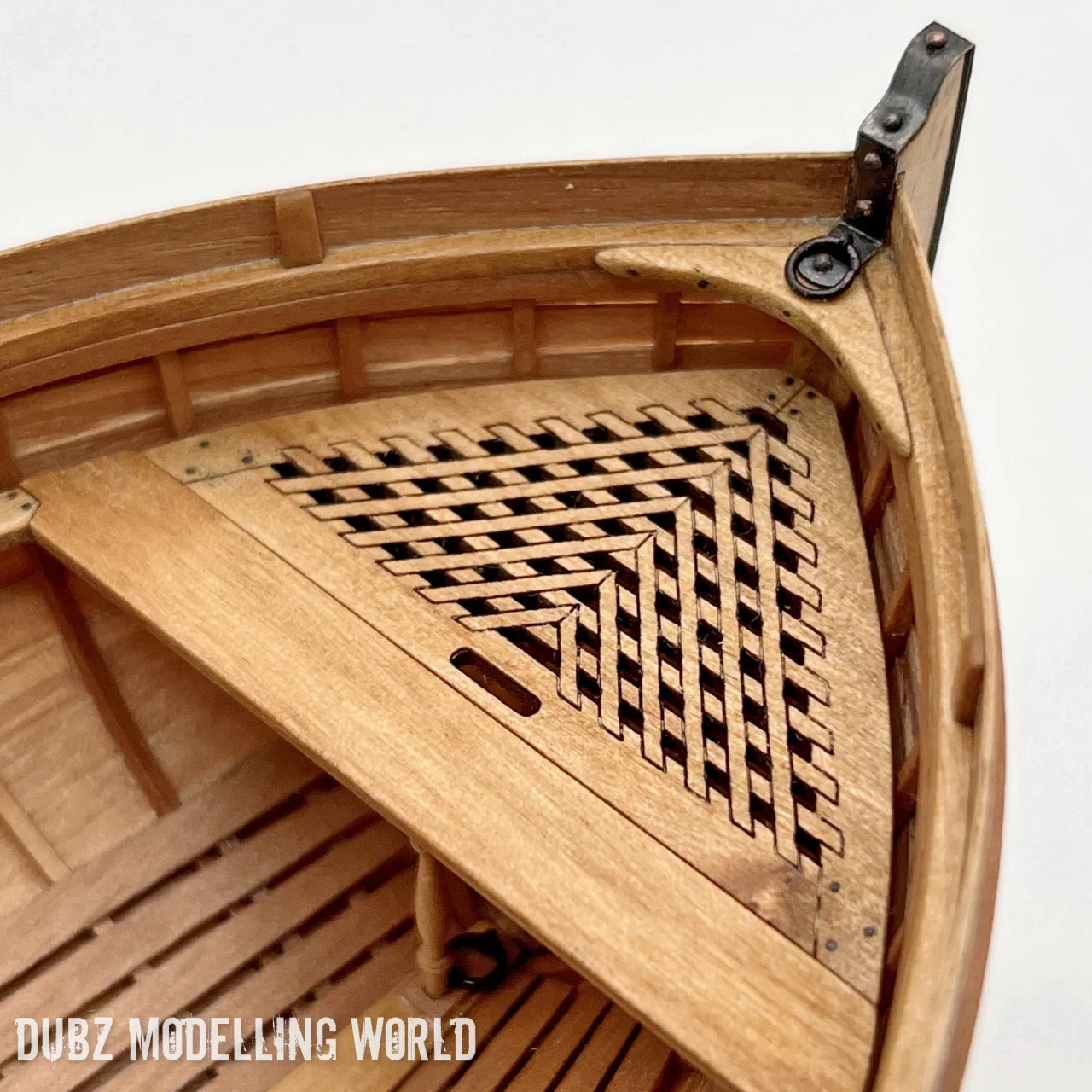
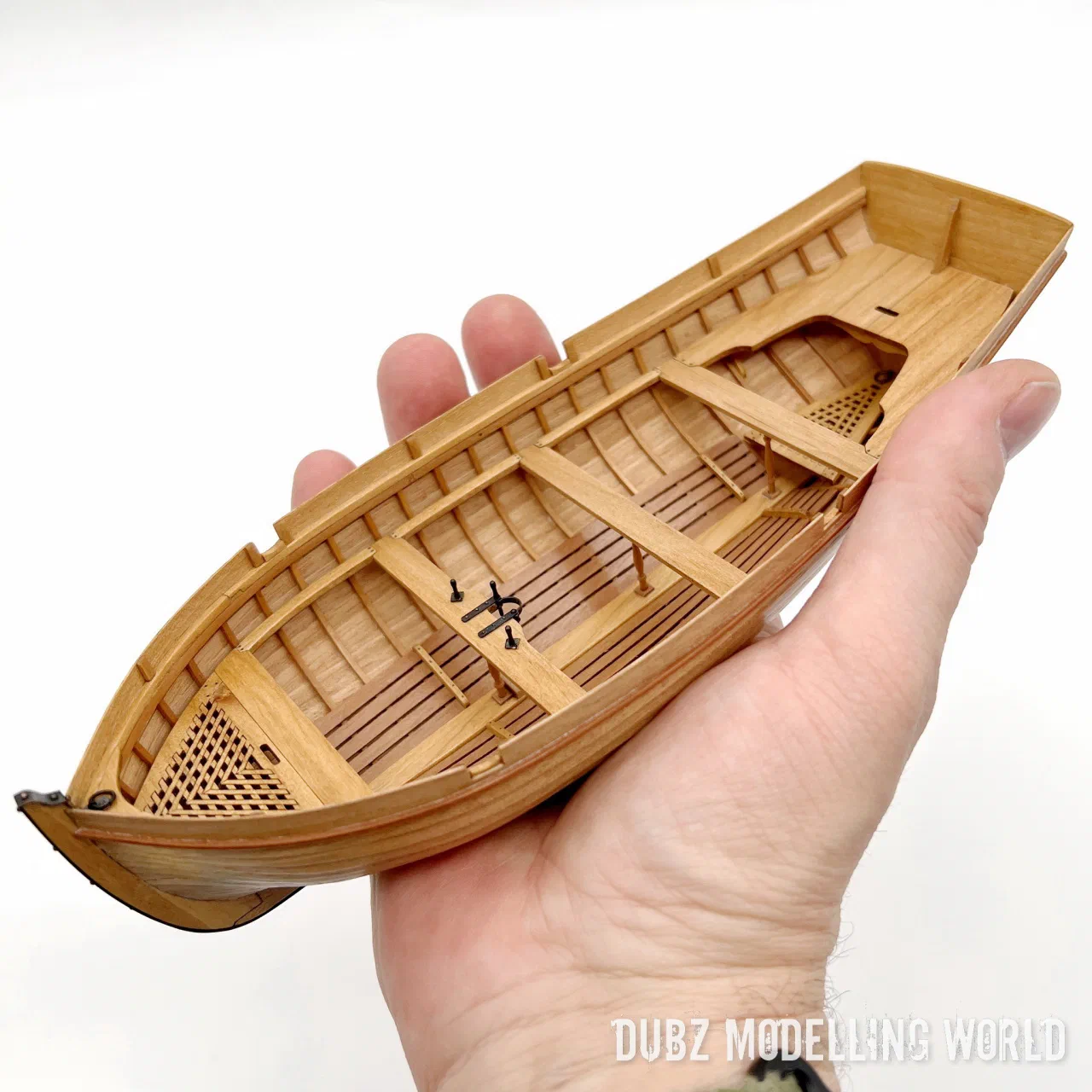
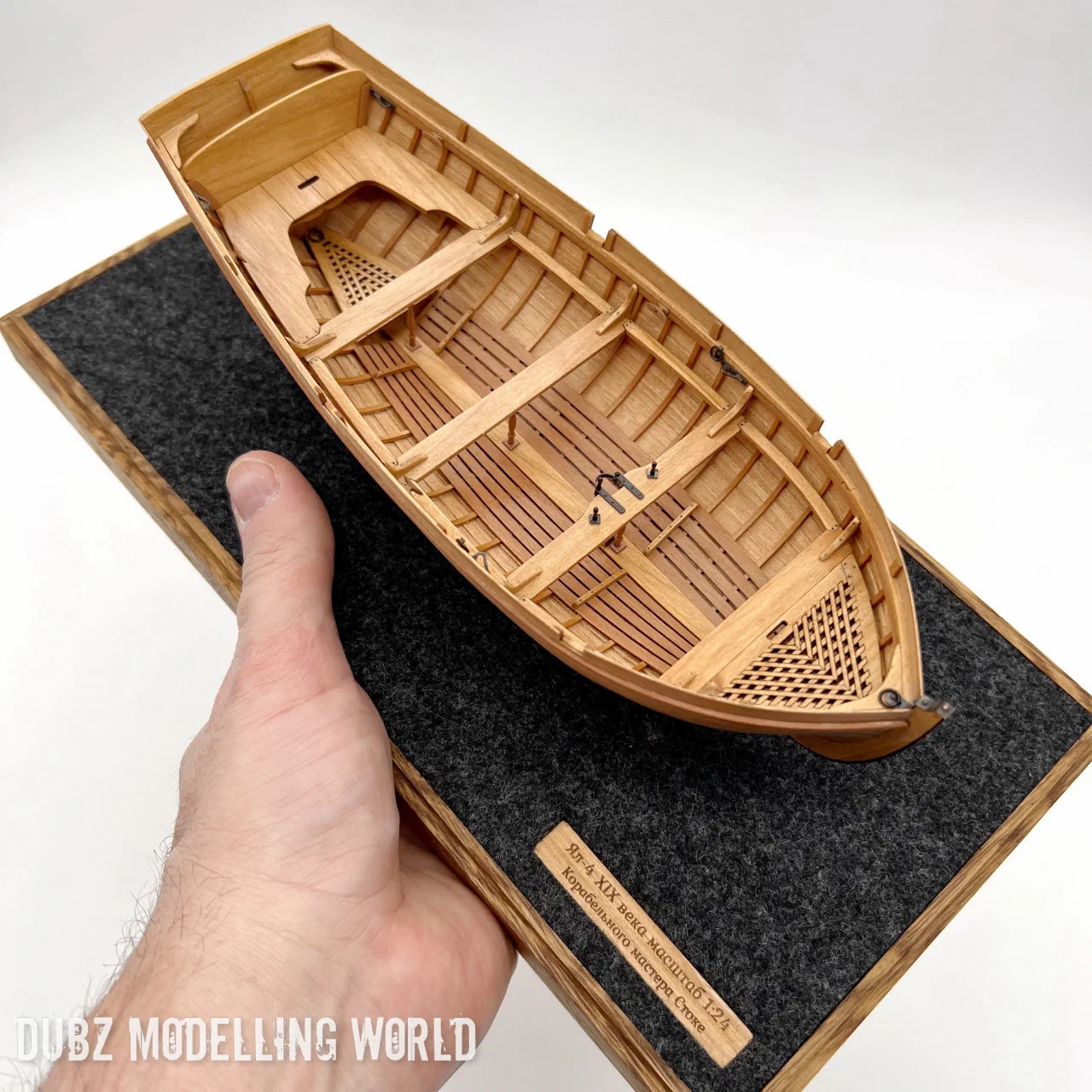
At 1:24 the yawl is no longer a miniature. She sits comfortably in the hand.
Knees and photo-etch
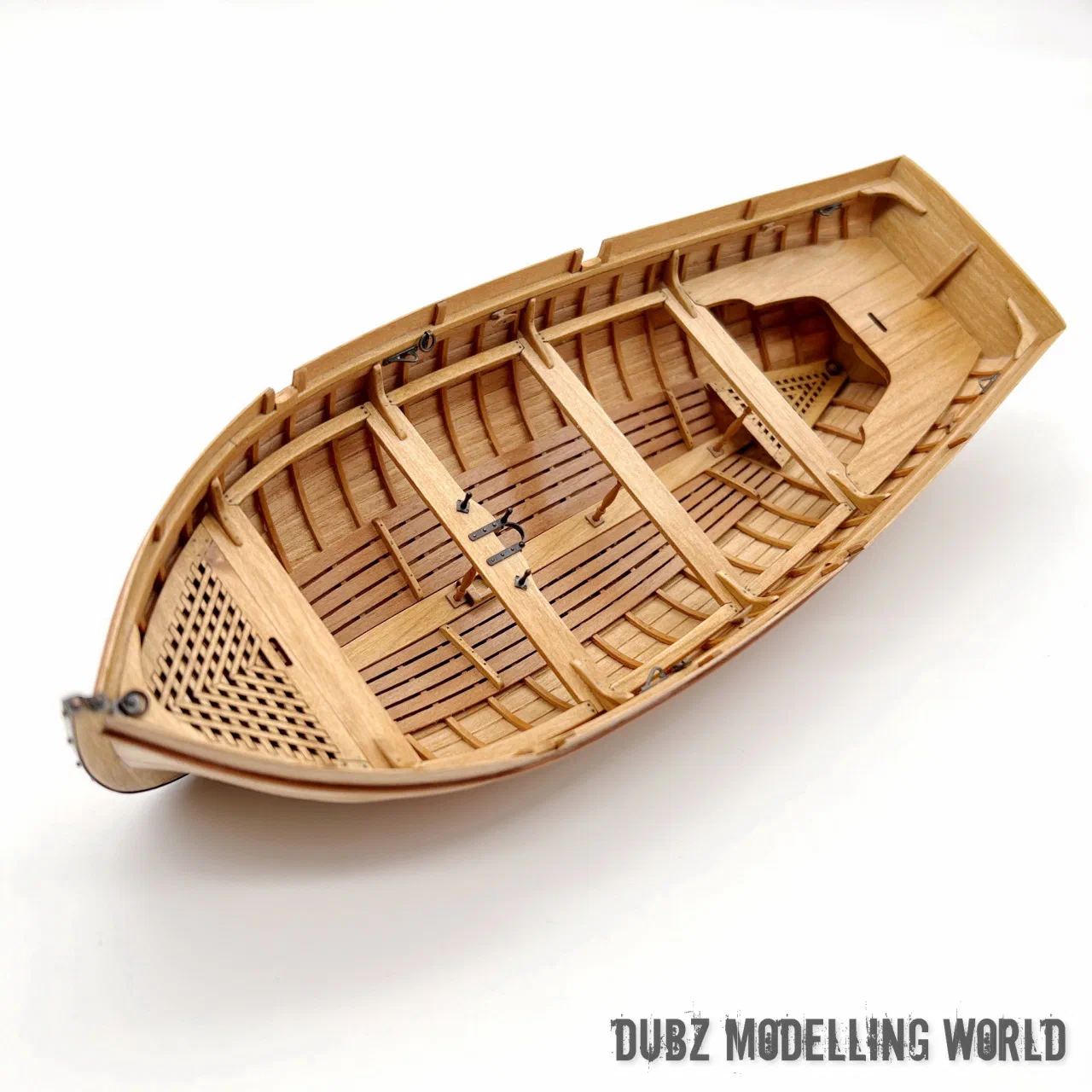
In the meantime all the knees and the other photo-etched parts were installed.
In the case
The work for the presentation in the case was completed, and the removable backrest for the rower found its place.
Compass, barrel, lamp and anchor
Then the details took over. I reworked the backrest: it is no longer a single board but made from several, and it got a handle so that it can be taken out easily. The water barrel and the compass came on board, followed by a lamp and an anchor.
Oars, mast and rudder
The last wooden parts followed: oars, mast and spar. I built the mast, but she will not be shown with it stepped – it lies in the boat with the oars. Only the fittings for the rudder, the mast and the spar were missing after that.
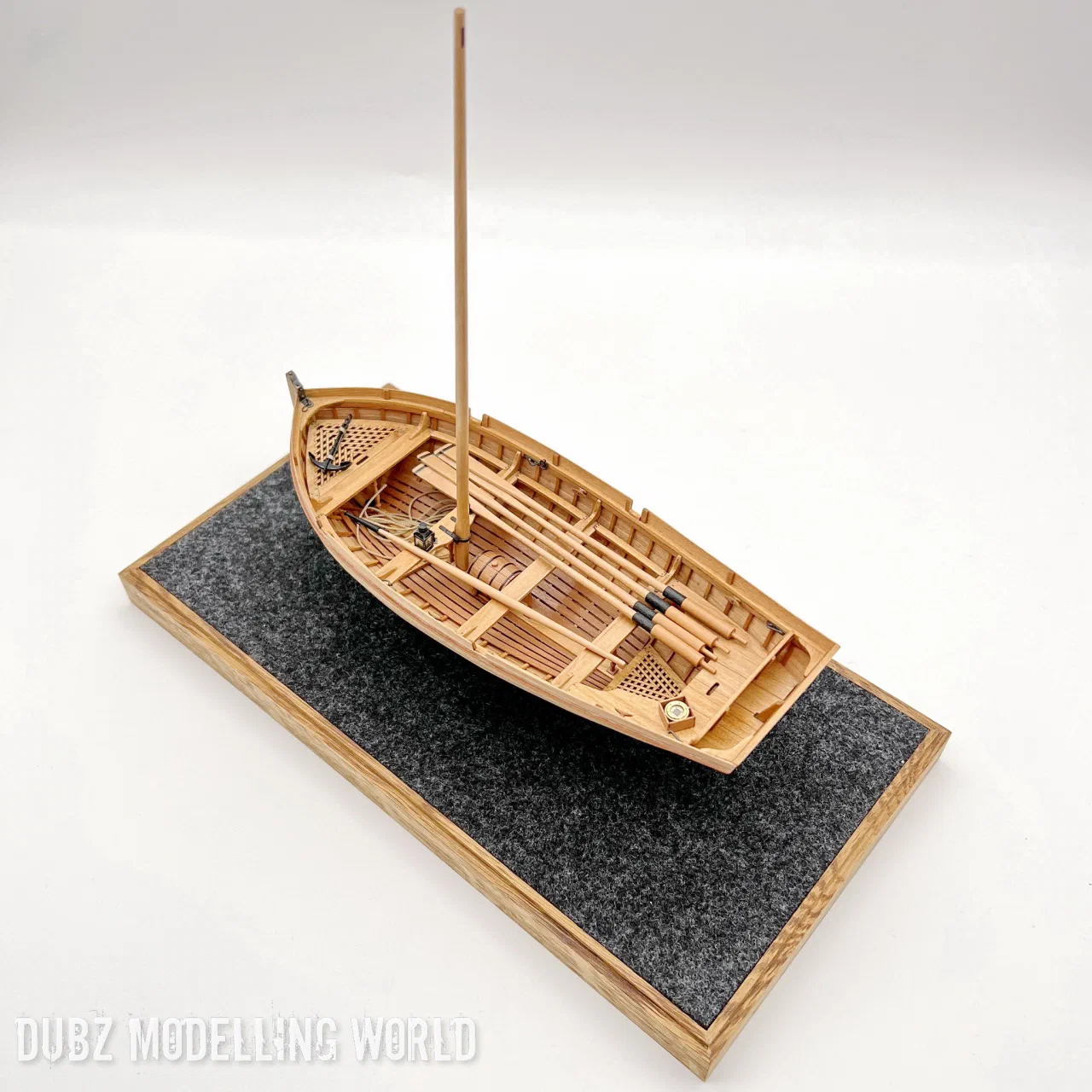
As one of the last parts, the rudder was finished and fitted with its tiller.
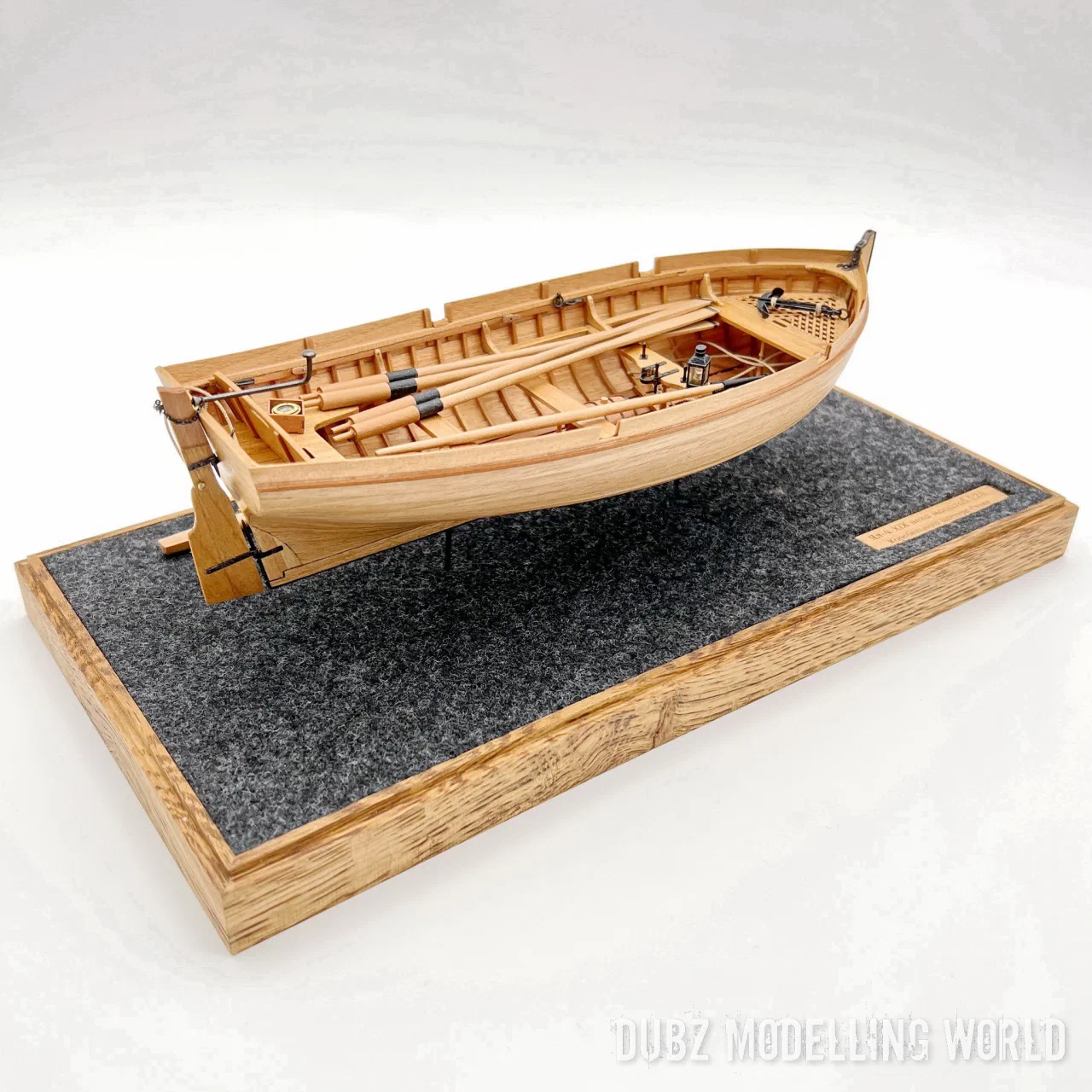
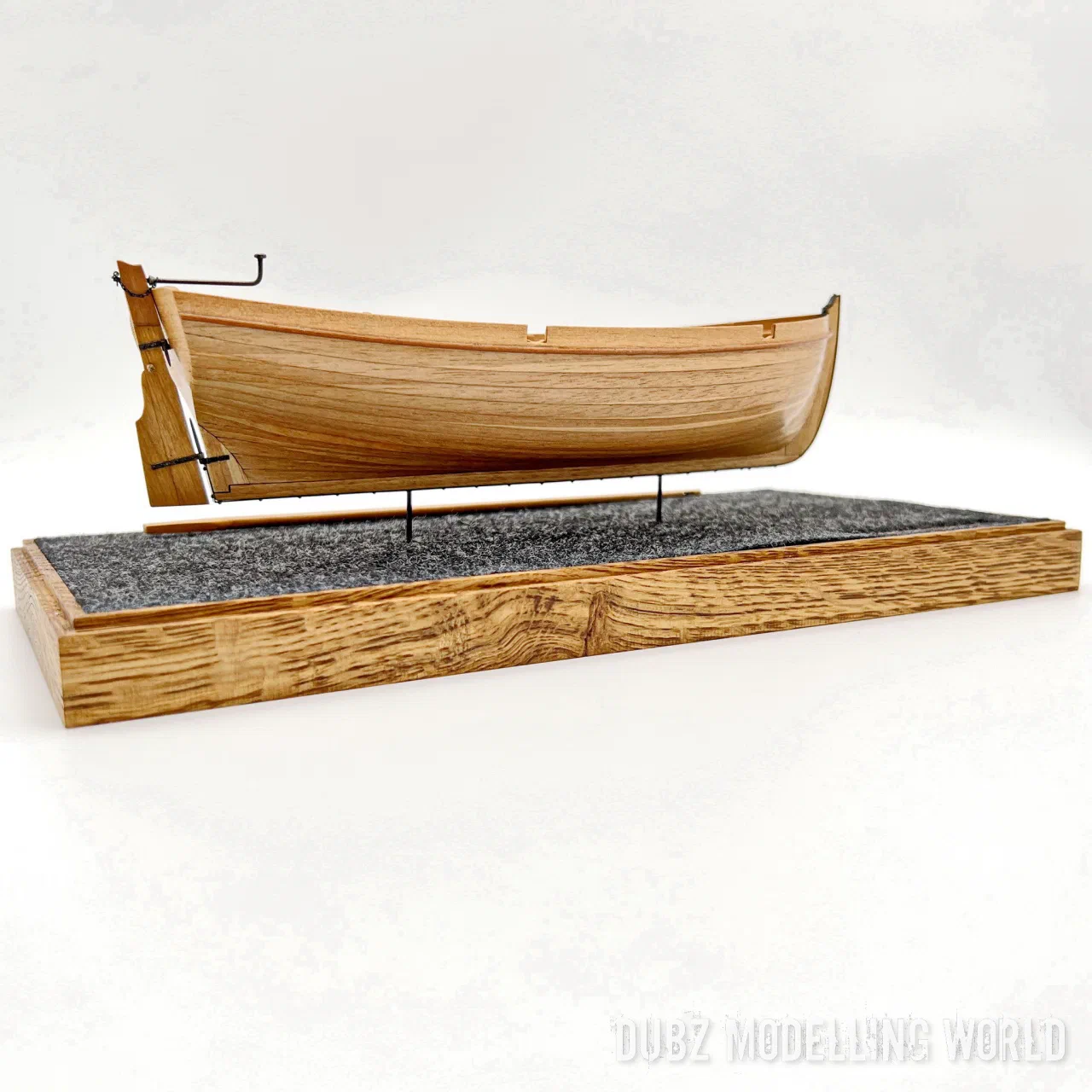
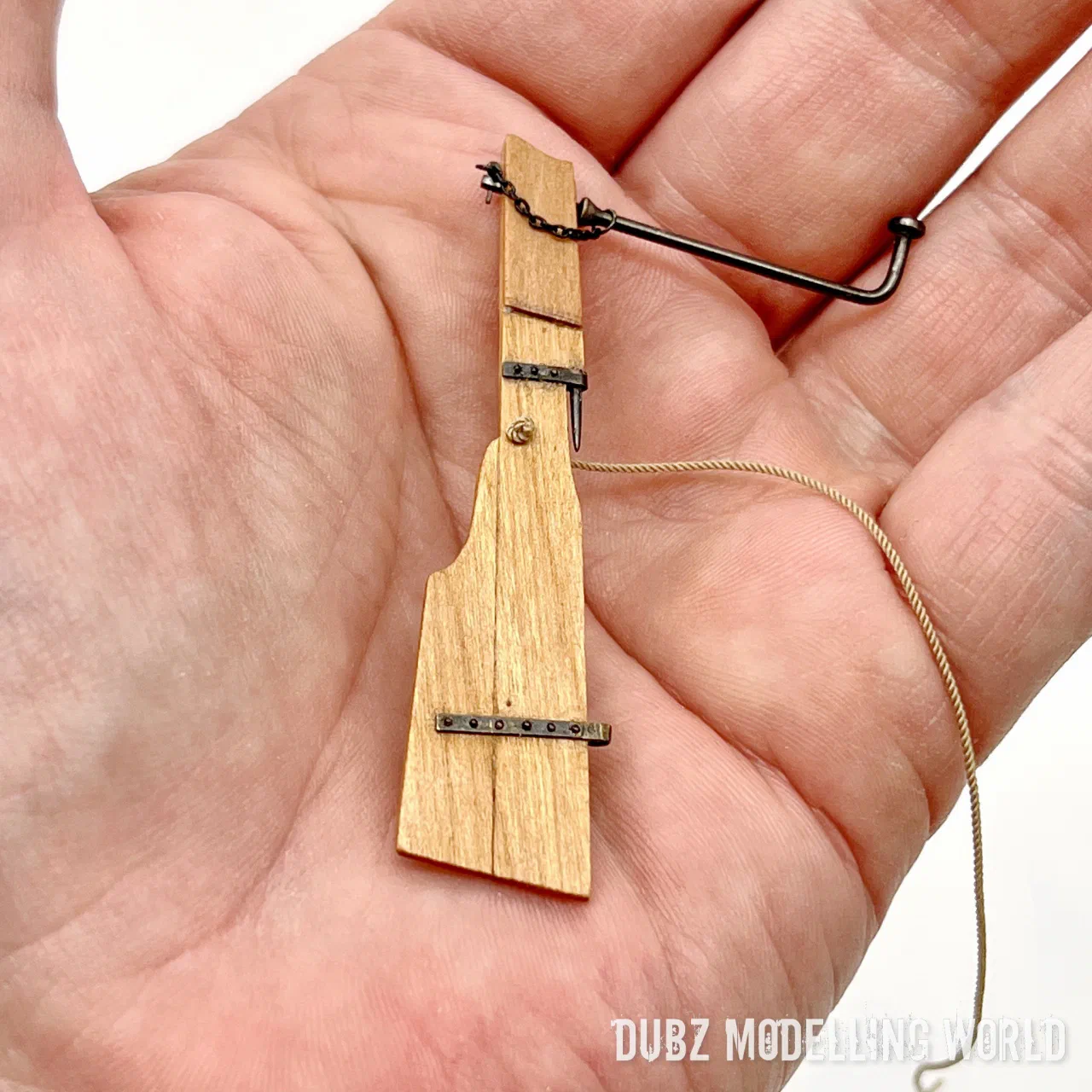
Finished
With the rudder and its tiller the yawl was essentially finished in March 2023 – a small project for a time with little time, and one I enjoyed from the first frame to the last rivet.