
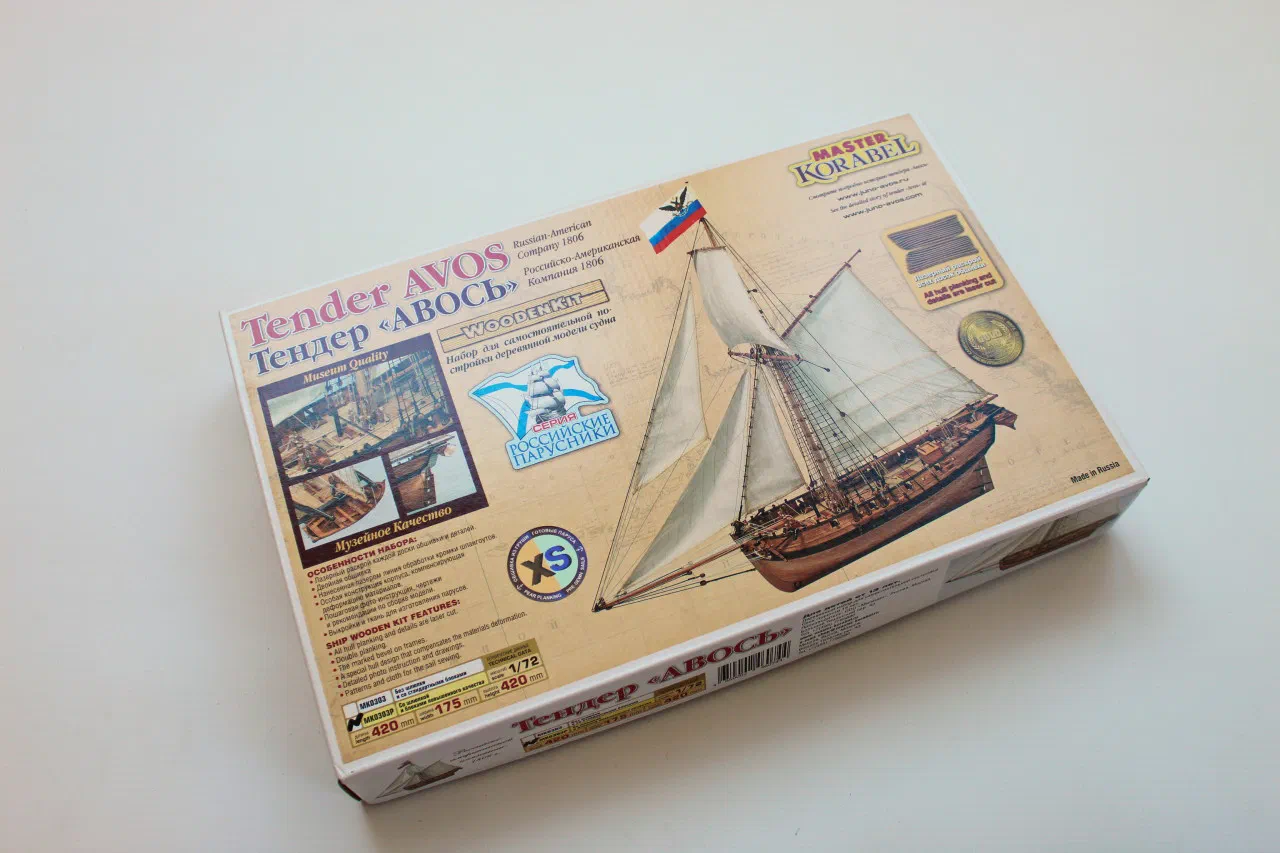
The ship
According to Master Korabel, the Avos was launched for the Russian-American Company at Novo-Arkhangelsk in Alaska – today Sitka – on 1 July 1806, an eight-gun tender named by the Russian envoy Nikolai Rezanov. On 27 July 1806 she sailed under the 22-year-old officer Gavriil Davydov, with a crew of twelve, on a secret expedition led by Lieutenant Nikolai Khvostov together with the Juno, to assert Russian interests around the southern Kurils and Sakhalin.
On the way along the Aleutians to Petropavlovsk the crew weathered many storms, had to stop at the Fox Islands for repairs and picked up a mysterious “native” from Attu. In 1807 Avos and Juno carried out a series of raids along the Kuril coast, with many boarding and landing operations. In 1808, under Lieutenant Sukin, the Avos carried goods to America, and on 11 October 1808, on passage from Kodiak to Novo-Arkhangelsk, she was wrecked in a storm off Chichagof Island in the Alexander Archipelago. Her short but legendary story is still widely known through the Russian rock opera Juno and Avos.
Variants
Master Korabel offers the Avos in several versions at different prices, so that every modeller can choose exactly what he wants to work with:
- MK030303P – standard kit, lasered nailing on the deck, sail cloth
- MK0303PX – pear, lasered nailing on the deck, sail cloth
- MK0303PXN – pear, lasered nailing on deck and hull, sail cloth
- MK0303PXS – pear, lasered nailing on the deck, pre-sewn sails
- MK0303PXSN – pear, lasered nailing on deck and hull, pre-sewn sails
I show the MK0303PXSN – the full programme. Every variant includes the ship’s boat as a small kit of its own. The finished model is 420 mm long, 420 mm high and 175 mm wide; Master Korabel rates it intermediate to advanced.
In the box
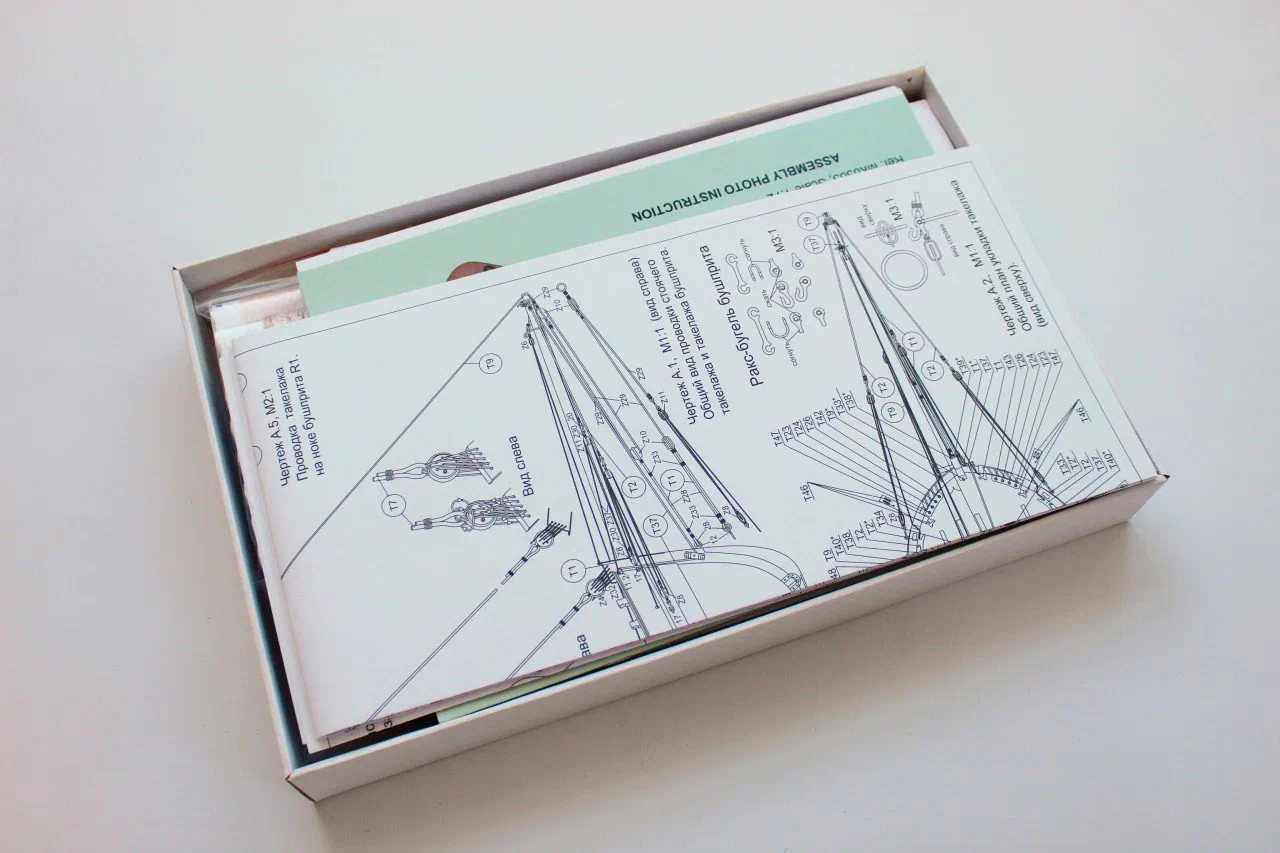
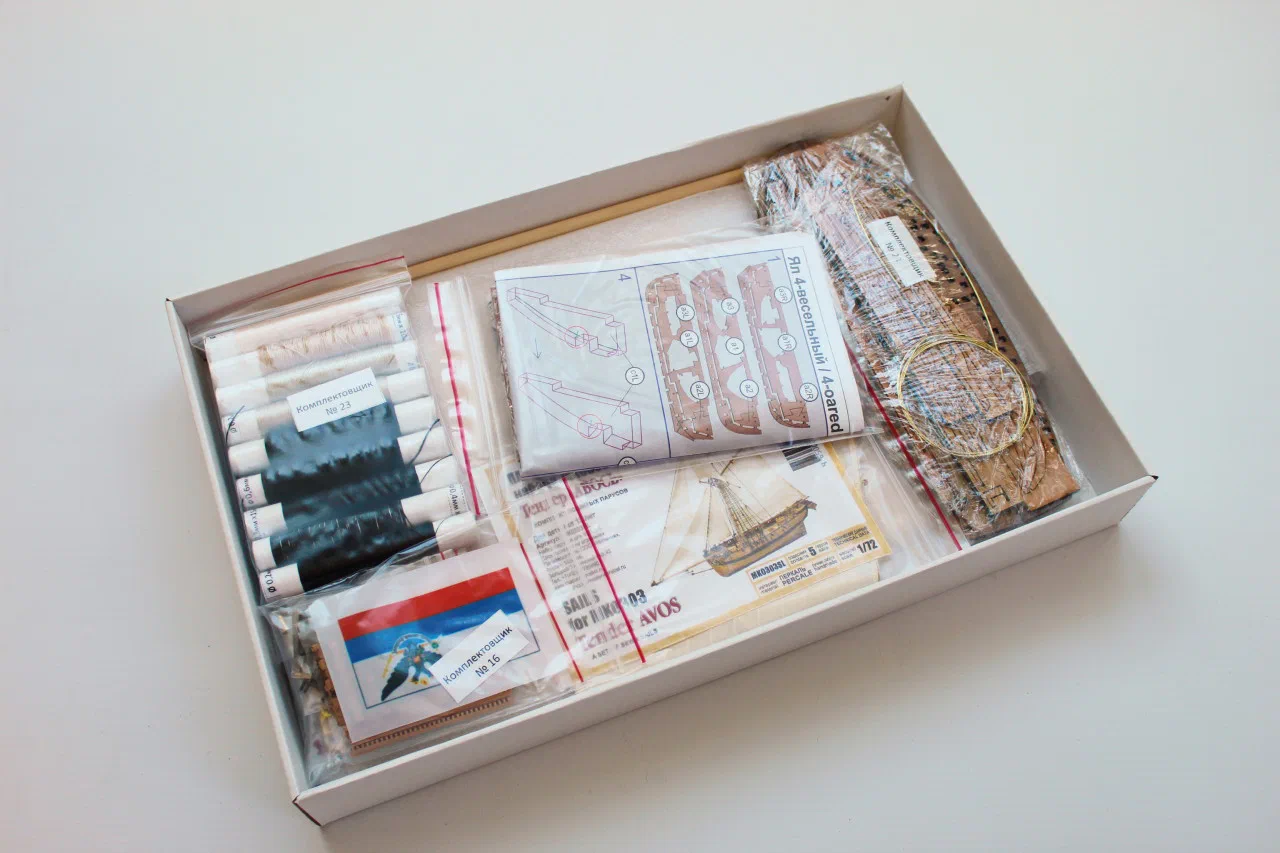
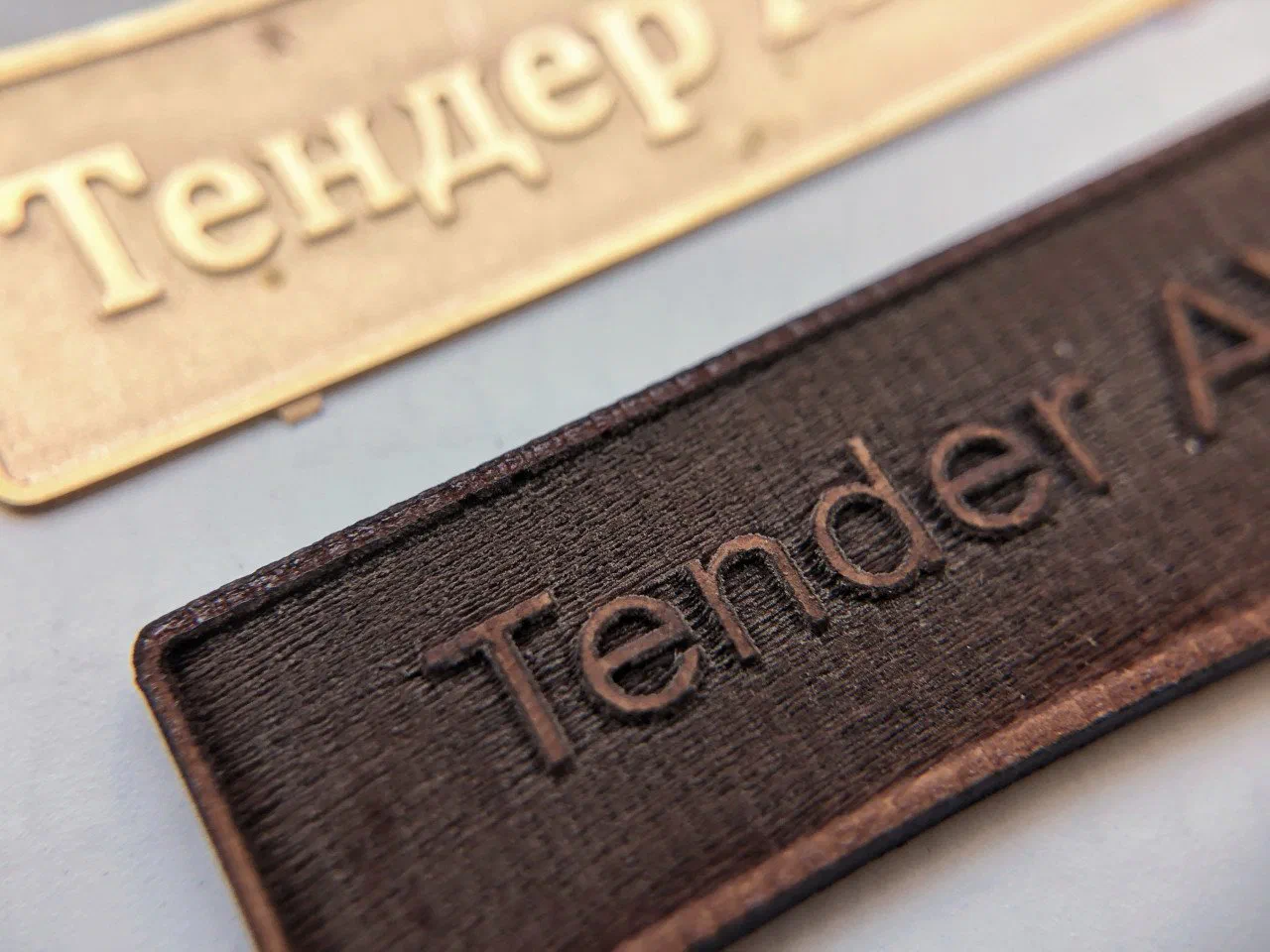
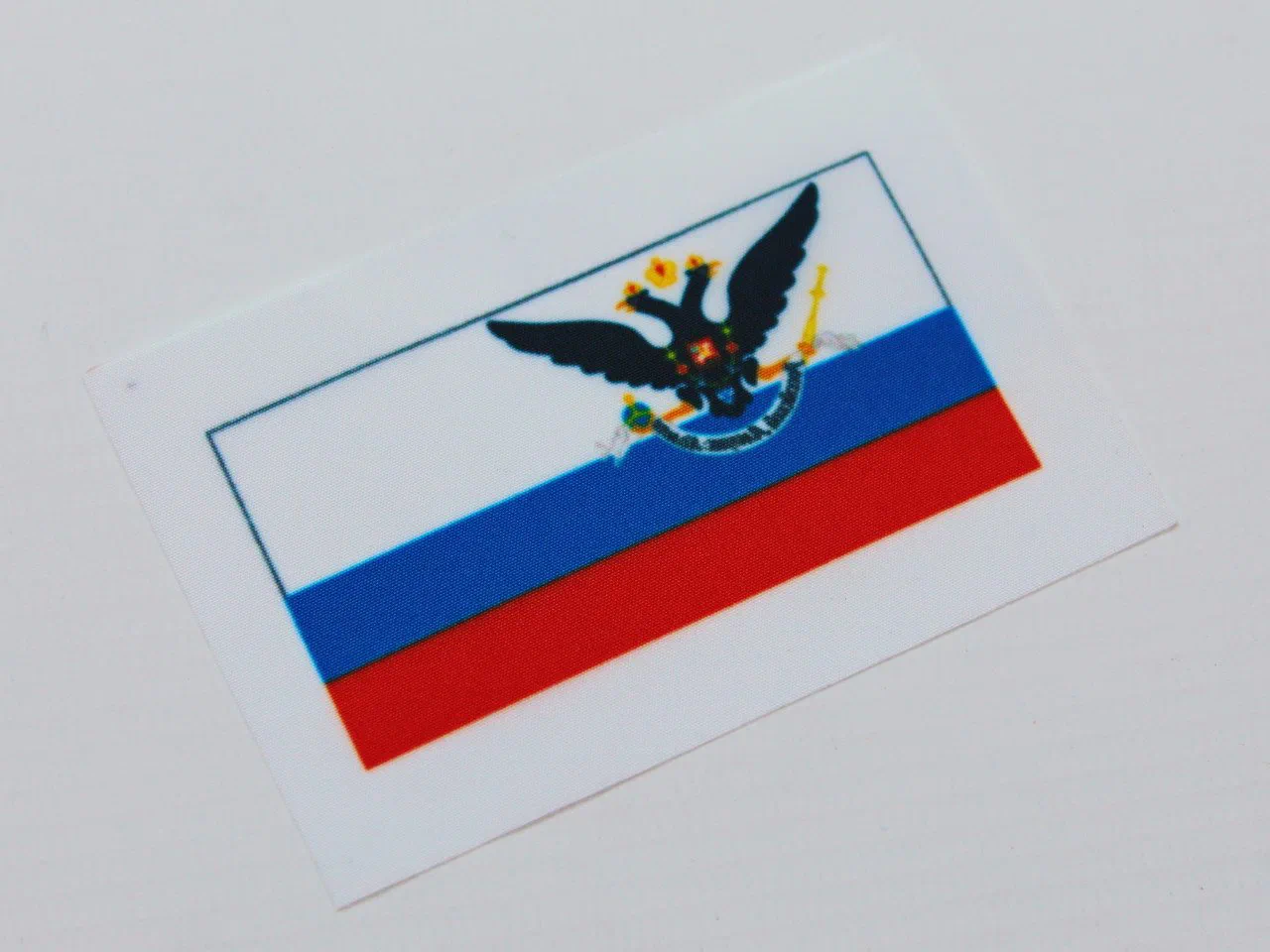
Instructions and parts lists in Russian and English, a coloured picture manual, three reduced plans with English labels and three full-size plans with Russian labels, a large number of cleanly lasered sheets and veneers – mostly pear – a dowel, eleven rigging threads, the small parts (blocks, anchors, deadeyes, belaying pins, bell, gratings, pumps, guns), two brass photo-etch sheets of outstanding quality, a photo-etched brass nameplate and a lasered pear one, a flag and pre-sewn sails. Everything is stored safely and tidily in the box.
Wood and planking
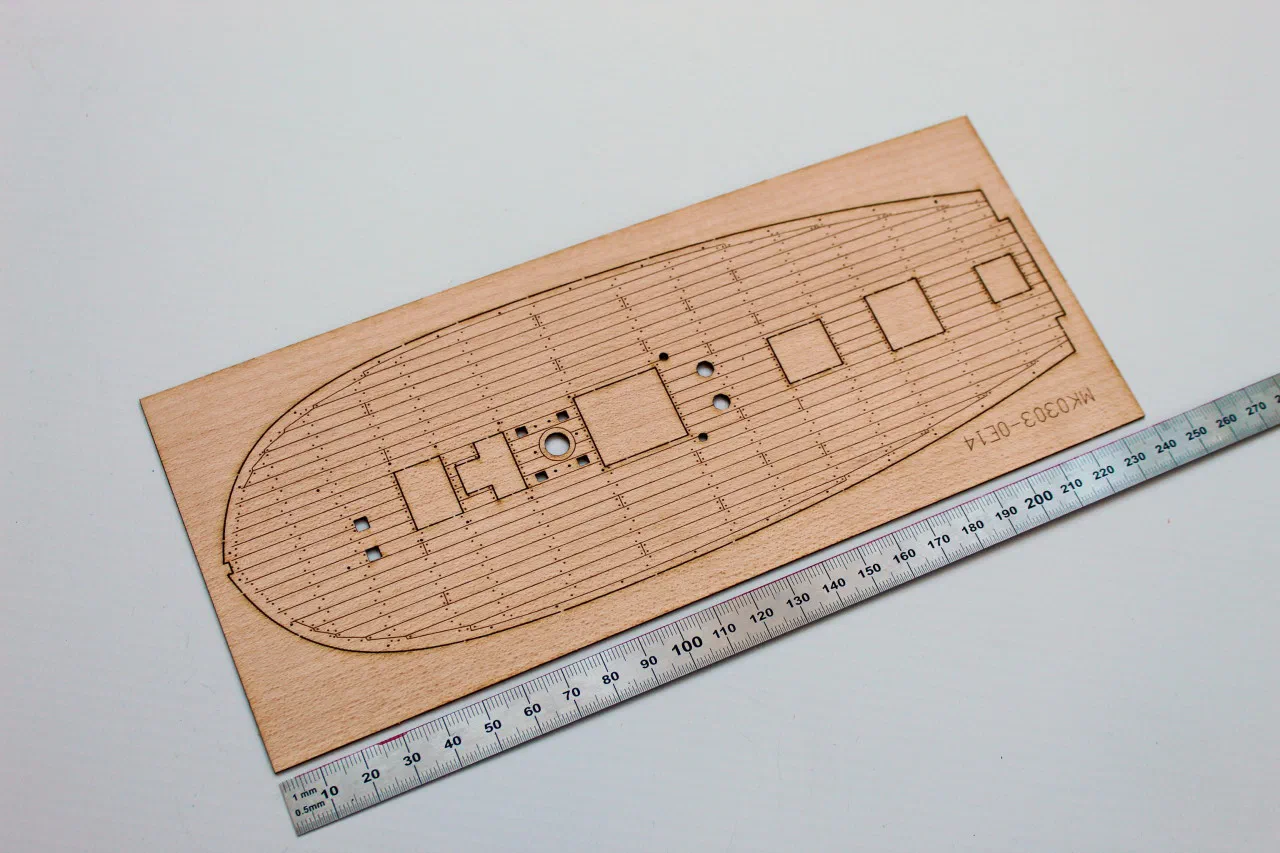
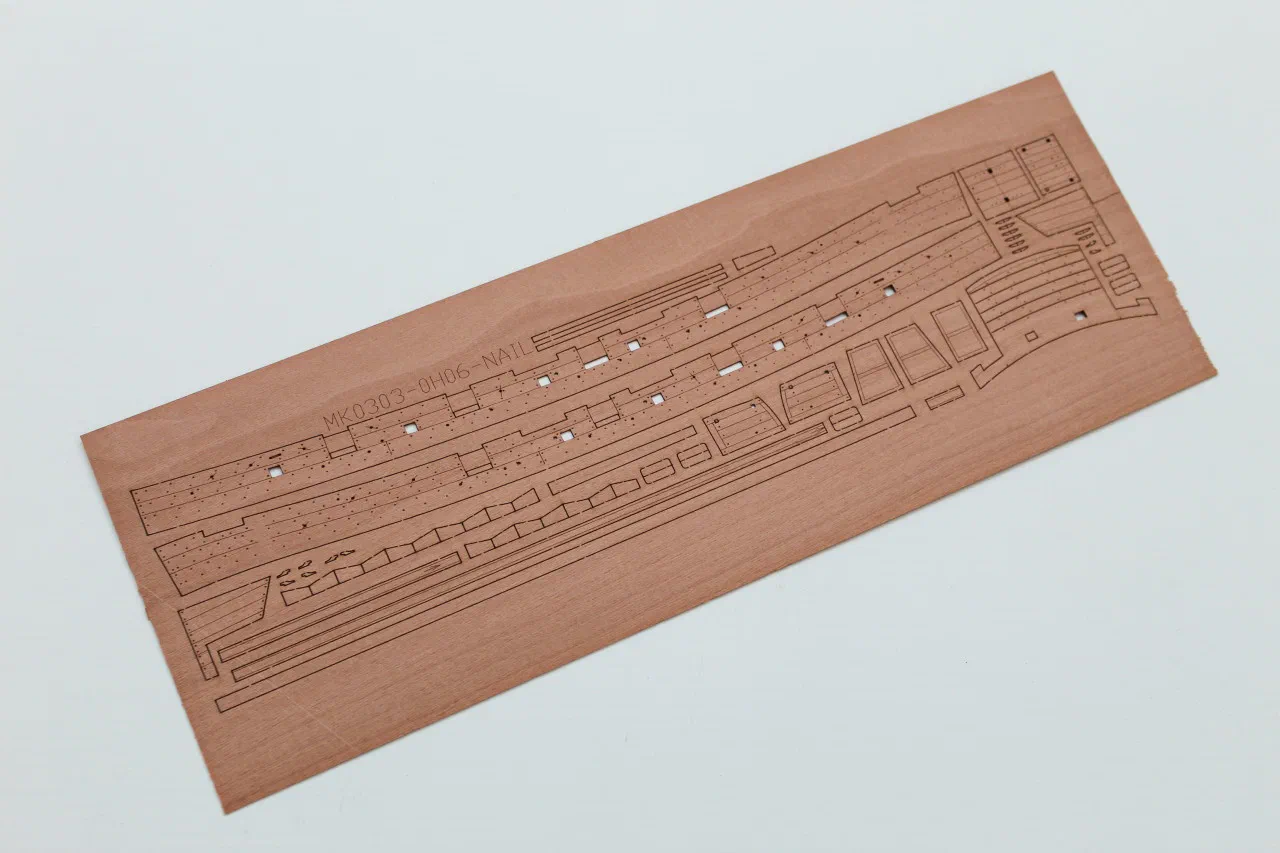
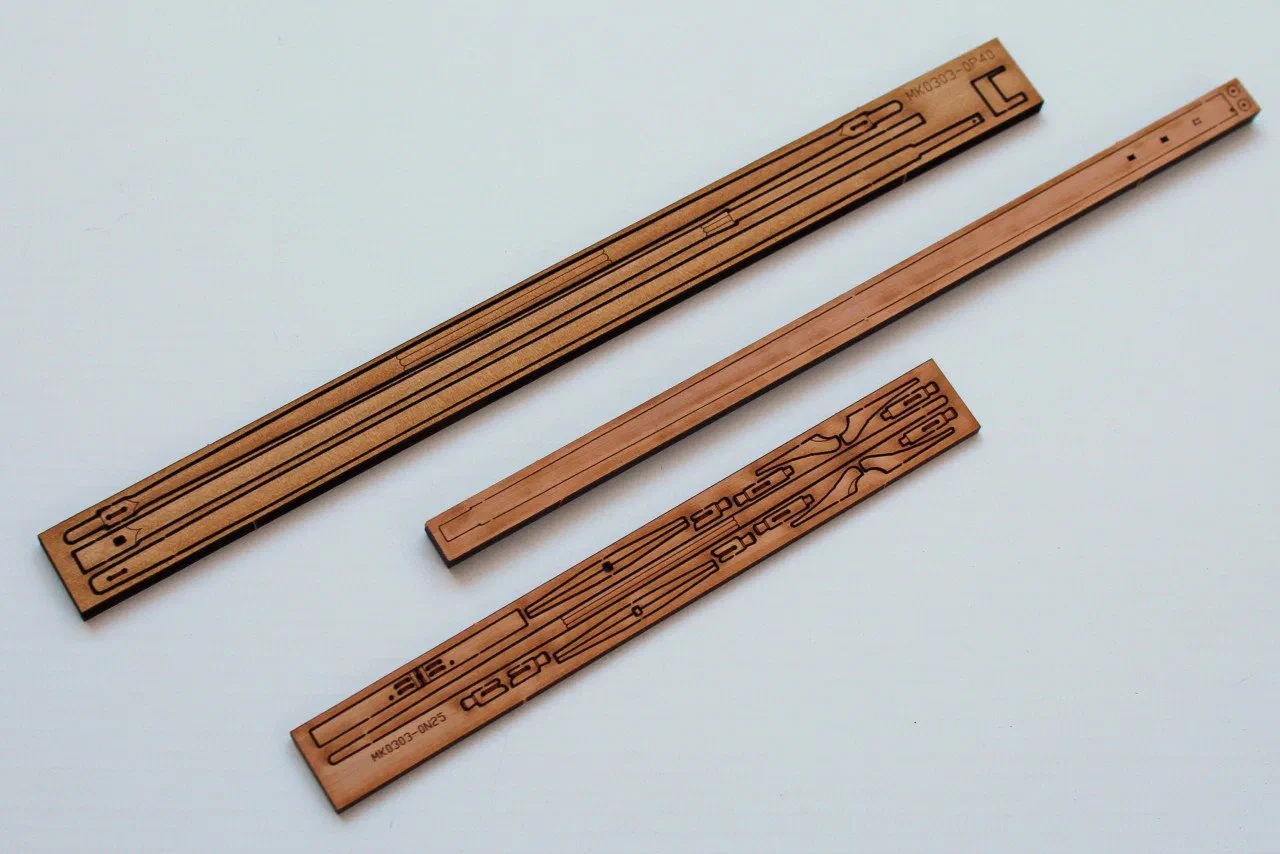
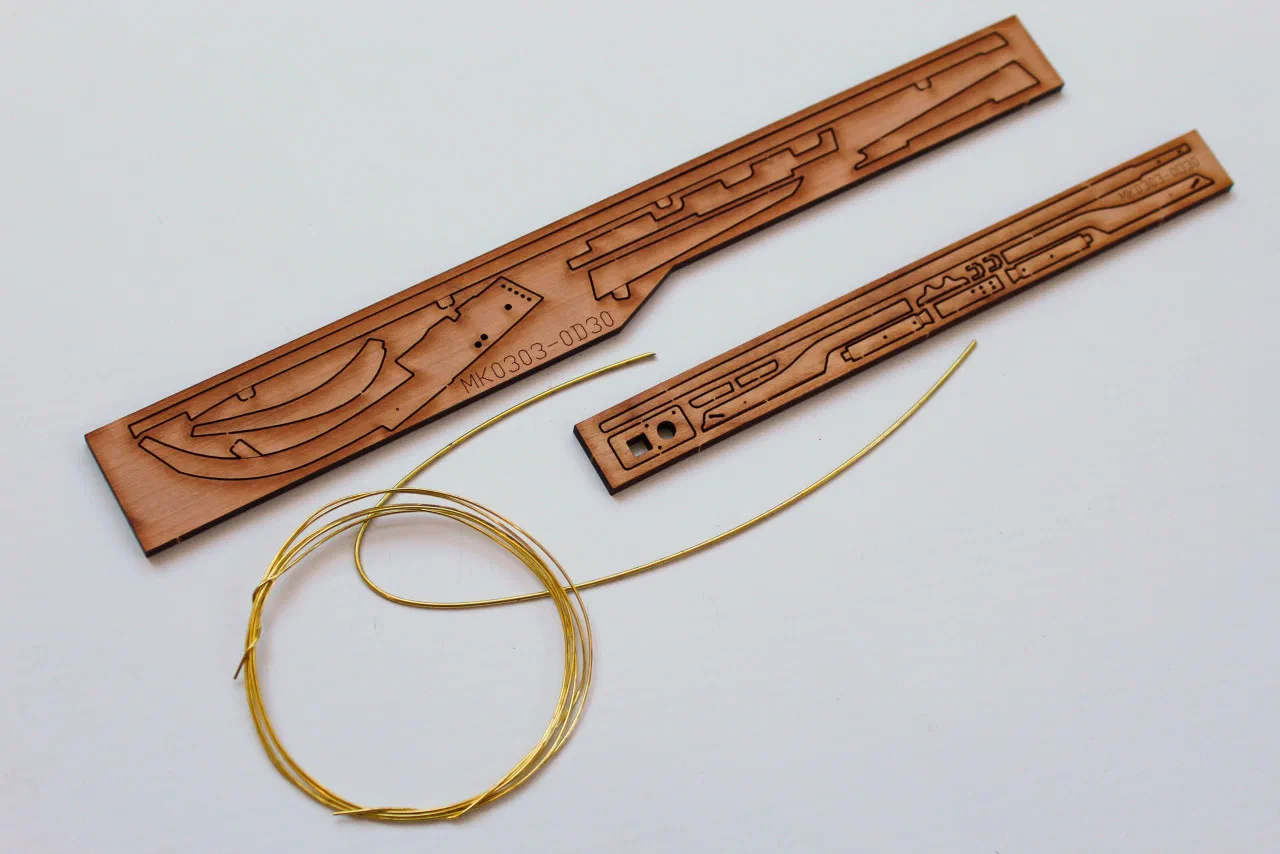
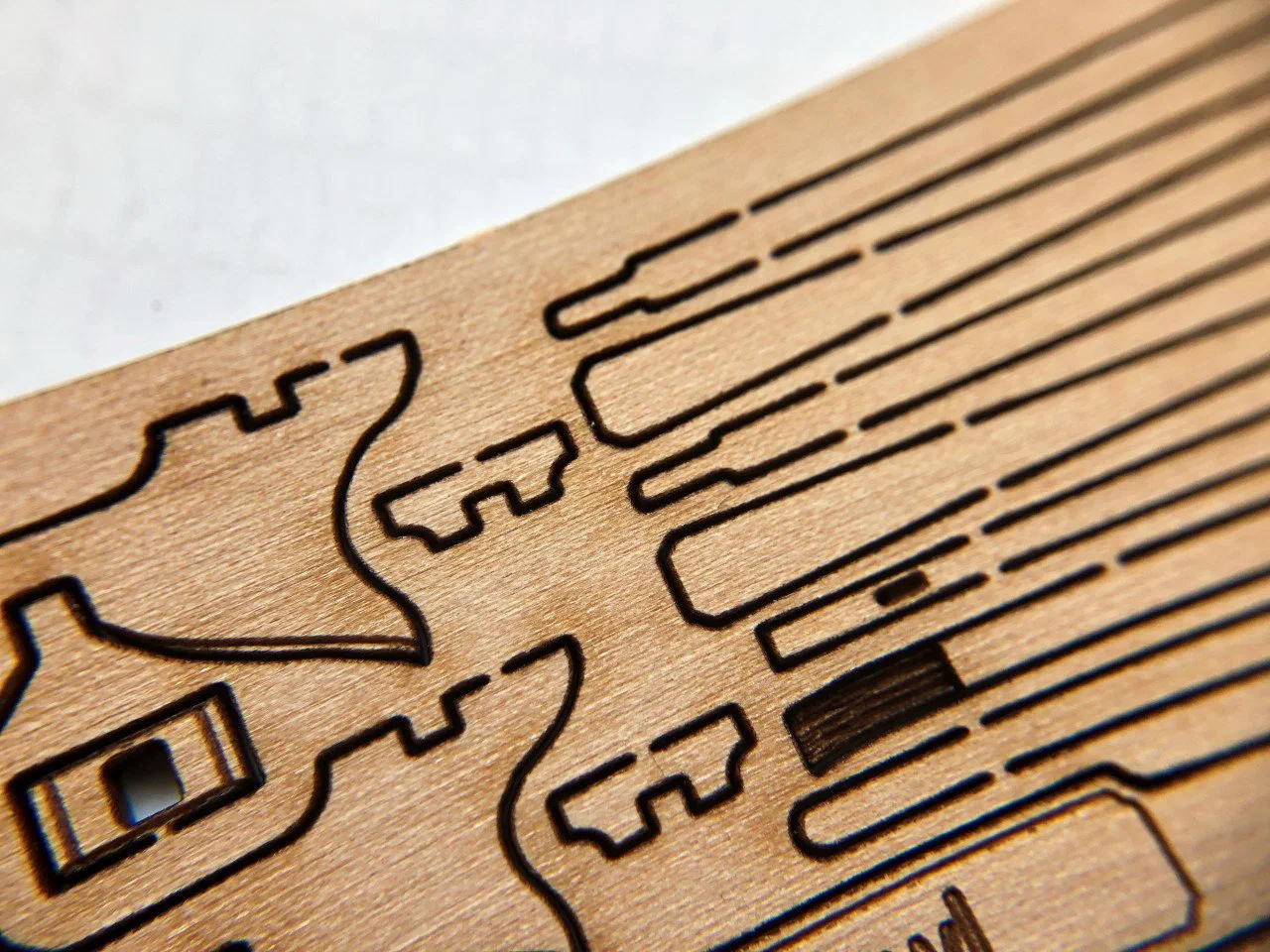
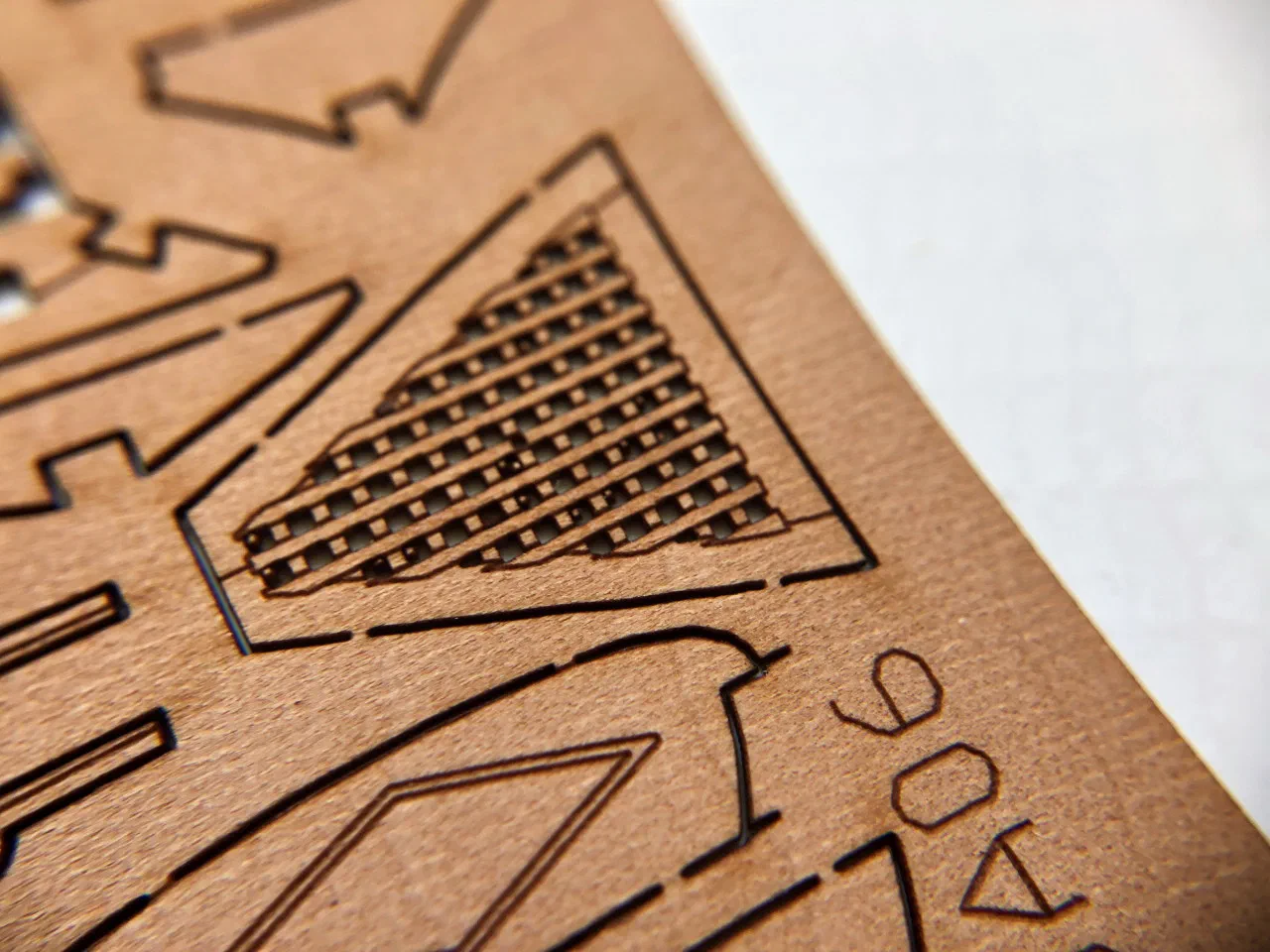
The sheets are lasered perfectly – nothing burnt, everything clean, even in a super-macro photo. The skeleton is plywood, the deck comes with lasered nailing, and the hull is double-planked: the first layer is 1.4 mm plywood, lasered as pre-shaped components, the second is pear with pre-lasered nailing. All planks are pre-cut and can go straight onto the first layer; adjustments are usually minimal.
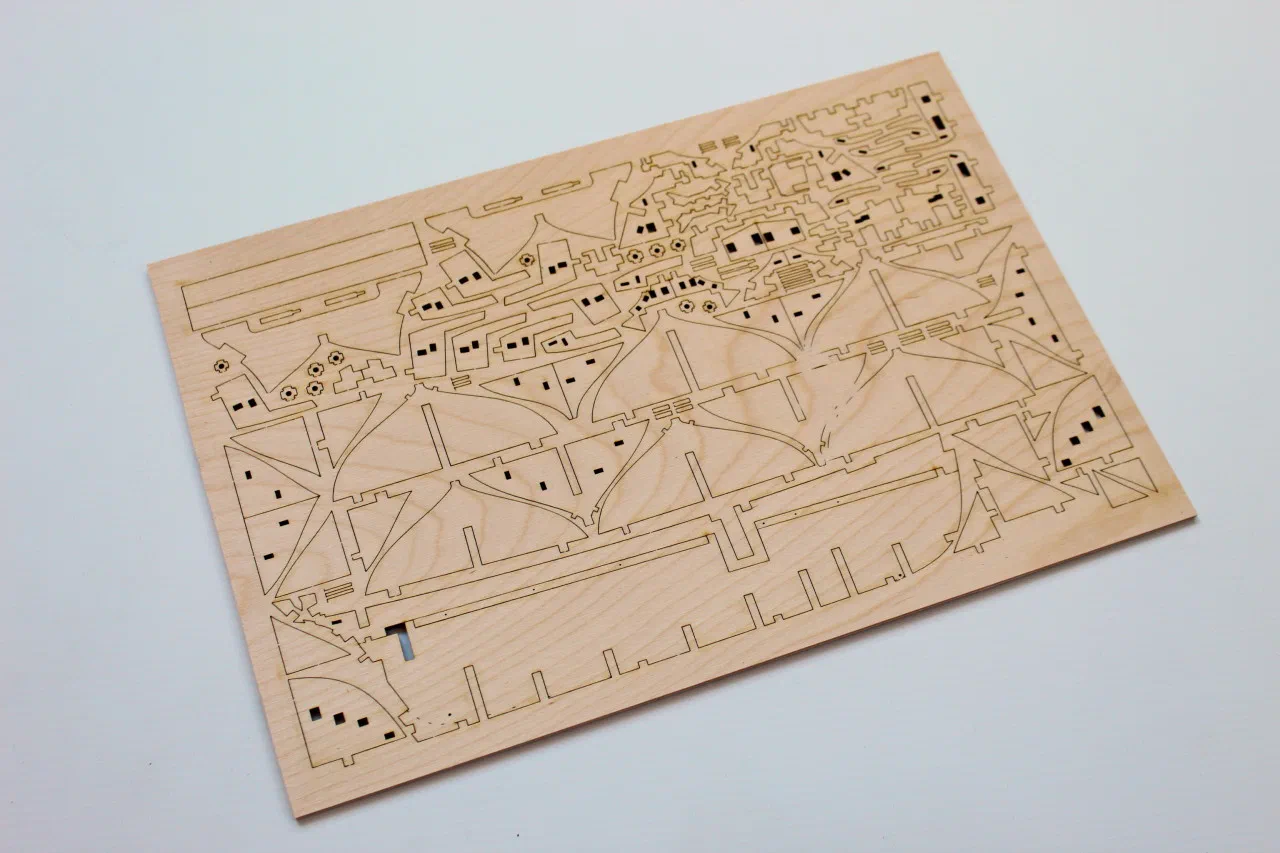
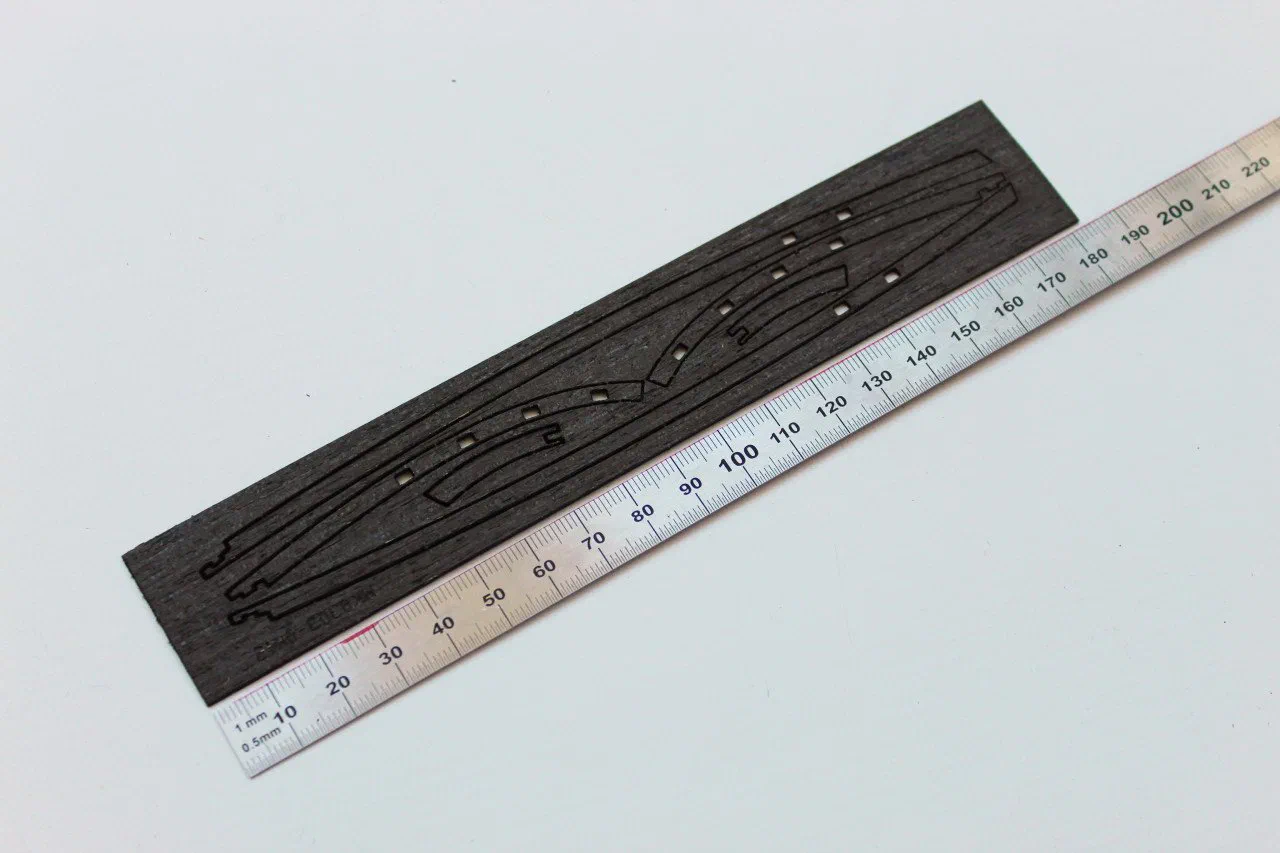
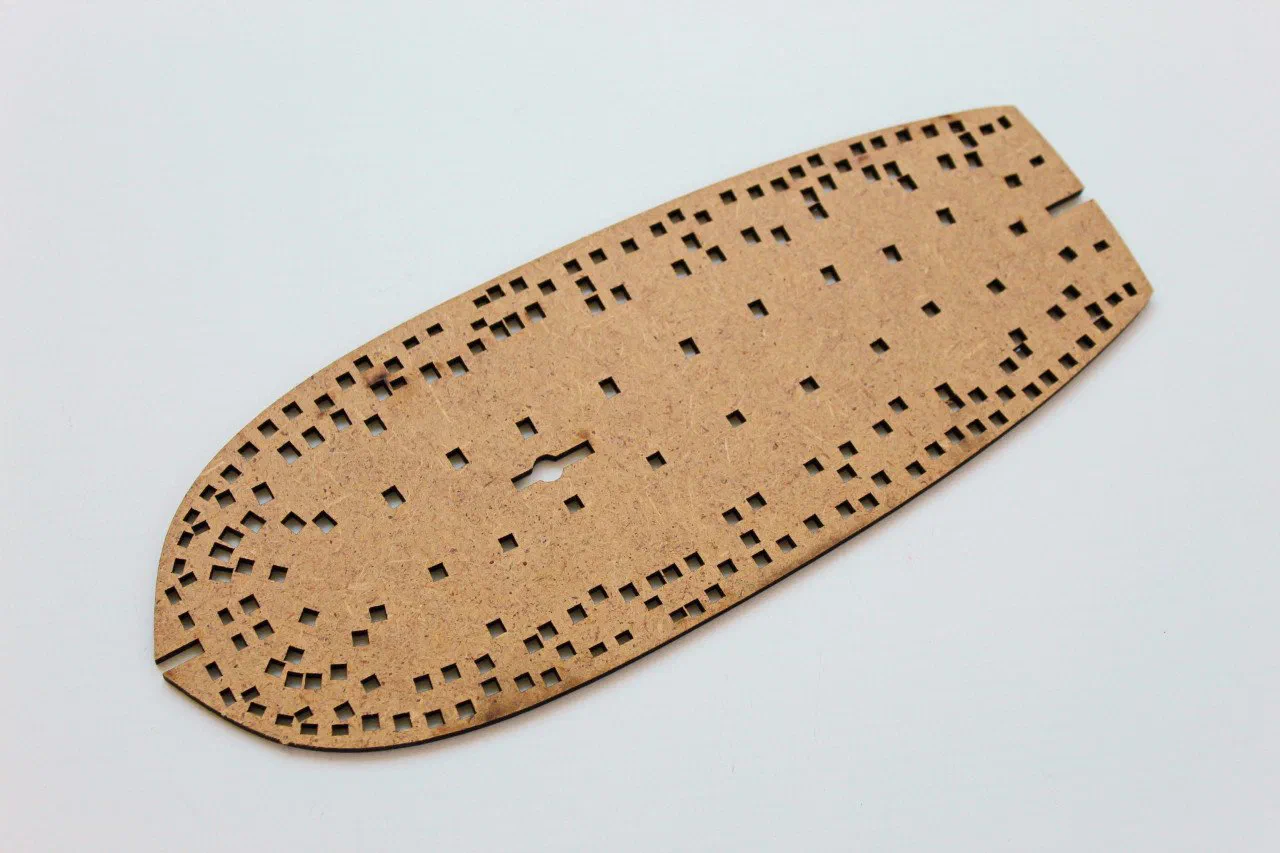
There are black sheets as well, more pear parts such as the gun carriages, and the upper part of the hull structure in MDF. Yards, bowsprit and anchor stocks are prepared in pear, and so are the keel, the rudder and many other parts.
Fittings
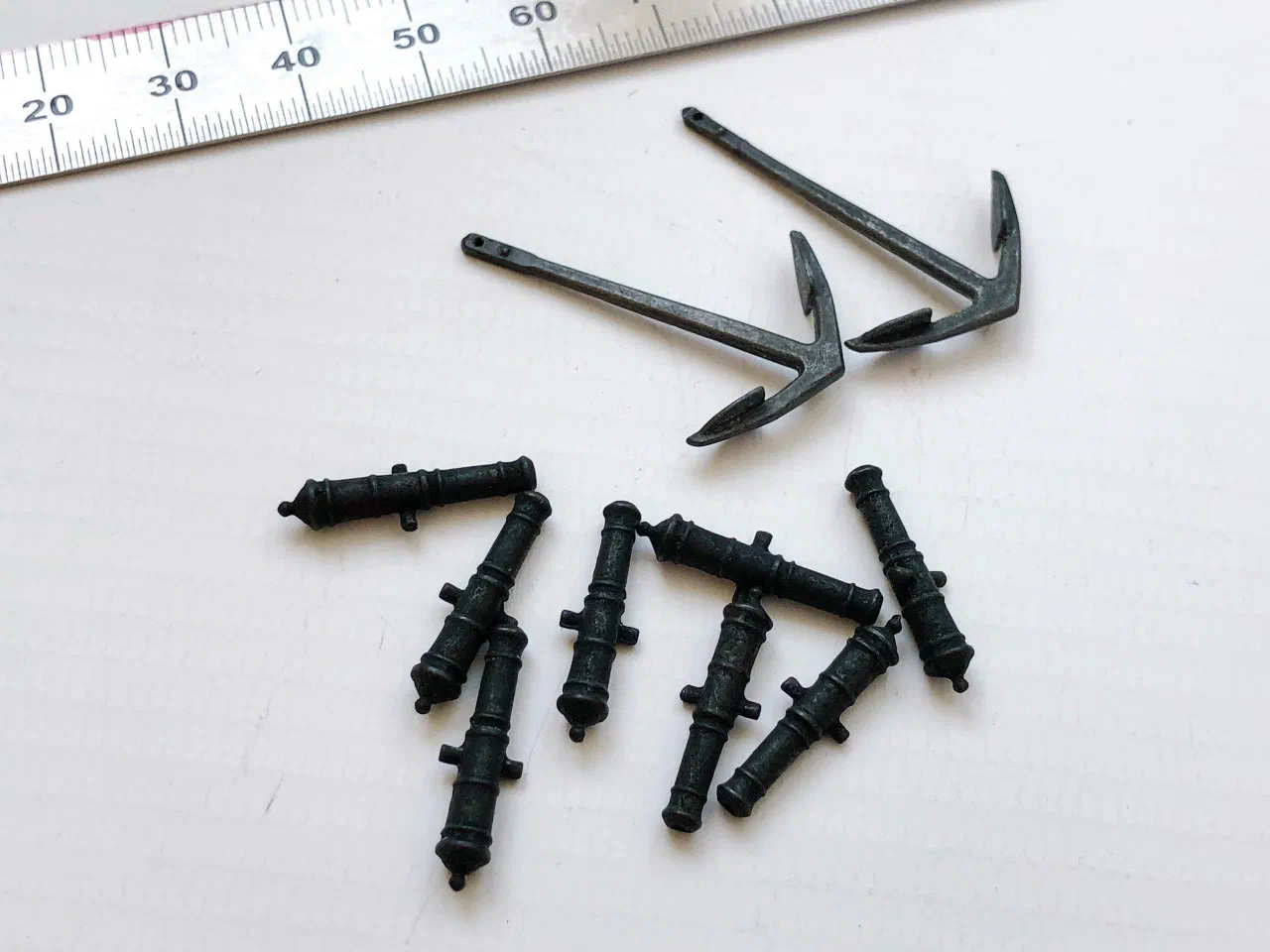
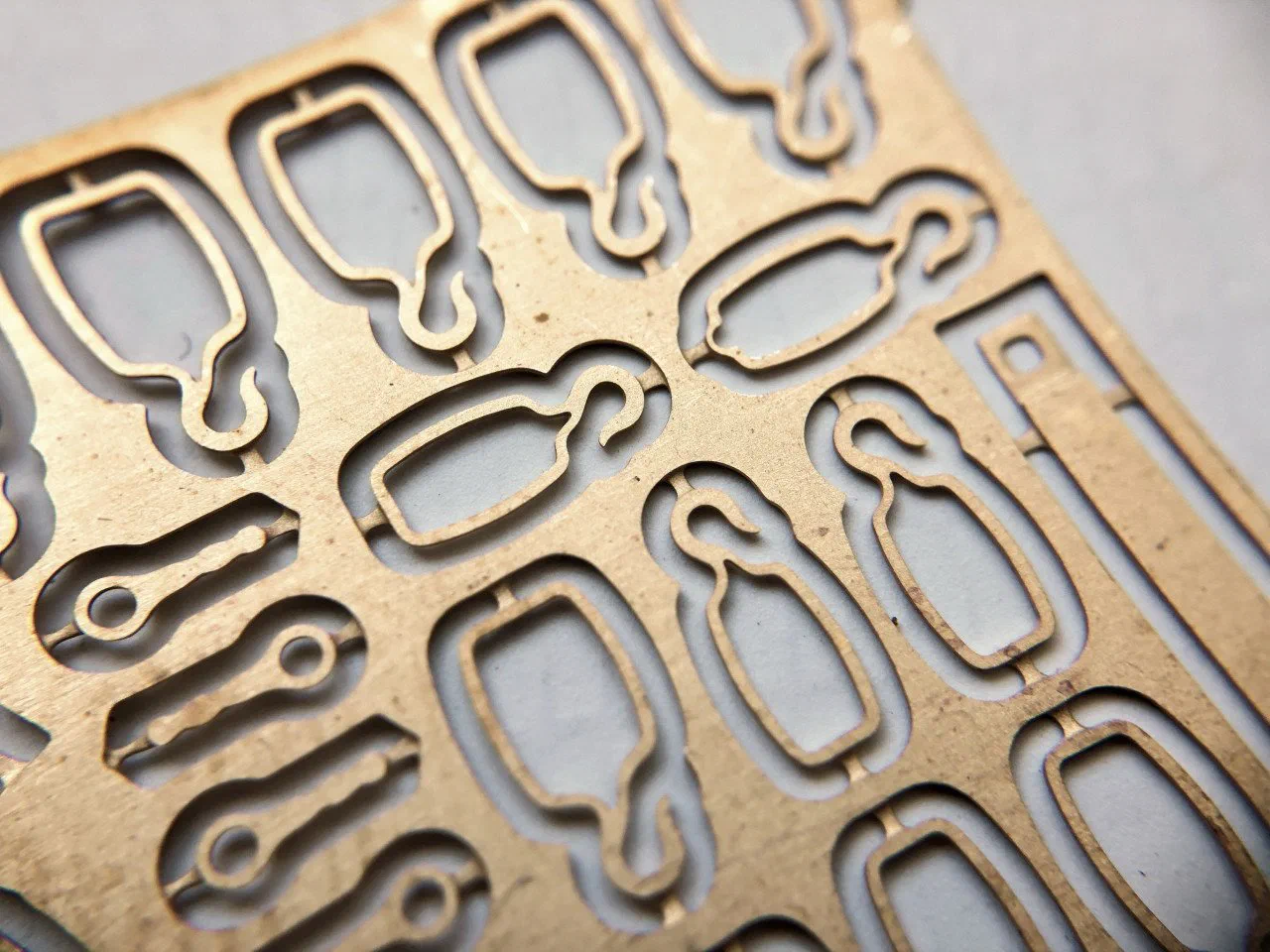
The two anchors and the eight guns are cast cleanly. Rarely have I seen such good blocks in a kit, and there are even metal strops for them on the photo-etch. Deadeyes and parrel balls are included, the belaying pins are turned brass, and so is the ship’s bell. The parts for the gratings are made with high precision, and the two pumps come as a mini-kit of their own.
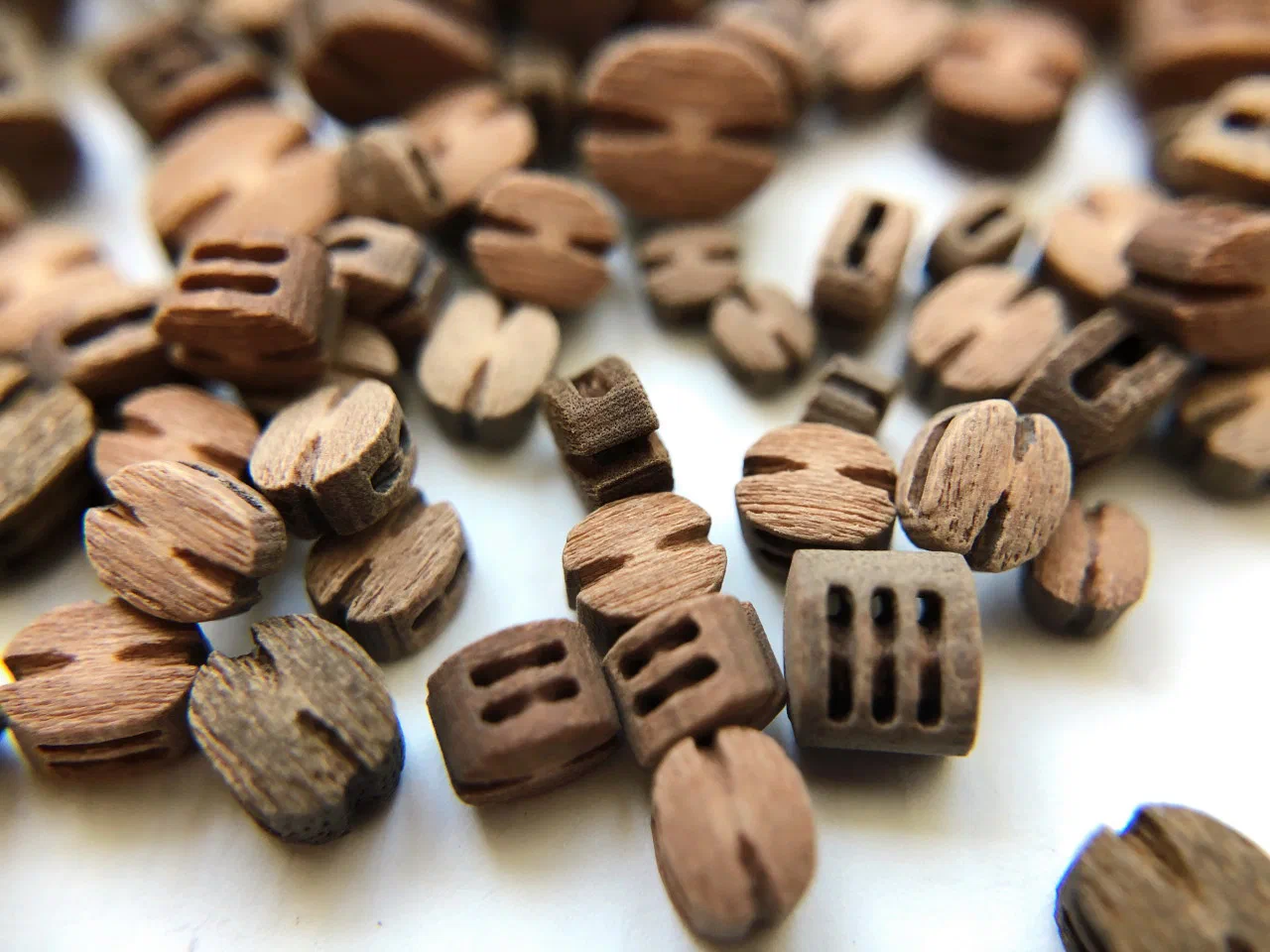
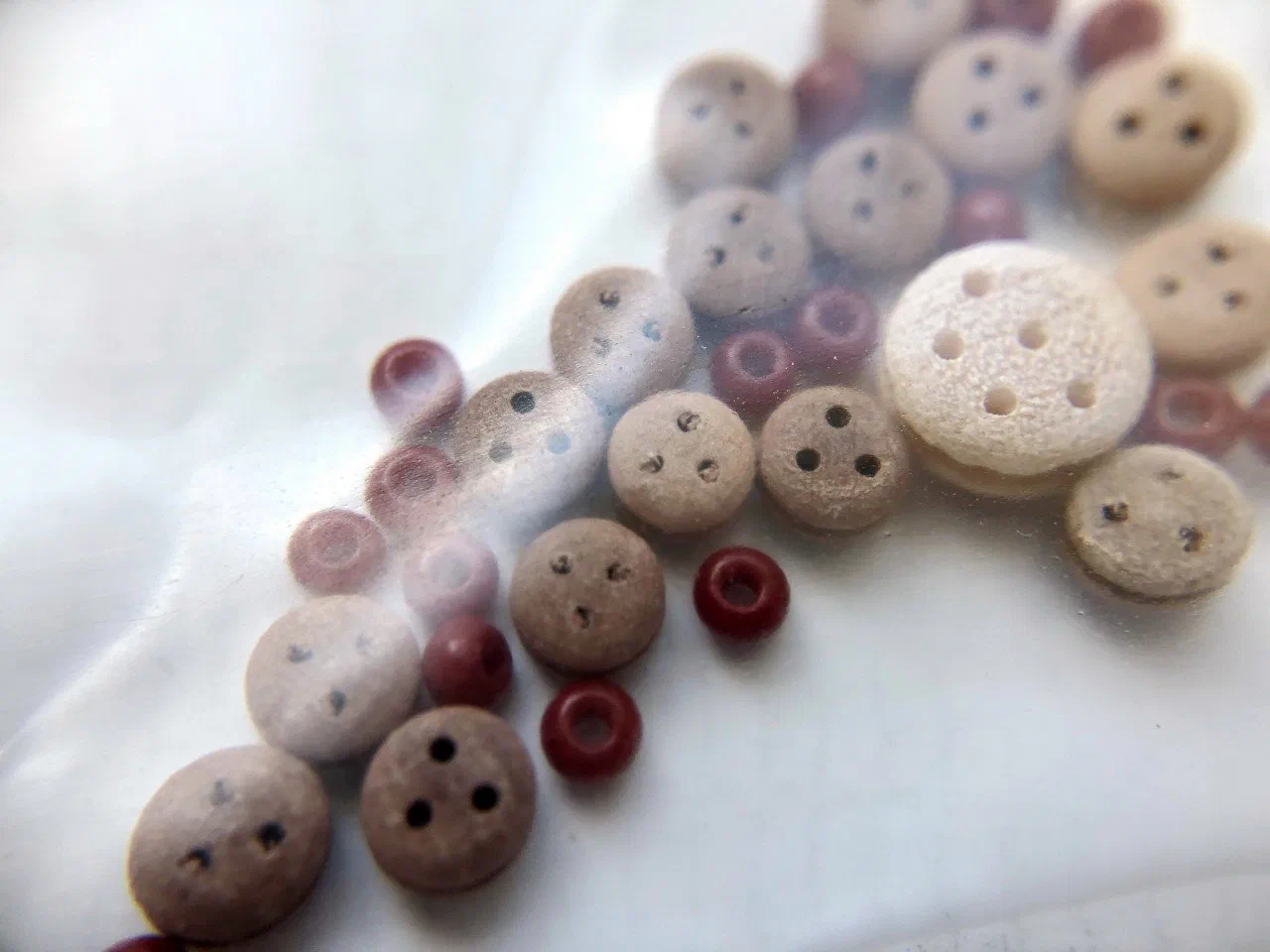
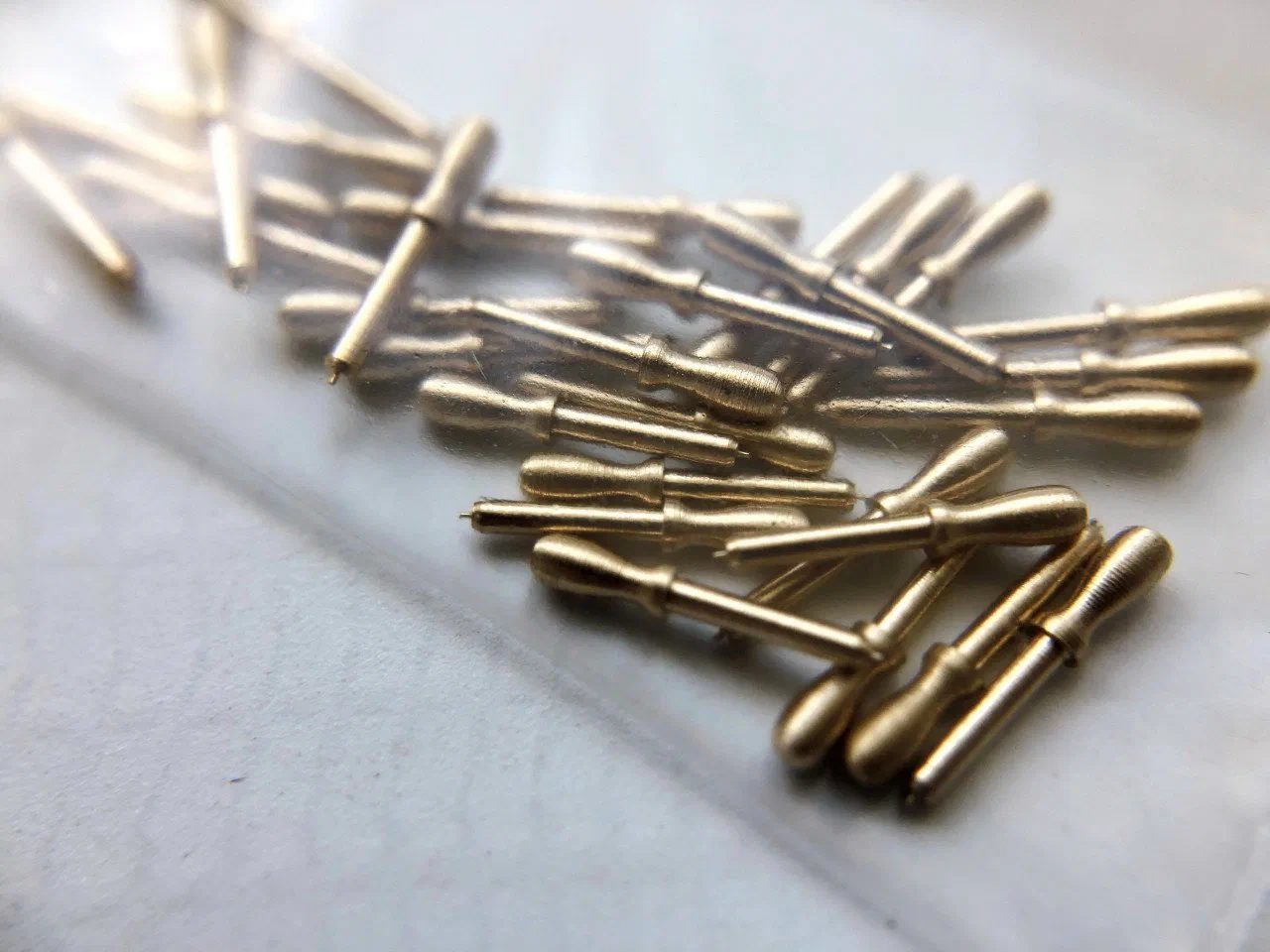
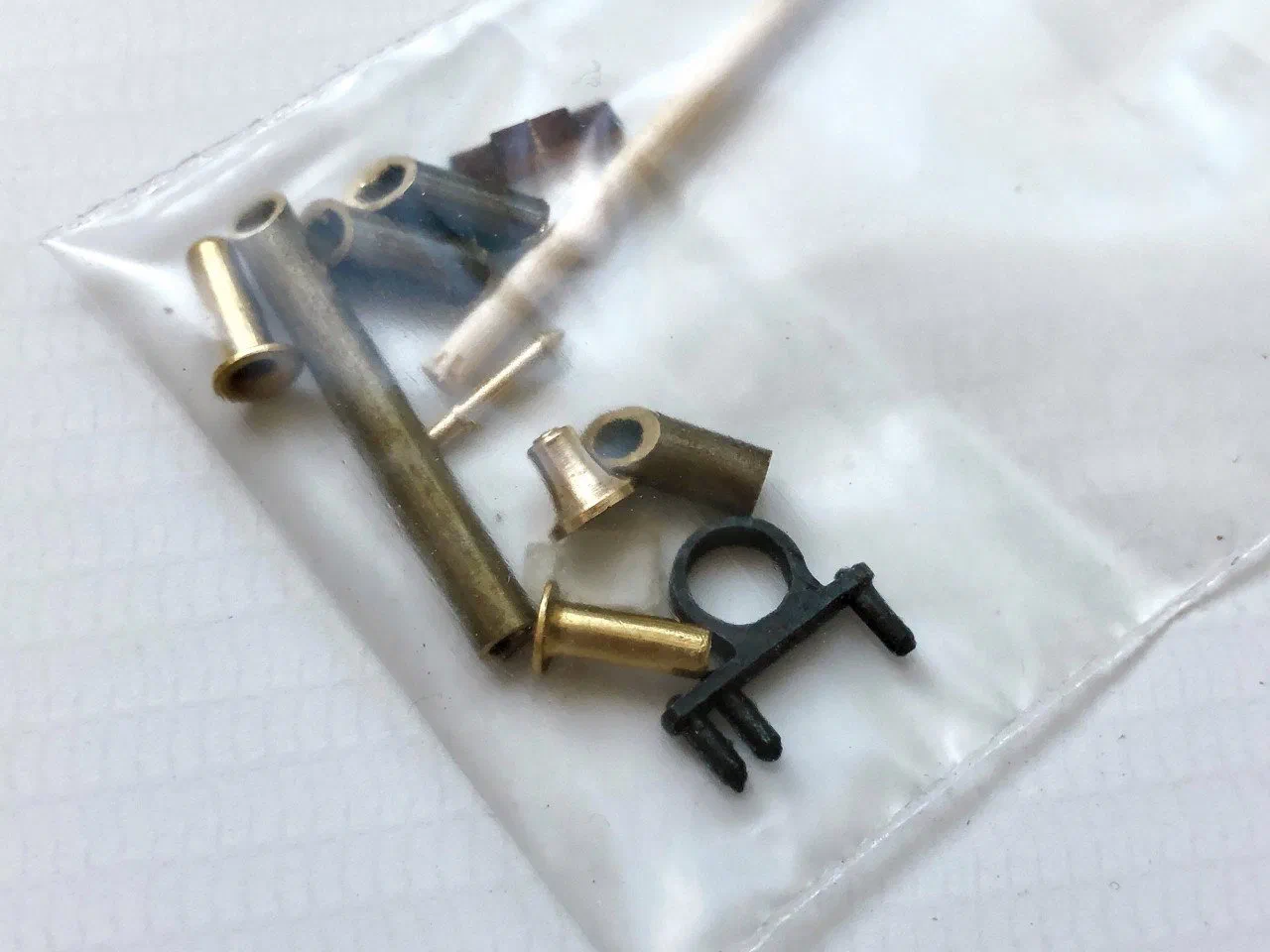
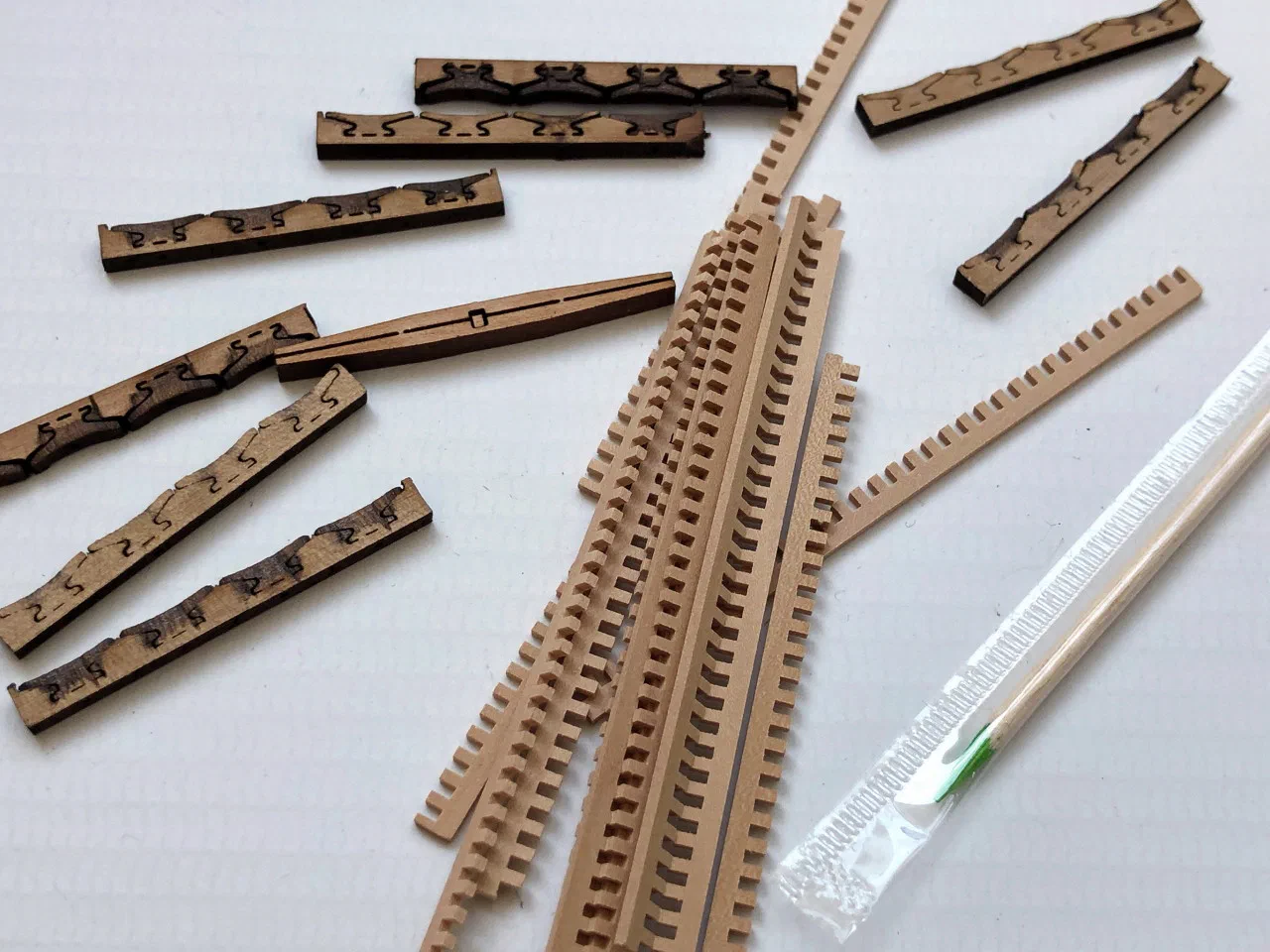
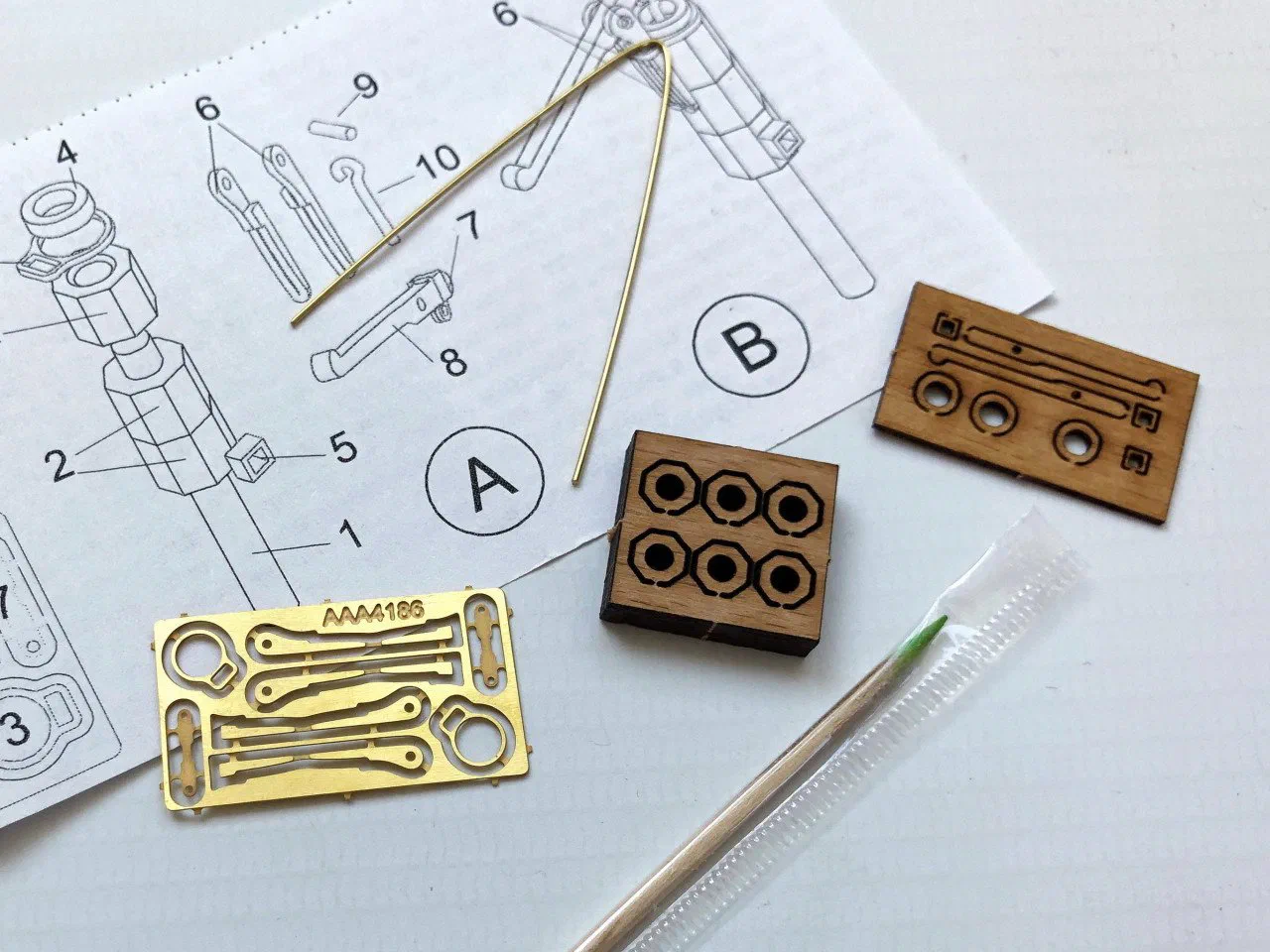
Last but not least the photo-etch, made in a two-layer process. It hardly needs saying that the quality is first-class – and metal strops for the blocks are a real treat. The name is also supplied as a lasered pear plate.
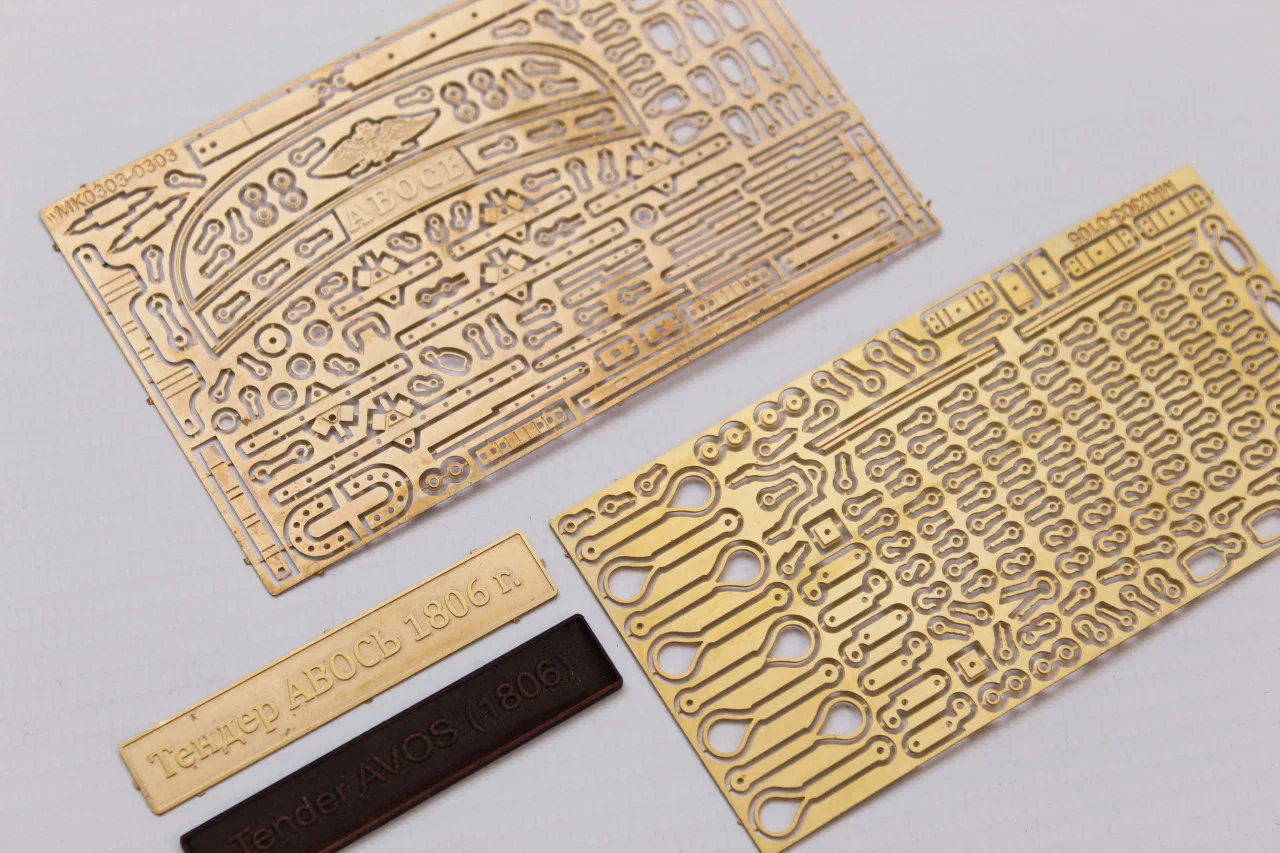
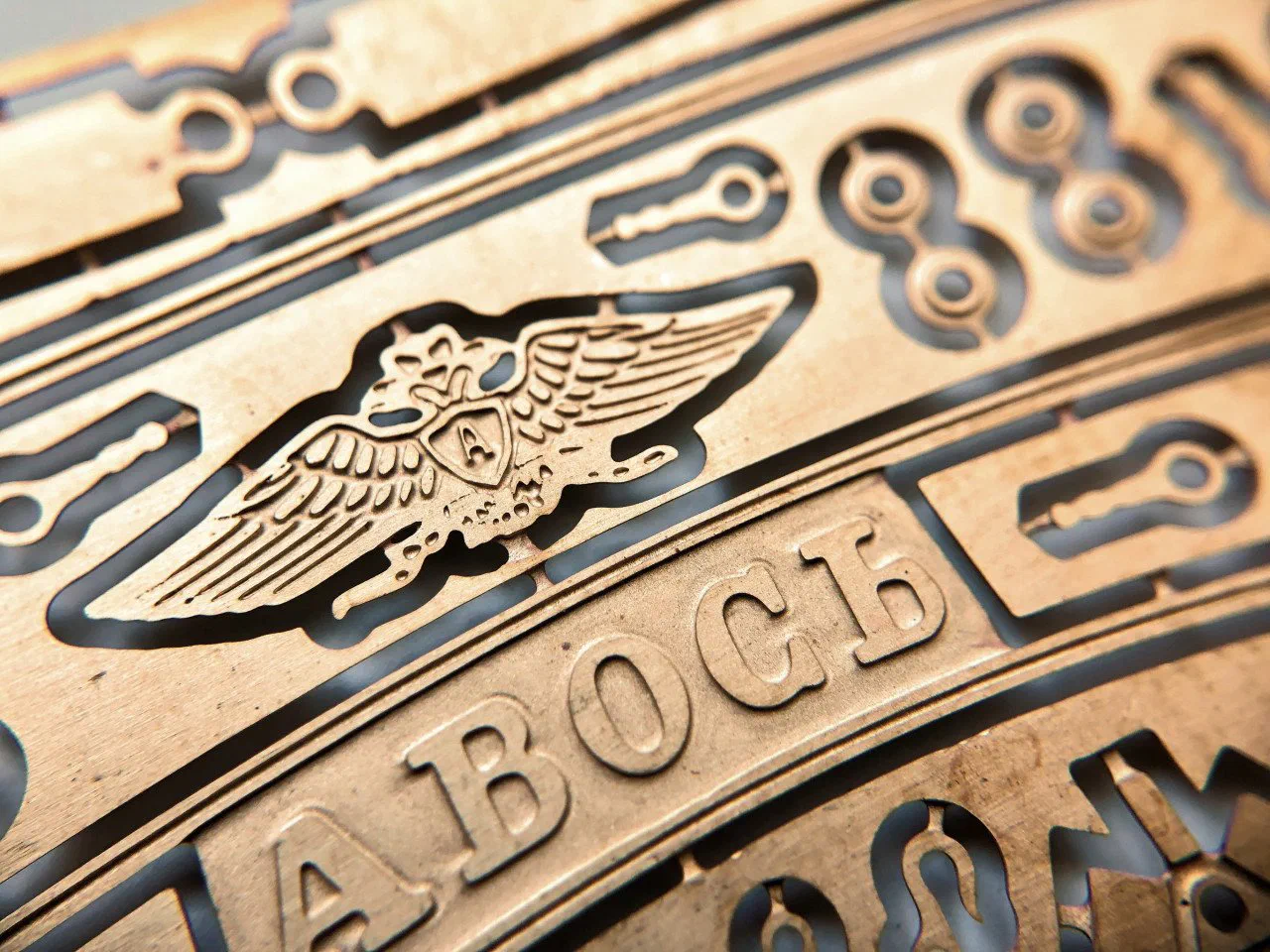
The ship’s boat
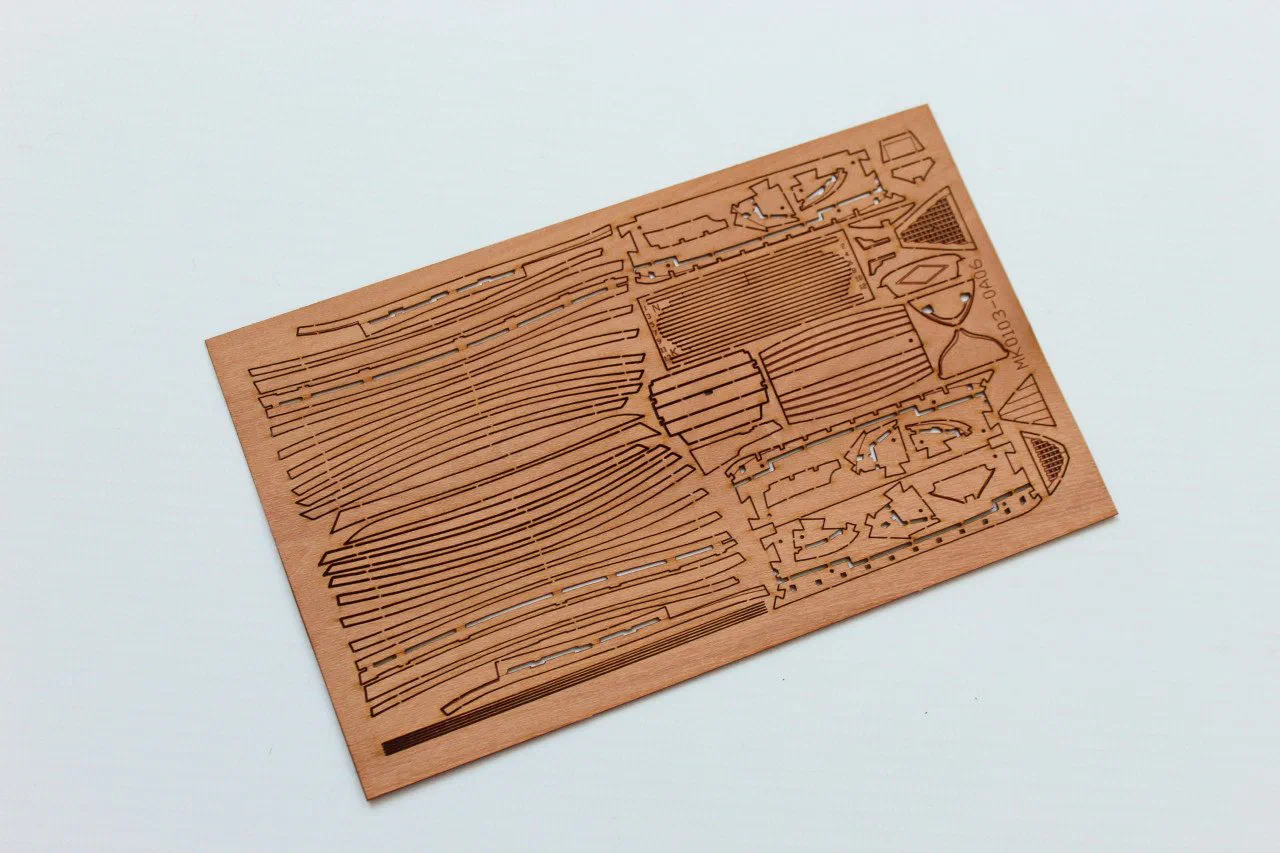
Nearly at the end there is one more “mini-kit” in the kit: the ship’s boat, in pear as well and lasered just as cleanly.
Rigging thread and sails
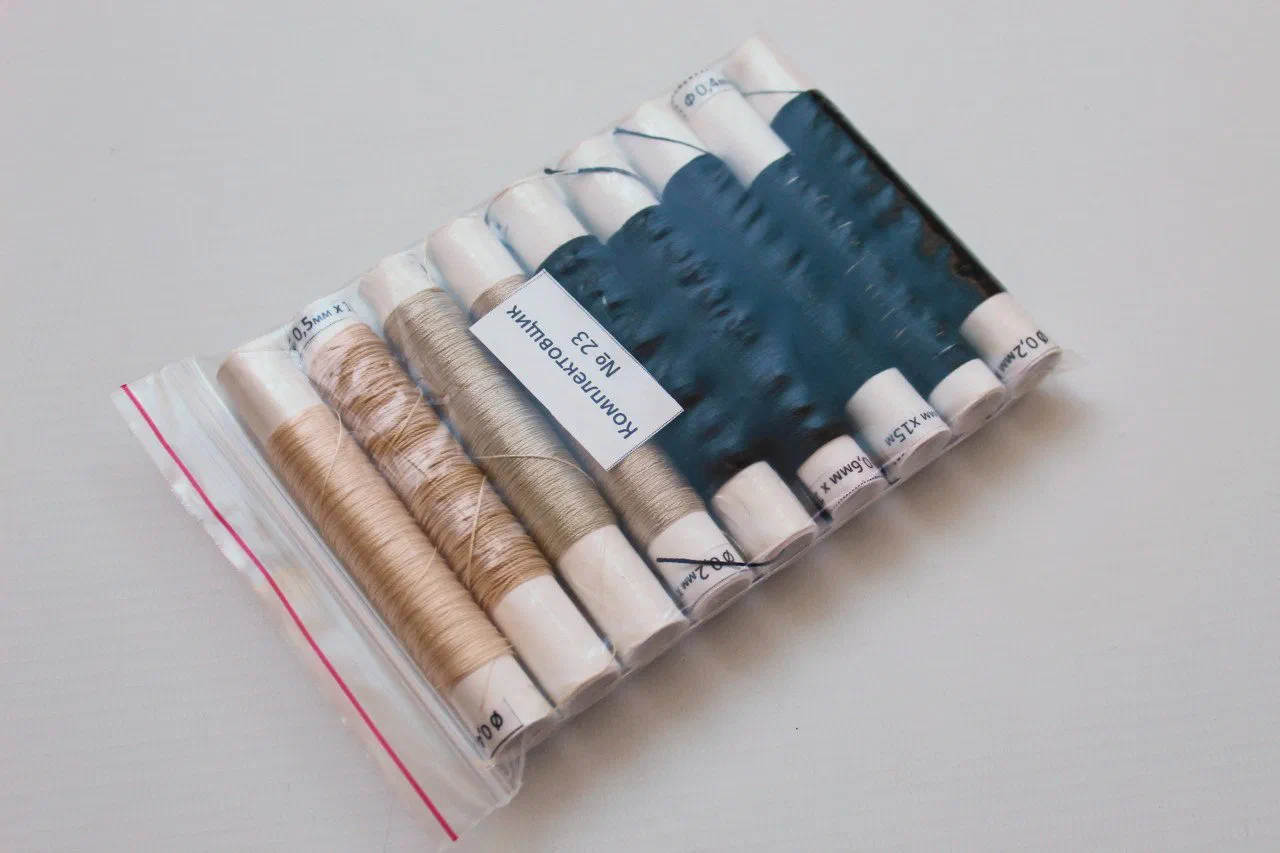
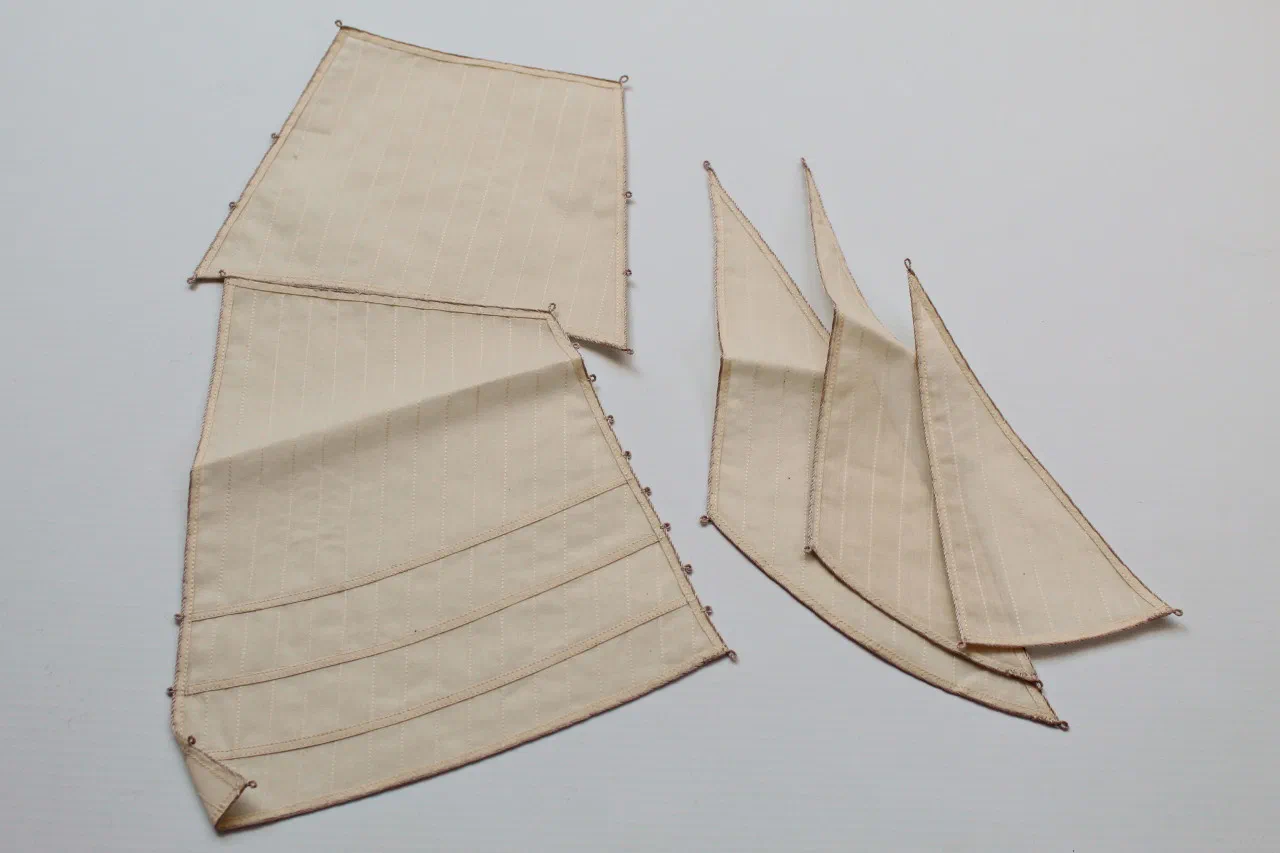
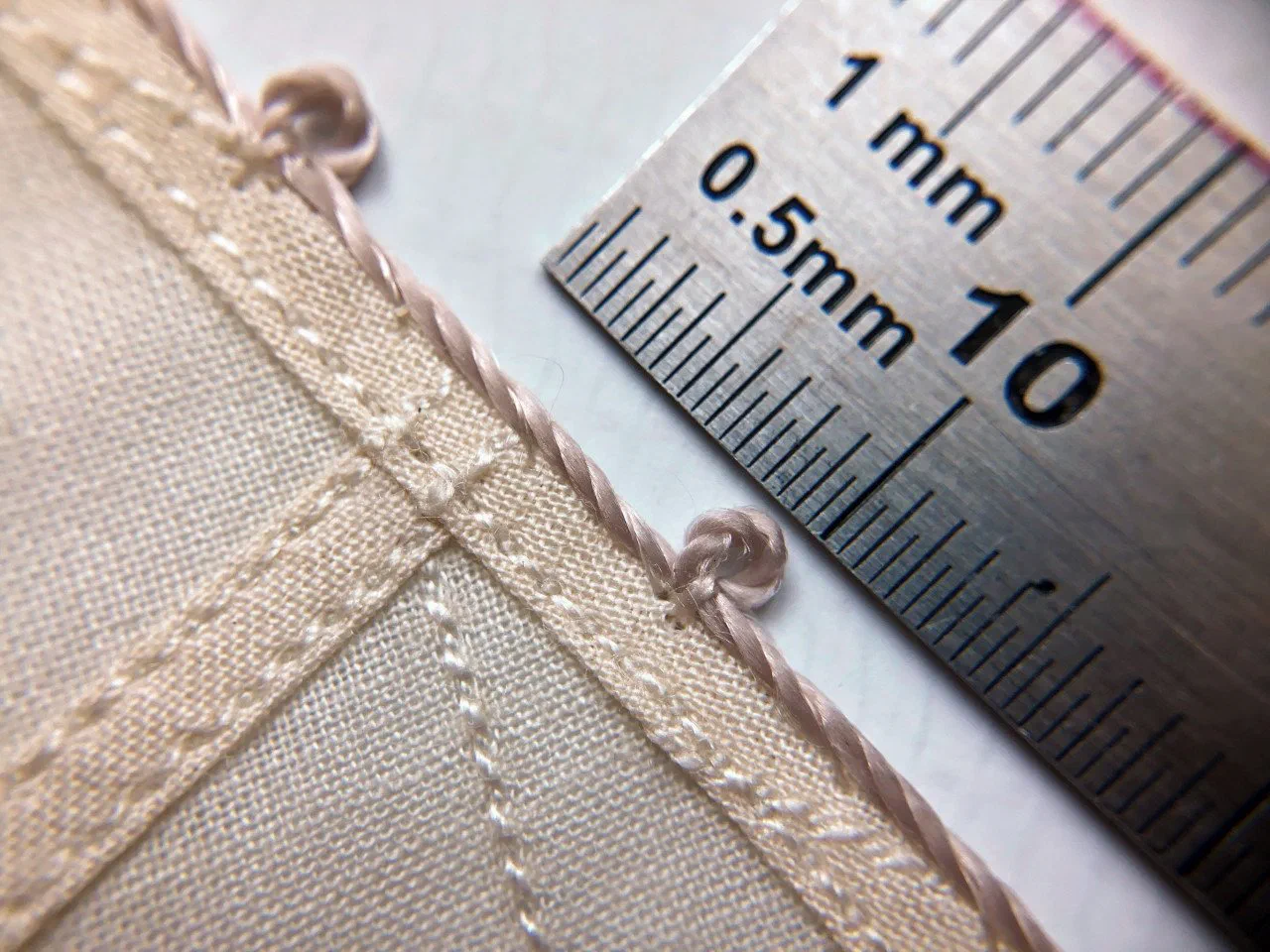
The rigging thread is perhaps the only “weak point” at this otherwise very high level. Not that it is bad – it is better than in most kits. The sails, on the other hand, are really well made: very thin cloth in a pleasant, light beige, with clean seams.
Plans and instructions
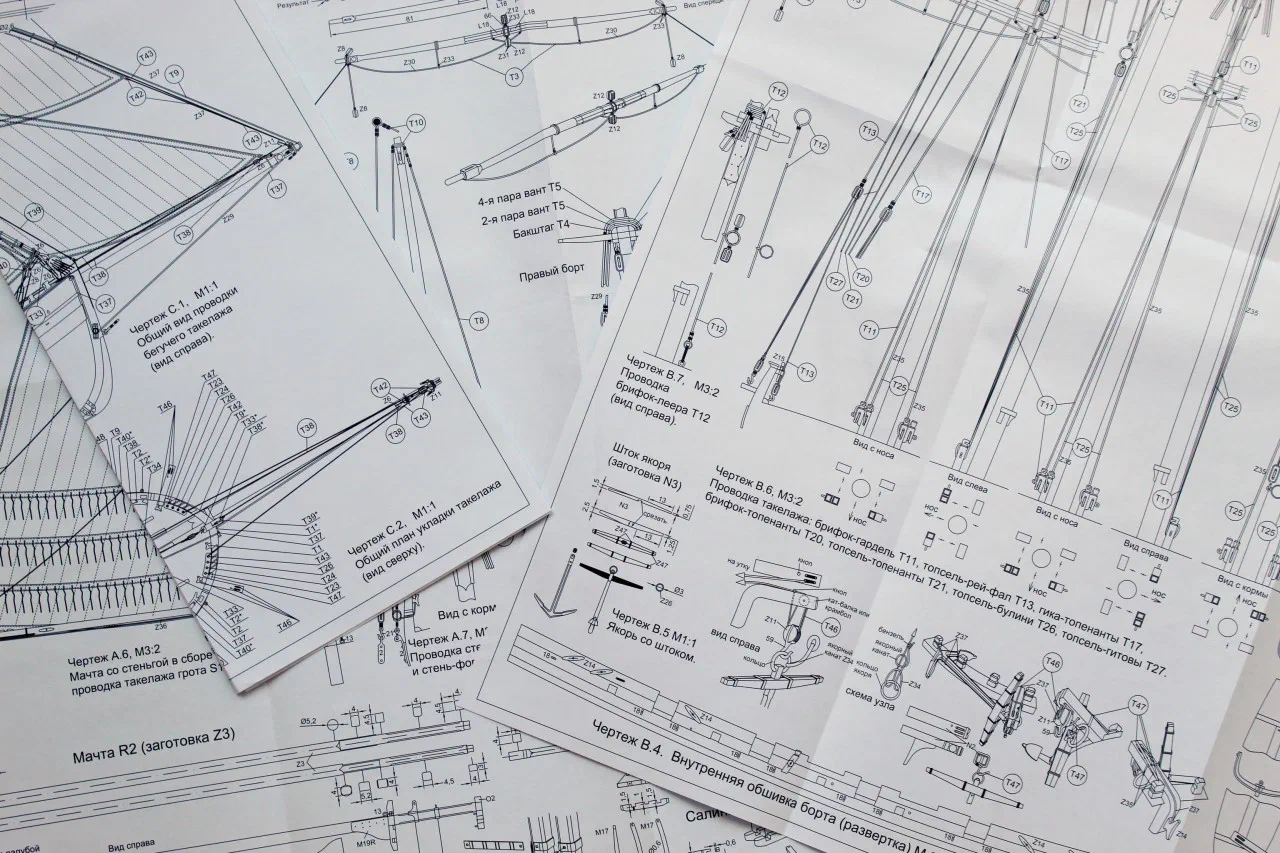
The instructions are in Russian and English, but the picture manual explains a great deal in pictures, and the plans and the incredible number of small explanatory drawings mean that language should not be a problem. Master Korabel also publishes build videos.
Conclusion
This is my first Master Korabel kit, and I am impressed: so much quality, so many details, so much thoughtful use of new technology – all at a price that seems almost cheap even for the deluxe version. And even there Master Korabel is innovative, offering the kit in different “flavours”.
My criticism is at the very highest level: the flag could be better, the rigging thread does not match the quality of all the other parts in my eyes, the dowel should be pear too, and the pear nameplate would be better lasered inverted – only the name burnt in, not the background. My thanks go to Master Korabel for sending this kit for review.
Pro
- Pear almost throughout
- Pre-lasered planks with nailing
- Outstanding two-layer photo-etch
- Turned brass belaying pins and bell
- Excellent blocks, even with metal strops
- Ship's boat as a mini-kit
- Beautiful pre-sewn sails
- Picture manual, plans and build videos
Contra
- The flag could be better
- Rigging thread not up to the rest
- Dowel should be pear too
- Pear nameplate should be lasered inverted